A Long Autumn at the Table
This book, assembled with love, for Judy
Read the foreword
This is a book built for the stretch of weeks when the light goes low and gold and the kitchen becomes the warmest room in the house. It begins with the last bright things of the year — citrus, chili, raw fish, shaved fennel — and moves, course by course, toward the deep, slow dishes that carry a table through the cold months: soups, curries, roasted vegetables, braises, things that bake for an hour while the windows fog. By the end it has turned toward sweetness, and then toward morning, because that is what a long season at the table actually does. It eats its way from bright to rich to sweet and then starts the whole day over again.
The order here is not arbitrary. Each dish leans on the one before it — a spice, a sauce, a vegetable, a technique — so that cooking through the book feels less like working down a list and more like following a single meal that keeps unfolding. Fennel shows up at the start and again near the end. Lentils thread through the early chapters. Fish gives way to curry, curry gives way to meat, meat gives way to cake. It is a season written in dishes, meant to be cooked roughly in this sequence, though of course no one is stopping you from skipping ahead to dessert.
Mostly, though, this is just twenty dishes I wanted at the same table over the same stretch of autumn, arranged so one leads naturally into the next.
We start where autumn still remembers summer: something raw and cold, brightened with citrus and heat, before the oven gets turned on for anything else.
Fluke Crudo with Blood Orange, Chili & Shaved Fennel
Ingredients
- 6 oz sushi-grade fluke, very thinly sliced
- 1 blood orange, segmented, juice reserved
- 1/2 small fennel bulb, shaved paper-thin
- 1 tsp capers, roughly chopped
- 1/2 small red chili, thinly sliced (or pinch chili flakes)
- 2 tbsp extra virgin olive oil
- 1 tsp lemon juice
- Flaky sea salt
- Fresh mint leaves, torn
- 1 slice crusty whole grain bread, grilled
Method
- Lay the fluke slices on a chilled plate in a single layer.
- Scatter the shaved fennel, blood orange segments, capers, and chili over the top.
- Whisk the olive oil, lemon juice, and a spoonful of the reserved orange juice; drizzle over the fish.
- Finish with flaky salt and torn mint leaves.
- Serve immediately with the grilled bread on the side for scooping.
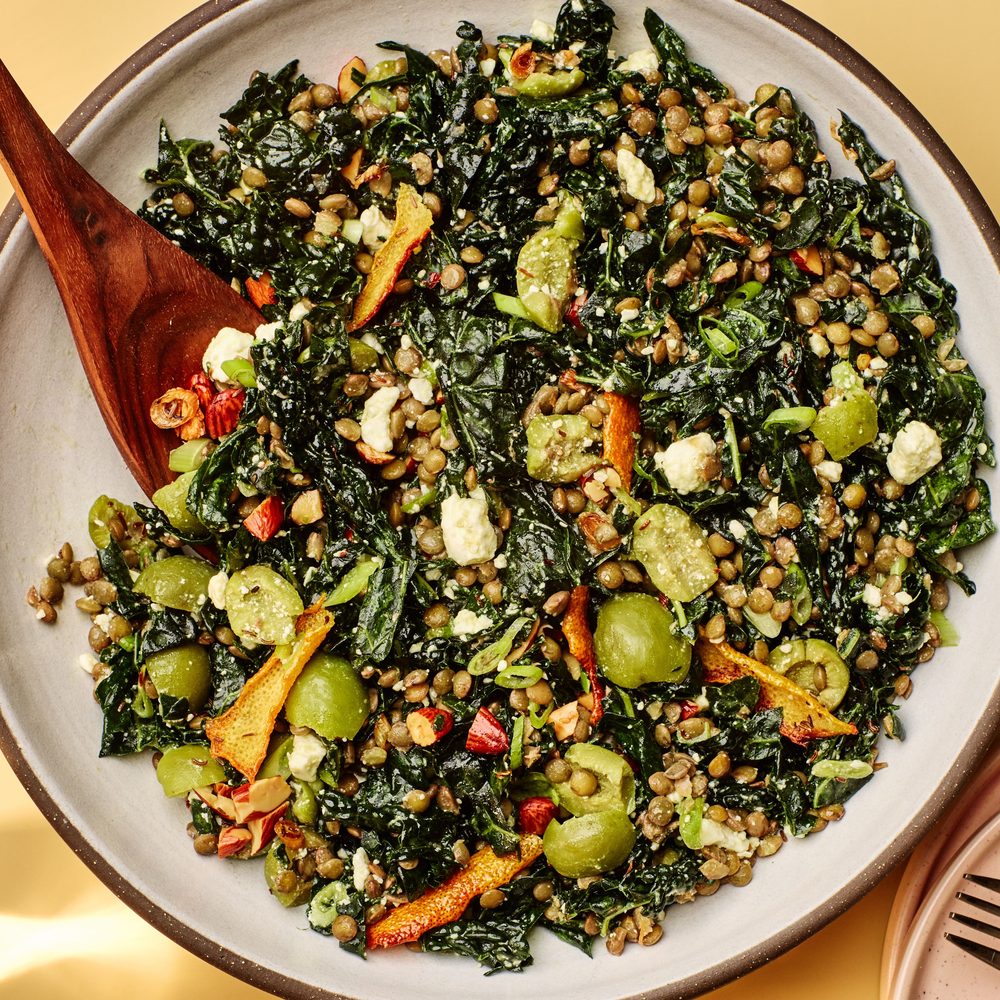
From the sharp citrus and chili of the crudo, we settle into something plainer and earthier — lentils, dressed simply, a salad that asks for nothing more than a good spoon and a little patience.
Lentil Salad
Ingredients
- 1 large bunch Tuscan kale (about 10 oz.)
- Kosher salt
- ½ cup raw almonds
- 3 scallions
- 4 garlic cloves
- 1 lemon
- ½ cup extra-virgin olive oil
- 1½ cups black beluga or French green lentils
- 1 Tbsp. cumin seeds
- ½ tsp. crushed red pepper flakes
- 5 oz. feta
- 1 cup Castelvetrano olives
Method
- Strip leaves off stems from 1 large bunch Tuscan kale; discard stems or save for later! Stack leaves, then roll into fat cigars. Slice crosswise into ¼" strips to long, thin ribbons. Unfurl ribbons and run your knife through them just once or twice more to shorten any very long strips. Transfer to a large bowl, season with salt, and massage until kale is silkier, softer, and darker in color, 1–2 minutes.
- Bring a large pot of heavily salted water to a boil over high heat. While you're waiting, prep the spiced oil. Coarsely chop ½ cup raw almonds; set aside. Trim 3 scallions and separate white and green parts (save the green parts for later in the recipe); thinly slice white parts and transfer to a small skillet. Smash and peel 4 garlic cloves. Add those to same skillet, too. Using a vegetable peeler or paring knife, remove three 3" strips of lemon peel (avoiding white pith); reserve rest of the lemon for your salad dressing. Add peels to skillet. Pour ½ cup extra-virgin olive oil into skillet and stir so that all of the elements are coated in oil.
- Add 1½ cups black beluga or French green lentils to now-boiling water, reduce heat to medium, and simmer, uncovered, until lentils are tender but still al dente, 20–25 minutes (they'll turn mushy if overcooked). We love to cook lentils like pasta—that is, in an abundant amount of salted water—so that we can monitor their doneness as they cook and make sure they don't get too soft.
- While lentils cook, heat skillet with scallion mixture over medium. Cook, stirring occasionally, until garlic starts to brown and lemon peel starts to curl, about 3 minutes. Add almonds and cook, stirring frequently, until almonds are browned, about 3 more minutes. Remove from heat and stir in 1 Tbsp. cumin seeds and ½ tsp. crushed red pepper flakes—the residual heat from the oil will bloom those spices and bring out their flavors.
- Strain mixture through a fine-mesh sieve into a small bowl, shaking to help oil drain; reserve oil (that's the base of your salad dressing). Spread almond mixture (don't forget those cumin seeds!) on a paper towel-lined plate or baking sheet. Season with salt and let cool (the nuts will get crunchier as they sit).
- Crumble 5 oz. feta into bowl with kale. Smash 1 cup Castelvetrano olives with the back of your knife; remove pits. Tear olives into large pieces and add to bowl. Thinly slice reserved scallion greens and add most to bowl (save some for serving). Add juice of reserved lemon and ½ tsp. salt.
- Drain lentils well, shaking to get rid of excess moisture, and add to bowl with kale; season with salt. Add infused oil and half of nuts and toss to combine.
- Divide salad among bowls. Garnish with remaining nuts and scallion greens. (If you’re taking this to work, just throw all of the scallions and nuts in at once—or bring them to work in separate containers and be that person garnishing your desk salad. You're worth it.) Eat around the lemon peels and garlic slices, which are edible but intense.
Recipe by Sarah Jampel · Epicurious, originally at epicurious.com. Shared here privately with credit.
↑ Back to contentsThe lentils set the tone for what comes next: a bowl you eat with a spoon instead of a fork, as the kitchen turns from assembling to simmering.
Fish soup

Ingredients
- 8 oz raw shrimp, peeled and deveined, tails on
- 6 oz squid ink linguine
- 3 tbsp olive oil, plus extra for toast
- 1 small shallot, finely chopped
- 2 cloves garlic, thinly sliced
- 1/2 tsp chili flakes
- 1/2 tsp fennel seeds
- 1/4 cup dry white wine
- 1 (14 oz) can crushed San Marzano tomatoes
- 1 cup fish or clam stock
- Salt and black pepper, to taste
- 4 slices rustic bread
- Small handful fresh basil leaves, torn
Method
- Heat 2 tbsp olive oil in a large skillet over medium. Add shallot and cook 3-4 minutes until soft.
- Add garlic, chili flakes, and fennel seeds, stir 1 minute until fragrant.
- Pour in the wine, let it bubble hard for a minute to cook off the raw edge.
- Add the tomatoes and stock. Simmer 12-15 minutes, stirring now and then, until slightly thickened. Season with salt and pepper.
- Meanwhile, bring a pot of salted water to a boil and cook the pasta 1 minute less than the package says. Drain, keeping a splash of the pasta water.
- Toast the bread in the toaster oven until deeply golden, then drizzle with a little olive oil.
- Slide the shrimp into the simmering broth. Cook 3-4 minutes, turning once, until just curled and opaque - do not let them go rubbery.
- Add the drained pasta straight into the broth, tossing with tongs to coat. Loosen with a splash of pasta water if it looks tight.
- Divide between two bowls, scatter with torn basil, and serve the toast alongside for dunking.
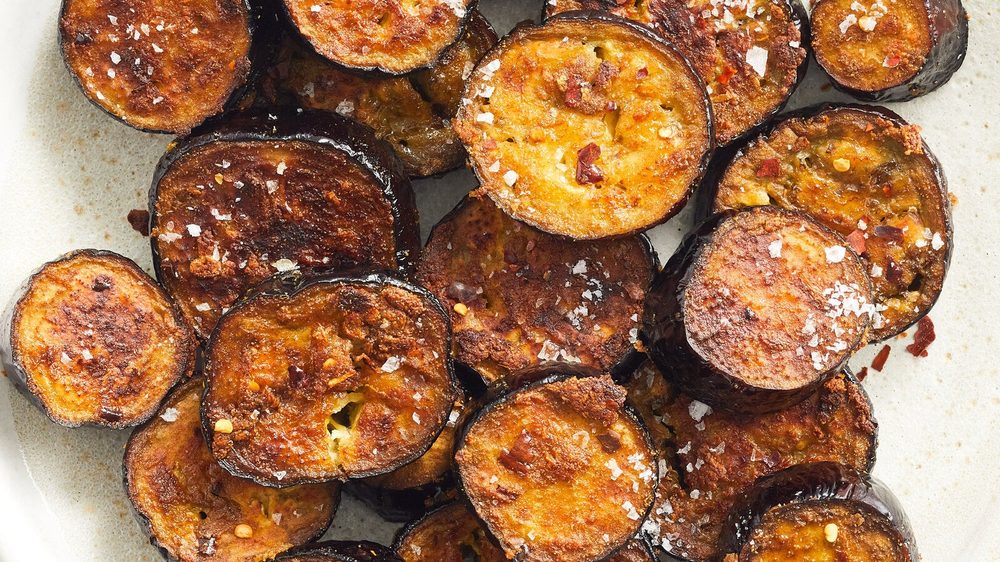
Out of the broth and into the oven — eggplant, spiced and roasted until it collapses, the first dish here that leans on heat and time rather than a knife.
Spiced Roasted Eggplant
Ingredients
- 3 small Italian eggplants (1 ½ pounds)
- ½ cup olive oil
- 3 garlic cloves, finely grated
- 1 tablespoon ground cumin
- ¾ teaspoon kosher salt (such as Diamond Crystal)
- ¼ teaspoon crushed red pepper flakes
Method
- Heat the oven to 450 degrees and line a sheet pan with parchment paper.
- Prepare eggplants by slicing off their tops and a fine layer of skin from their bottoms. Slice the eggplant into 1-inch-thick rounds and place on the lined pan.
- Make your spice oil by combining the olive oil, garlic, cumin, salt and red-pepper flakes in a small bowl. Brush the spiced oil onto the faces of all the eggplant slices, then flip each one over and repeat on the second side.
- Roast for 20 minutes, then use a spatula to flip over each round. Roast for another 10 to 20 minutes, or until soft, browned and crisp. If you’re looking for a little extra color, broil the eggplant, watching carefully, for about a minute.
Recipe by Clare de Boer · NYT Cooking, originally at cooking.nytimes.com. Shared here privately with credit.
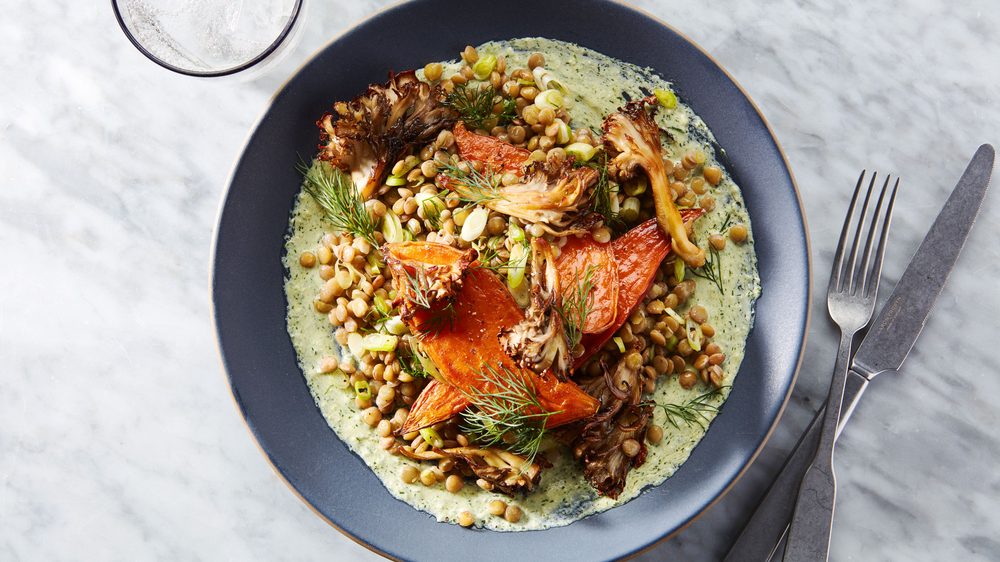
↑ Back to contentsThat same roasting heat carries over into a full dinner built around it: sweet potatoes and mushrooms next to the lentils again, pulled together with a tahini sauce that borrows the eggplant's warmth of spice.
Roasted Sweet Potato Dinner with Mushrooms, Lentils, and Feta-Tahini Sauce
Ingredients
- 6 small sweet potatoes (garnet yams), halved lengthwise
- 7 Tbsp. extra-virgin olive oil, divided, plus more for drizzling
- 1 tsp. kosher salt, divided, plus more
- 1 1/4 tsp. freshly ground black pepper, divided
- 1/2 cup black or green lentils
- 1/2 lb. maitake mushrooms, trimmed, torn into pieces
- 6 oz. feta, crumbled (about 1 cup)
- 1/4 cup tahini
- 1 small garlic clove, crushed
- 1/4 cup fresh lemon juice, divided
- 1 bunch dill, coarsely chopped (about 1 1/2 cups), divided
- 2 scallions, finely chopped
Method
- Preheat oven to 400°F. Toss potatoes, 1 Tbsp. oil, 1/2 tsp. salt, and 1/2 tsp. pepper on a rimmed baking sheet. Arrange potatoes cut side down in an even layer and roast until beginning to soften and golden brown on the cut sides, 15–20 minutes.
- While potatoes roast, cook lentils in a medium pot of simmering salted water until lentils are tender but still retain their shape, 15–20 minutes. Drain and transfer to a medium bowl.
- Toss mushrooms, 1 Tbsp. oil, and 1/2 tsp. pepper in another medium bowl. Arrange around potatoes on hot baking sheet and continue to roast until mushrooms are browned and crisped and potatoes are well browned on cut sides, 12–15 minutes.
- Meanwhile, pulse feta, tahini, garlic, 2 Tbsp. lemon juice, half of the dill, 3 Tbsp. oil, and 1/4 cup water in a food processor until a smooth sauce forms. Add more water, 1 Tbsp. at a time, and pulse to combine until sauce is just thin enough to pour.
- Add scallions and remaining dill, 2 Tbsp. oil, 2 Tbsp. lemon juice, 1/2 tsp. salt, and 1/4 tsp. pepper to bowl with lentils and stir to combine. Stir in roasted mushrooms.
- Divide feta sauce among plates. Top with potato halves. Spoon lentil salad over and drizzle with oil.
Recipe by Anna Stockwell · Epicurious, originally at epicurious.com. Shared here privately with credit.
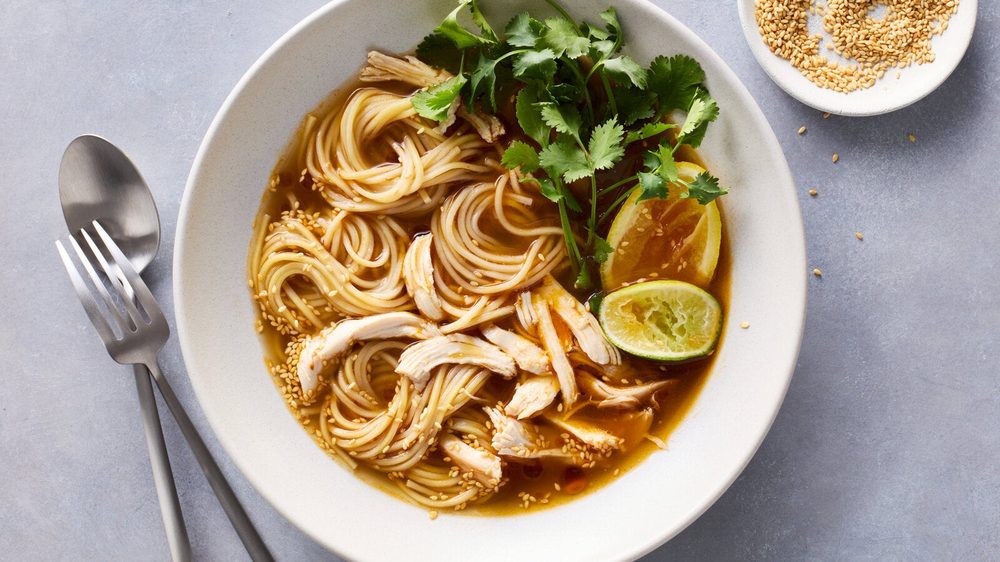
↑ Back to contentsFrom a roasted vegetable dinner to a bowl of broth and noodles — the citrus returns, this time soaking into chicken and soy instead of fish, the season's first real soup of the book.
Citrus-Soy Chicken Ramen
Ingredients
- 1 (2-pound) rotisserie chicken
- Salt and pepper
- 2 tablespoons olive oil or other oil of your choice
- 3 heads garlic, halved crosswise
- 2 large yellow onions (about 1 pound), unpeeled, quartered
- 1 small bunch cilantro, thick stems cut off and reserved
- 3 tablespoons soy sauce, plus more for serving
- 6 to 8 ounces thin dried noodles (such as ramen, lo mein or soba)
- 2 limes, cut in half
- 2 lemons, cut in half
- Sesame seeds or toasted sesame oil, for serving
Method
- Pick and shred the meat off the chicken (you should have about 3½ cups), season with salt and pepper to taste and set aside; save the bones and skin.
- In a large pot or Dutch oven, heat the oil over medium-high. Add the garlic and onions and cook, stirring occasionally, until lightly golden in spots, about 5 minutes.
- Add the chicken bones and skin, cilantro stems, soy sauce and 8½ cups of water. Bring to a gentle simmer, and let cook until flavorful with a distinct chicken essence, 15 to 20 minutes.
- Using a spider or fine-mesh sieve, lift or strain out the vegetables and chicken pieces and discard.
- Bring the broth back up to a simmer. Add the noodles and cook according to the package instructions, then turn off heat.
- To serve, ladle the broth into bowls and add as much chicken as you'd like. Squeeze in lime and lemon juice to taste, then add the spent citrus halves if desired. Top with cilantro leaves and tender stems, along with sesame seeds or sesame oil and more soy sauce if desired.
Recipe by Christian Reynoso · NYT Cooking, originally at cooking.nytimes.com. Shared here privately with credit.
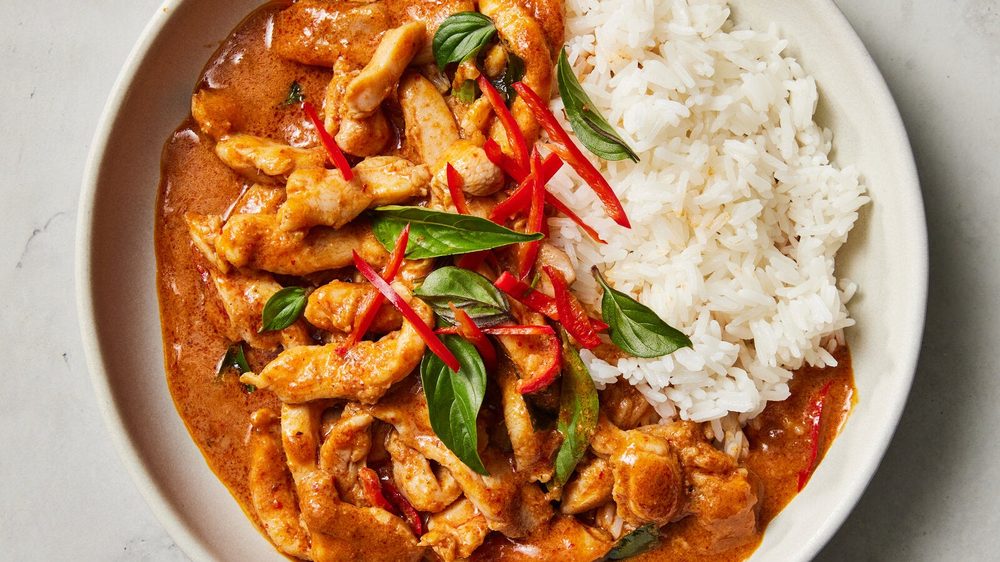
↑ Back to contentsThe broth deepens from here: ramen gives way to curry, and the clean citrus-soy base turns rich and coconut-heavy, built for colder nights.
Panang Curry
Ingredients
- ½ teaspoon coriander seeds
- ½ teaspoon cumin seeds
- ¼ cup/1 ounce dry-roasted, unsalted peanuts
- 2 to 4 tablespoons red curry paste, to taste (see Tip)
- 1 pound boneless, skinless chicken breasts or thighs
- 2 teaspoons fish sauce, plus more as needed
- 1 (13.5-ounce) can full-fat coconut milk (do not shake)
- 8 makrut lime leaves, deveined, 6 torn and 2 thinly sliced, or 1 teaspoon grated lime zest, for serving
- 1 ½ teaspoons palm, granulated or brown sugar, plus more as needed
- 1 small, mild, thin-skinned pepper, such as a Fresno, Anaheim or banana pepper, or ½ small red bell pepper, thinly sliced
- Thai basil, thinly sliced, for serving (optional, if makrut lime leaves are not used)
- Rice, for serving
Method
- Prepare the curry paste: Heat a medium sauté pan over medium. Add the coriander and cumin. Swirl the pan around, or toss the seeds with a wooden spoon, and gently toast until fragrant, about 1 minute, taking care not to burn the spices. Transfer to a small plate and cool, then place in a spice grinder or mortar and pestle, and grind to a fine powder.
- Add the peanuts and finely grind until smooth. Transfer the mixture to a small bowl, add the red curry paste and stir until mixed.
- Thinly slice the chicken into 1 ½-inch-long pieces. Place in a medium bowl, drizzle with the fish sauce and mix until coated.
- Heat the same pan over medium-high. Scoop 4 tablespoons of the thick cream off the top of the coconut milk and add it to the pan; it will immediately sizzle. Stir until thickened and bubbling on the sides, about 30 seconds. Stir in the curry paste, to taste. Reduce to medium, and cook the paste, continuously stirring, until a thick paste forms and the coconut oil separates (the sauce “breaks”), 2 to 3 minutes. If it starts sticking, add a splash of coconut milk and scrape up anything from the bottom of the pan.
- Add the torn lime leaves or zest and sugar. Cook, continuously stirring, to dissolve the sugar and infuse the flavors, about 2 minutes. Add the remaining coconut milk, increase to medium-high, bring to a boil and cook, continuously stirring, until the curry has thickened enough to coat the back of a spoon and has a layer of bright red oil on top, 4 to 8 minutes. The curry should be at a lively simmer; adjust the heat as necessary.
- Add the chicken and cook, stirring frequently, until cooked through, 3 to 4 minutes. If using, stir in the peppers, saving a few for serving, and cook until just incorporated, about 1 minute. Taste and add more fish sauce and sugar, if needed. (Be mindful, this is not a sweet curry; the sweetness should hit a back note, not lead with it.)
- Garnish with the sliced lime leaves or Thai basil and reserved peppers. Serve alongside rice.
Recipe by Naz Deravian · NYT Cooking, originally at cooking.nytimes.com. Shared here privately with credit.
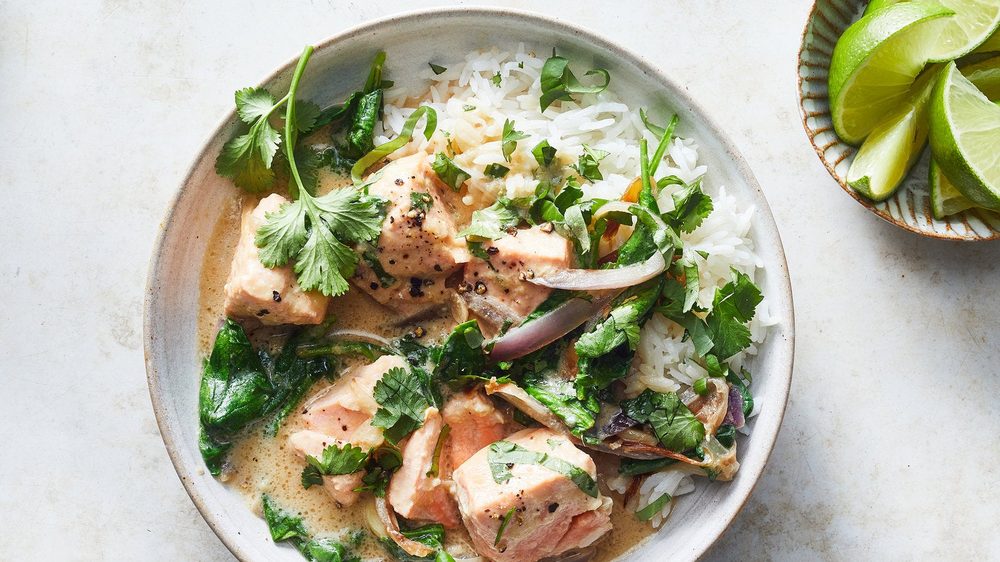
↑ Back to contentsOne curry leads naturally to another — the same coconut backbone, now turned toward miso and salmon, fish standing in where chicken stood before.
Coconut-Miso Salmon Curry
Ingredients
- 2 tablespoons safflower or canola oil
- 1 medium red onion, halved and sliced ½-inch thick (about 2 cups)
- 1 (1-inch) piece fresh ginger, minced (about 2 tablespoons)
- 3 garlic cloves, thinly sliced
- Kosher salt and black pepper
- ¼ cup white miso
- ½ cup unsweetened, full-fat canned coconut milk
- 1 (1 ½-pound) salmon fillet, cut into 2-inch pieces
- 5 ounces baby spinach (about 5 packed cups)
- 1 tablespoon fresh lime juice, plus lime wedges for serving
- Steamed rice, such as jasmine or basmati, for serving
- ¼ cup chopped fresh basil
- ¼ cup chopped fresh cilantro
Method
- In a large pot, heat 2 tablespoons oil over medium. Add onion, ginger and garlic, and season with salt and pepper. Cook, stirring occasionally, until softened, about 3 minutes. Add miso and cook, stirring frequently, until miso is lightly caramelized, about 2 minutes.
- Add coconut milk and 3 cups water, and bring to a boil over high heat. Cook until liquid is slightly reduced, about 5 minutes.
- Stir in salmon, reduce the heat to medium-low and simmer gently until just cooked through, about 5 minutes. Turn off heat and stir in spinach and lime juice.
- Divide rice among bowls. Top with salmon curry, basil and cilantro. Serve with lime wedges for squeezing on top.
Recipe by Kay Chun · NYT Cooking, originally at cooking.nytimes.com. Shared here privately with credit.
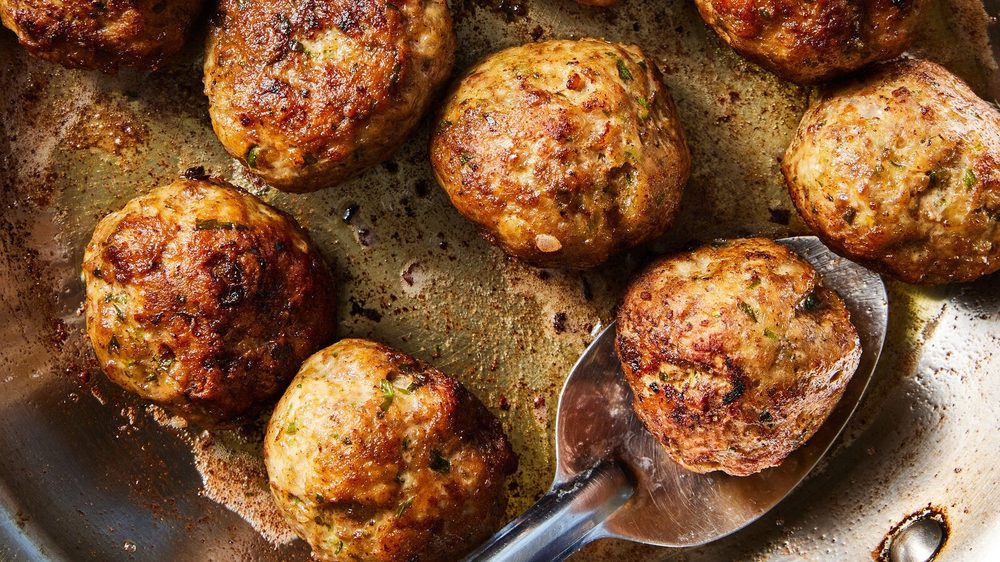
↑ Back to contentsAfter a run of curries and bowls, it's time for something you can shape with your hands — any meat you like, formed into something simple and familiar.
Meatballs With Any Meat
Ingredients
- 1 pound ground meat (pork, beef, veal, chicken, turkey or a combination)
- ½ cup panko bread crumbs
- 1 egg
- 1 teaspoon kosher salt, more as needed
- Black pepper and/or ground cumin, curry powder, chile flakes, garam masala, etc., to taste
- Minced garlic, onion, scallions or shallot
- Chopped parsley, basil or cilantro
- Olive oil, for frying (optional)
Method
- In a large bowl, gently combine all ingredients. Roll into 1 ½-inch balls. Transfer to a baking sheet.
- Broil until golden and firm, 7 to 10 minutes. Or fry in oil until deeply browned all over. Sprinkle with more salt before serving.
Recipe by Melissa Clark · NYT Cooking, originally at cooking.nytimes.com. Shared here privately with credit.
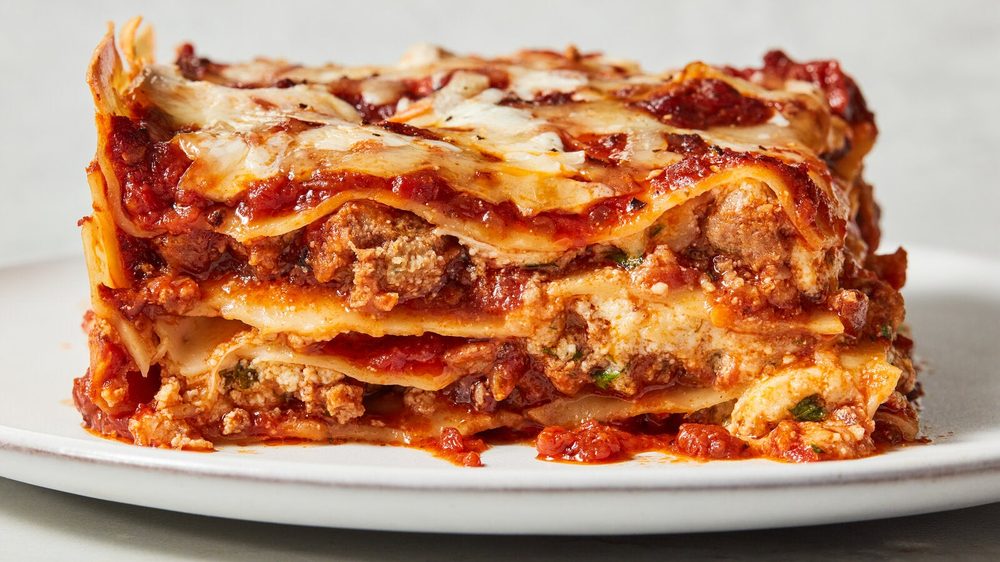
↑ Back to contentsThose same meatballs point the way toward layers: the next dish takes ground meat and sauce and stacks them, sheet after sheet, into something that bakes low and slow.
Best Lasagna
Ingredients
- 1 cup extra virgin olive oil
- 2 medium red onions, finely diced
- 2 large cloves minced garlic
- 8 ounces pancetta, diced
- Salt and freshly ground black pepper
- 1 ½ cups good red wine, preferably Italian
- 2 28-ounce cans Italian plum tomatoes
- 3 tablespoons tomato paste
- ¾ pound ground sirloin
- ¼ cup freshly grated Pecorino Romano
- 2 eggs
- 10 sprigs fresh parsley, leaves only, washed and dried
- 2 large whole cloves garlic
- ½ cup flour
- 1 pound Italian sausage, a mix of hot and sweet
- 1 15-ounce container ricotta cheese
- 2 eggs
- 2 cups freshly grated Pecorino Romano
- ½ cup chopped parsley
- 1 pound mozzarella, grated
- 16 sheets fresh lasagna noodles, preferably Antica Pasteria
Method
- For the sauce, heat ½ cup oil in a large heavy Dutch oven or kettle over low heat. Add the onions, minced garlic and pancetta, and cook, stirring, for 10 minutes, until the onions are wilted. Season liberally with salt and pepper. Raise heat slightly, add the wine and cook until it is mostly reduced, about 20 minutes. Crush the tomatoes into the pan, and add their juice. Add the tomato paste and 2 cups lukewarm water. Simmer for 1 hour.
- Combine the sirloin, cheese and eggs in a large bowl. Chop the parsley with the whole garlic until fine, then stir into the beef mixture. Season lavishly with salt and pepper. Using your hands, mix until all the ingredients are well blended. Shape into meatballs and set aside.
- Heat the remaining oil in a large skillet over medium-high heat. Dust the meatballs lightly with flour, shaking off excess, and lay into the hot oil. Brown the meatballs on all sides (do not cook through) and transfer to the sauce.
- In a clean skillet, brown the sausages over medium-high heat. Transfer to the sauce. Simmer 1 ½ hours.
- Heat the oven to 350 degrees. In a large bowl, combine the ricotta, eggs, Pecorino Romano, parsley and all but 1 cup of the mozzarella. Season well with salt and pepper. Mix thoroughly.
- Remove the meatballs and sausage from the sauce, and set aside to cool slightly, then chop coarsely. Spoon a thick layer of sauce into the bottom of a 9-by-12-inch lasagna pan. Cover with a layer of noodles. Spoon more sauce on top, then add a third of the meat and a third of the cheese mixture. Repeat for 2 more layers, using all the meat and cheese. Top with a layer of noodles, and cover with the remaining sauce. Sprinkle reserved mozzarella evenly over the top. Bake 30 minutes. Let stand 10 minutes before serving.
Recipe by Regina Schrambling · NYT Cooking, originally at cooking.nytimes.com. Shared here privately with credit.
↑ Back to contentsFrom one baked, cheese-topped dish to another — the lasagna's oven and its tomato sauce carry straight through to eggplant, breaded and layered the same way.
Eggplant parm

Ingredients
- 1 large eggplant (about 1 lb), sliced into 1/2-inch rounds
- 1 tsp salt (for salting eggplant)
- 1/2 cup all-purpose flour
- 2 large eggs, beaten
- 1 cup Italian-style breadcrumbs
- 1/2 cup grated Parmesan, divided
- 1/2 cup olive oil, for frying
- 2 cups good marinara sauce
- 1 clove garlic, minced
- 6 oz fresh mozzarella, sliced
- 6-8 fresh basil leaves
- Salt and black pepper, to taste
Method
- Slice eggplant into 1/2-inch rounds, salt lightly on both sides, and lay on a rack or paper towels for 20-25 min to draw out moisture. Pat dry.
- Set up a dredging line: flour on a plate, beaten eggs in a bowl, breadcrumbs mixed with half the Parmesan on another plate.
- Warm garlic in a small saucepan with a splash of the olive oil over medium heat for 1 min, add marinara, season, and simmer gently while you fry.
- Heat 1/4 inch olive oil in a large oven-safe skillet over medium-high (about 350F). Dredge eggplant through flour, egg, then breadcrumbs, and fry in batches, 2-3 min per side, until deep golden. Drain on paper towels and wipe out excess oil from the skillet.
- Spoon a thin layer of sauce into the same skillet, layer in fried eggplant, more sauce, mozzarella, and a scatter of Parmesan. Repeat until everything is used, finishing with cheese on top.
- Slide into the oven at 375F (fan) for 20-25 min, until the sauce bubbles at the edges and the top is deeply golden.
- Rest 5 min out of the oven, scatter with basil, and serve straight from the skillet.
After so much baking, we go back to the stovetop and the pan: fish seared hot and fast, root vegetables roasted alongside, finished with a butter sauce that takes the place of all that melted cheese.
Pan-Seared Fish with Roasted Root Vegetables & Beurre Blanc

Ingredients
- 2 skin-on fish fillets (6 oz each — cod, halibut, or similar white fish)
- 6 oz waxy potatoes, cut into 1-inch pieces
- 4 oz carrots, cut into ½-inch pieces
- 4 oz parsnips or turnips, cut into ½-inch pieces
- 2 cups dark leafy greens (kale, chard, or spinach)
- 3 tablespoons olive oil
- 4 tablespoons cold butter, divided
- ½ cup white wine or white wine vinegar
- ¼ cup shallots, minced
- salt and pepper
- 1 tablespoon lemon juice
- 1 teaspoon Dijon mustard (optional, for sauce stability)
Method
- Toss potatoes, carrots, and parsnips with 2 tablespoons olive oil, salt, and pepper. Spread on a sheet pan and roast at 400F (fan) for 20–25 minutes, stirring halfway, until golden and tender.
- While vegetables roast, make the beurre blanc: In a small saucepan over medium heat, combine white wine and minced shallots. Simmer until reduced to about 2 tablespoons (3–4 minutes). Lower heat to very low. Whisk in 3 tablespoons cold butter one piece at a time, whisking constantly until emulsified and creamy. Stir in lemon juice and mustard if using. Season with salt and pepper. Keep warm but not hot; set aside off the heat.
- Heat 1 tablespoon olive oil in a skillet over medium-high heat. Pat fish dry with paper towels, season both sides with salt and pepper. When oil shimmers, place fish skin-side down and don't move it for 4–5 minutes until skin is crispy and golden. Flip gently and cook 2–3 minutes more until just cooked through (the flesh should flake easily). Transfer to a plate.
- In the same skillet, add a knob of remaining butter and the greens with a pinch of salt. Cook, stirring, for 2–3 minutes until wilted.
- Divide roasted vegetables among two plates, top with greens, then the fish fillet skin-side up. Spoon beurre blanc around the plate.
The same beurre blanc returns, gentler this time, built for fish that's poached rather than seared, with broccoli rabe standing in for the roasted roots.
Poached White Fish with Herb Beurre Blanc and Broccoli Rabe

Ingredients
- 2 × 6 oz white fish fillets (halibut, sea bass, or cod)
- 1 lb broccoli rabe, trimmed
- 3 tablespoons white wine or dry vermouth
- 3 tablespoons fresh lemon juice
- 2 shallots, minced
- 4 tablespoons cold butter, cubed
- 2 tablespoons olive oil
- Salt and pepper
- ½ cup fish or vegetable stock
- Edible flowers (nasturtium, borage, or pansies—for garnish)
Method
- Bring stock and ½ cup water to a gentle simmer in a shallow saucepan. Season the fish fillets with salt and pepper, slide them into the liquid, and poach until just cooked through (about 8 minutes). Lift out with a slotted spoon and set aside on a warm plate, tent loosely with foil.
- Meanwhile, heat olive oil in a skillet over medium-high heat. Add broccoli rabe, season with salt and pepper, and sauté until the stems are tender and the leaves begin to char (4–5 minutes). Set aside.
- Pour the poaching liquid into a saucepan and reduce over high heat until you have about 3 tablespoons left (3 minutes). Add the white wine and lemon juice, and reduce again by half (2 minutes).
- Lower the heat to very low. Whisk in the minced shallots, then whisk in the cold butter piece by piece, letting each cube almost melt before adding the next. Season to taste. The sauce should be silky and light.
- Spoon the sauce onto warm plates, nestle the fish on top, arrange broccoli rabe alongside, and scatter edible flowers over the fish just before serving.
One more fish dish closes out this run, and it brings back the fennel from the very beginning of the book — seared sea bass, bright with salsa verde, the citrus and shaved fennel completing a kind of circle.
Seared Sea Bass with Lemon-Herb Salsa Verde & Shaved Fennel
Ingredients
- 2 sea bass fillets, skin on (about 150 g each)
- 1 small fennel bulb
- 1 lemon (zest + juice)
- 1 small bunch flat-leaf parsley
- Small handful mint leaves
- 1 tbsp capers, drained
- 1 small garlic clove
- 5 tbsp extra-virgin olive oil
- 1 tbsp neutral oil for the pan
- Flaky sea salt
- Black pepper
Method
- Pat the fillets very dry with paper towel and leave them skin-side up on a plate, uncovered, while you make the salsa — dry skin is crisp skin.
- Finely chop the parsley, mint, capers and garlic together on a board, then scrape into a bowl. Stir in the lemon zest, 1 tbsp lemon juice, 5 tbsp olive oil, a pinch of salt and a good grind of pepper. Taste; it should be sharp and loose, not a paste.
- Shave the fennel as thinly as you can (mandoline or sharp knife), toss with a squeeze of lemon juice and a pinch of salt, and set aside to soften slightly.
- Salt the fish skin generously just before cooking. Heat the neutral oil in a non-stick or well-seasoned pan over medium-high until it shimmers.
- Lay the fillets in skin-side down and press each one flat with a spatula for 15 seconds so the skin makes full contact. Cook undisturbed 4–5 min until the skin is deep golden and releases on its own.
- Flip and cook just 45–60 seconds more — the flesh should be opaque and flake at the thickest point. Lift straight onto warm plates, skin up.
- Pile the fennel alongside, spoon the salsa verde over the flesh (never the skin), and finish with flaky salt.
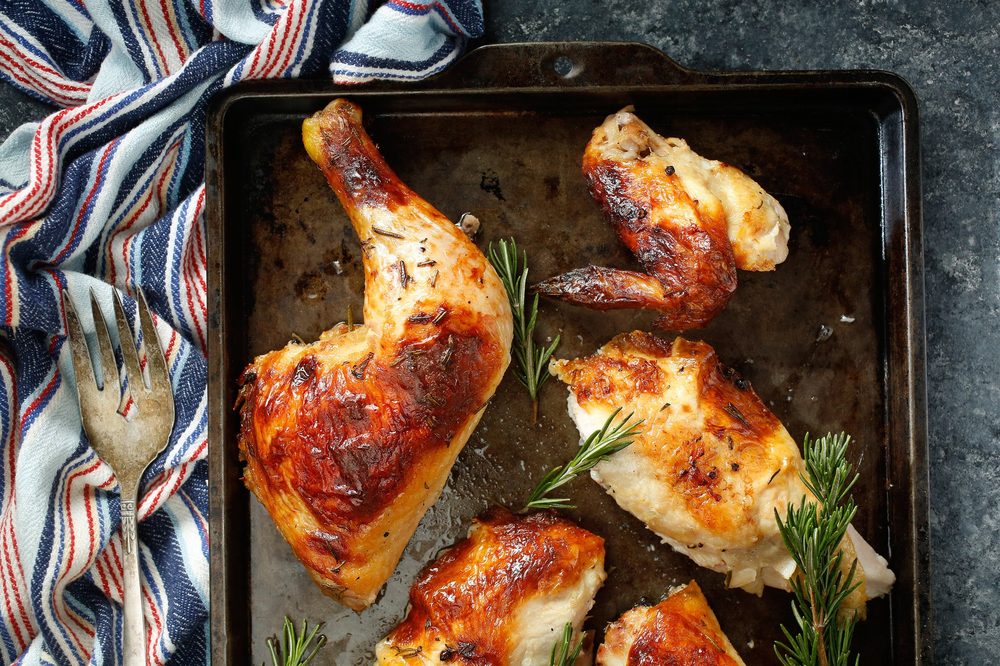
From fish back to poultry, and from a quick sear to a long, slow roast — buttermilk doing the quiet work that butter sauces did a few dishes ago.
Buttermilk Roast Chicken
Ingredients
- 1 4-pound chicken
- 2 cups buttermilk
- ¼ cup plus 2 tablespoons vegetable oil
- 2 cloves garlic, lightly crushed
- 1 tablespoon crushed black peppercorns
- 1 tablespoon Maldon or other sea salt
- 2 tablespoons fresh rosemary leaves, roughly chopped
- 1 tablespoon honey
Method
- Butterfly chicken by placing breast side down and using heavy-duty kitchen shears to cut along both sides of backbone. Discard backbone, turn chicken over and open it like a book. Press gently to flatten it.
- Place chicken in a large freezer bag. Add buttermilk, ¼ cup oil, garlic, peppercorns, salt, rosemary and honey. Seal bag securely and refrigerate overnight or up to two days.
- Heat oven to 400 degrees. Remove chicken from marinade and place on a rack so excess can drip off. Line a roasting pan with foil and place chicken in pan. Drizzle with remaining 2 tablespoons oil. Roast for 45 minutes, then reduce heat to 325 degrees. Continue roasting until well browned and until juices run clear when chicken is pierced where leg joins thigh, about another 20 minutes.
- Place chicken on a carving board and allow to rest for 10 minutes before cutting into serving pieces. Place a portion on each of four plates, and drizzle each serving with pan juices.
Recipe by Nigella Lawson · NYT Cooking, originally at cooking.nytimes.com. Shared here privately with credit.
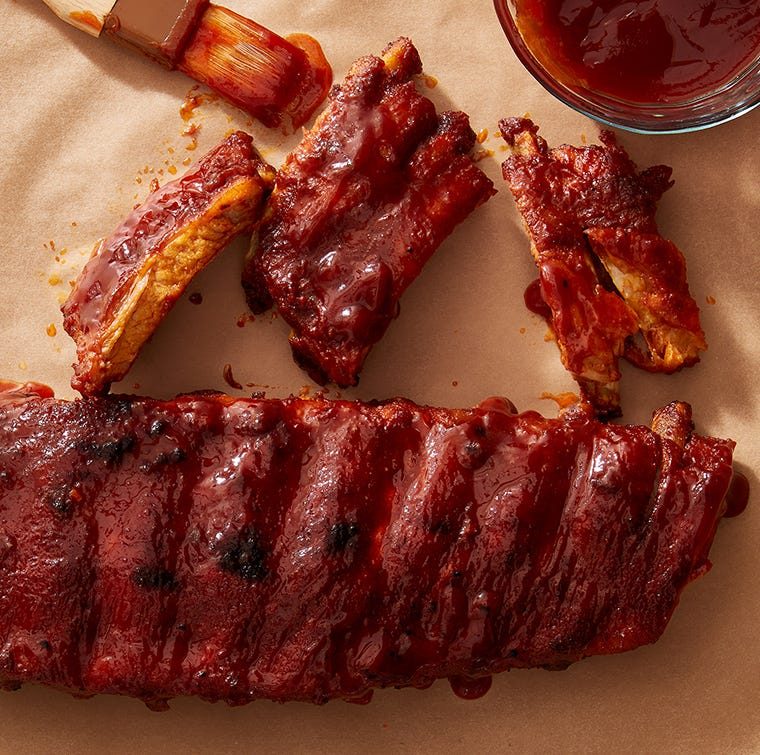
↑ Back to contentsThe roasting continues, but over fire instead of in the oven, and chicken gives way to ribs, cooked low and slow until the meat falls from the bone.
Grilled Ribs
Ingredients
- 1/2 c. apple cider vinegar
- 1/2 c. ketchup
- 1/2 c. (107 g.) packed light brown sugar
- 1 tbsp. garlic powder
- 1 tbsp. smoked paprika
- 1 tbsp. Worcestershire sauce
- 1 tsp. kosher salt
- 1 tsp. freshly ground black pepper
- 1/4 c. (53 g.) packed light brown sugar
- 1/4 c. smoked paprika
- 2 tbsp. kosher salt
- 1 tbsp. ground cumin
- 1 (3 1/2- to 4-lb.) full rack baby back pork ribs, patted dry
Method
- In a small bowl, whisk brown sugar, paprika, salt, garlic powder, and cumin.
- Heat one burner on a gas grill to low, or preheat to 200°. (Or prep a charcoal grill with charcoal stacked on one side.) Place ribs on a large piece of foil and coat all sides with dry rub. Let sit 10 minutes, then tightly wrap in foil.
- Place ribs bone side up on cooler side of grill. Cover grill. After 1 1/2 hours, rotate ribs 180° and grill 1 1/2 hours more. (Make sure grill temperature does not exceed 200°.) Once they’ve cooked 3 hours total, you should be able to see bones protruding from meat when you peek inside foil. Transfer ribs to a large baking sheet. Open foil and let ribs rest 10 minutes.
- Adjust grill to high heat, or preheat to about 450°. (Turn on all burners or add more coals and spread them out evenly.) Remove ribs from foil and place directly on grill. Using a pastry brush, generously baste with BBQ sauce. Flip rack and baste other side with sauce. It helps to have 2 sets of tongs (or a set of tongs and a spatula) to flip the rack.
- Grill ribs until sauce is caramelized and meat has visible grill marks, 1 to 3 minutes. Flip again and continue to grill until sauce on other side is caramelized, 1 to 2 minutes more.
- Let ribs cool 5 minutes before slicing.
Recipe by Lee Kalpakis · Delish, originally at delish.com. Shared here privately with credit.
↑ Back to contentsAfter all that savory work, the book turns sweet: a simple loaf cake, swirled with cinnamon, the first thing here meant for the oven's gentler, sugar-scented heat.
Cinnamon Swirl Loaf Cake

Ingredients
- 6 oz all-purpose flour
- ½ teaspoon baking powder
- ¼ teaspoon salt
- 3.5 oz butter, softened
- ⅓ cup plus 2 tablespoons sugar
- 1 large egg
- ½ teaspoon vanilla extract
- ¼ cup sour cream or Greek yogurt
- 1½ teaspoons ground cinnamon
- 2 tablespoons brown sugar
Method
- Heat your toaster oven to 350F. Grease and line a small loaf pan (roughly 7 × 3 inches).
- Whisk together flour, baking powder and salt in a bowl.
- Cream the butter and ⅓ cup sugar together until pale and fluffy, about 2 minutes. Beat in the egg and vanilla until smooth.
- Fold in the flour mixture in two additions, alternating with the sour cream. Stop as soon as it comes together — do not overmix.
- Stir the cinnamon and brown sugar together in a small bowl.
- Spread half the batter into the loaf pan. Sprinkle half the cinnamon-sugar mixture over it. Top with the remaining batter and finish with the cinnamon-sugar, swirling gently with a fork or skewer to create a ribbon.
- Brush the top lightly with a little egg white or milk if you like a glossy finish.
- Bake for 35–40 minutes, until a skewer comes out with just a few moist crumbs. The top will be deep golden and a little cracked.
- Cool in the pan for 10 minutes, then turn out onto a rack. Slice once it is just warm.
From one baked sweet to another, but with more assembly — choux pastry, cream, and banana, built up rather than sliced down.
Banana Profiterole

Ingredients
- 2 ripe but firm bananas
- 3 tablespoons butter
- 1/3 cup brown sugar
- 2 tablespoons heavy cream
- 1/4 teaspoon sea salt
- 1/4 teaspoon vanilla extract
- 1/4 cup roasted sliced or slivered almonds or hazelnuts
- 4 ounces vanilla ice cream
Method
- Slice one banana in half lengthwise and set aside for plating.
- Slice the second banana into 1/2-inch rounds.
- Melt 2 tablespoons butter in a skillet over medium-high heat. Working quickly, lay the banana halves cut-side down and cook until deeply caramelized, about 3 minutes per side. Transfer to a plate.
- In the same skillet, melt the remaining 1 tablespoon butter. Add the banana rounds and cook 2 minutes per side until golden. Remove and set aside.
- Pour off any excess butter, then add the brown sugar to the skillet with 2 tablespoons water. Stir over medium heat until the sugar dissolves and darkens slightly, about 2 minutes. Remove from heat, stir in the cream, salt, and vanilla. Let cool 1 minute—it will bubble gently.
- Toast the nuts in a dry skillet over medium heat for 2 minutes, shaking often, until fragrant. Set aside.
- Place a caramelized banana half on each plate. Top each with a quenelle or small scoop of vanilla ice cream, then crown with a caramelized banana round.
- Pour the warm caramel sauce around the banana. Scatter the toasted nuts over the sauce.
- Serve immediately.
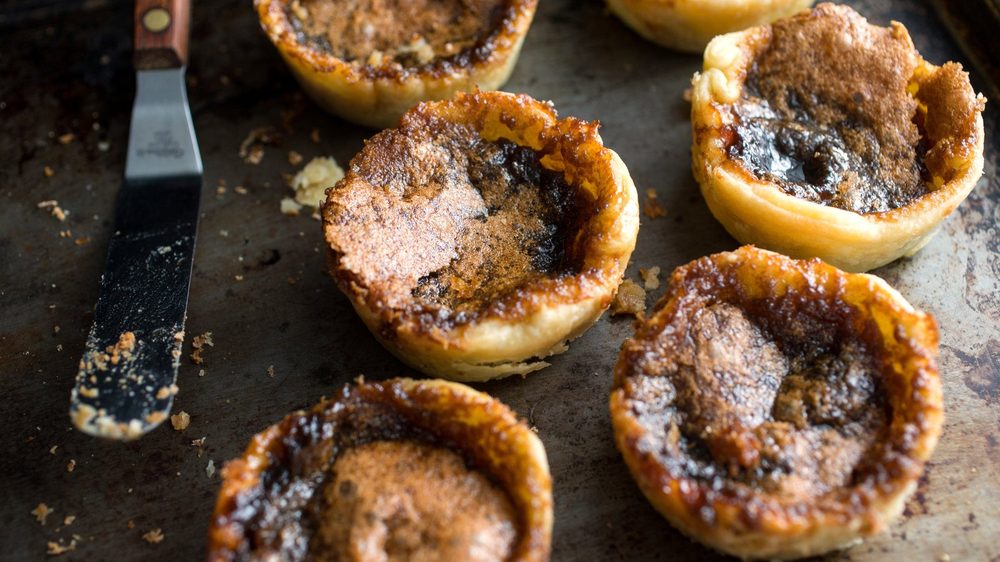
The pastry work continues at a smaller scale: little tarts, buttery and dense, easy to make in a batch and easier still to eat more than one of.
Butter Tarts
Ingredients
- 1 ½ cup/191 grams all-purpose flour, more for dusting
- Pinch of fine sea salt
- ½ cup/113 grams cold unsalted butter or lard (103 grams), cubed
- ¼ cup/60 milliliters ice water
- 1 large egg yolk
- 1 teaspoon white vinegar
- ¼ cup/36 grams raisins (optional)
- 1 cup/220 grams packed brown sugar, light or dark (see Note)
- ½ teaspoon fine sea salt
- ¼ cup/57 grams unsalted butter, softened
- 1 teaspoon vanilla extract
- 1 large egg
Method
- Make the pastry: In a large mixing bowl, combine flour and salt. Using a pastry blender or your fingertips, rub butter or lard into flour until mixture is in pea-size pieces.
- In a small bowl, mix water, egg yolk and vinegar until well combined. Add liquid to the flour mixture, using a fork to combine. Add 1 tablespoon more water if it looks dry.
- Knead dough several times by hand to bring it together and shape into a flat square. Wrap with plastic and refrigerate for at least 30 minutes.
- Once chilled, roll out the dough into a 16-inch-by-12-inch (40.5 centimeters by 30.5 centimeters) rectangle about ⅛- to ¼-inch (3 to 6 millimeters) thick. Flour the work surface and rolling pin as you work with the dough.
- Use a circular 4-inch (10 centimeter) cookie cutter (or a clean 28-ounce/496 milliliter can) to cut 12 pieces. Reroll dough if needed to cut more circles, but try to cut as many pieces on the first pass. With your fingertips, press each circle into the cup of a standard muffin tin, so that the edge of the dough is flush with the pan. Refrigerate while while you make the filling.
- In a bowl, cover raisins with hot tap water to plump. Heat oven to 425 degrees F (220 degrees C).
- Make the filling: In a bowl, mix brown sugar and salt, and then beat the butter into the sugar by hand until smooth. Add vanilla and egg and mix until combined. Do not use an electric mixer; it will add too much air to the filling.
- Drain the raisins and place seven or eight raisins in each chilled tart shell.
- Divide the filling evenly among the tart shells, filling each one about halfway. Place muffin tin on a baking sheet. Bake 13 to 15 minutes for a runnier tart and 17 to 19 minutes for a firmer one.
- A few minutes after removing the tarts from the oven, run a knife or offset spatula around the edge of each tart to loosen. Let cool completely in the tin. To remove, run a butter knife or offset spatula around and under each tart to pop it out of the tin.
Recipe by Sara Bonisteel · NYT Cooking, originally at nl.nytimes.com. Shared here privately with credit.
↑ Back to contentsAnd finally, from dessert to morning — the book closes the way any long stretch of good eating eventually should, back at the stove early, with a stack of pancakes made from the same patient starter that's been waiting in the kitchen all along.
Cast-Iron Sourdough Pancakes

Ingredients
- ½ to 1 cup sourdough starter
- 2 cups all-purpose flour
- 2 cups whole milk
- 3 eggs
- 1 teaspoon baking soda
- 1 teaspoon salt
- 1 tablespoon sugar
- 1 tablespoon butter, plus more for serving
- 3 to 4 peeled and sliced pears (you could also use sliced apples, peaches or strawberries, or whole blueberries)
- Maple syrup, for serving
Method
- Mix sourdough starter with flour and milk, then let it sit out at room temperature, covered with a cloth, overnight and up to 24 hours. Stir well, and transfer a scant cup of this mixture into a plastic container with lid or glass jar to store in the fridge, for another batch of pancakes.
- Whisk the eggs, baking soda, salt and sugar into the rest of the fermented flour and milk. The batter will loosen and take on the thick, airy liquid texture of a milkshake. If the batter seems a little too stiff, add a splash of milk.
- Preheat the oven to 450, with a cast-iron skillet inside the oven. (You can use a 4-inch pan for individual pancakes or an 8-inch pan for a larger pancake, which can be cut to share.) When the pan is hot, remove it, and swirl in 1 tablespoon butter until melted, then add a thin layer of fruit, so that you can still see some parts of the bottom of the pan. If using firm fruits like apples or pears, place the pan on medium heat on the stovetop, and let the fruit sizzle for a minute or two until it has softened on its edges, then add batter. If using softer fruits or berries, add the batter right away. Add enough batter to totally cover the fruit and make a substantial pancake about a half-inch in thickness.
- Return pan to oven for 15 minutes, or until the top of the pancake is evenly browned and the edges are crisp. Flip pancake onto a plate fruit-side up, and serve hot with another knob of butter on top and a generous glug of maple syrup. Repeat with remaining batter.
Recipe by Tejal Rao · NYT Cooking, originally at cooking.nytimes.com. Shared here privately with credit.
↑ Back to contents