The dish to eat in Gijón · Spain
Fabada asturiana
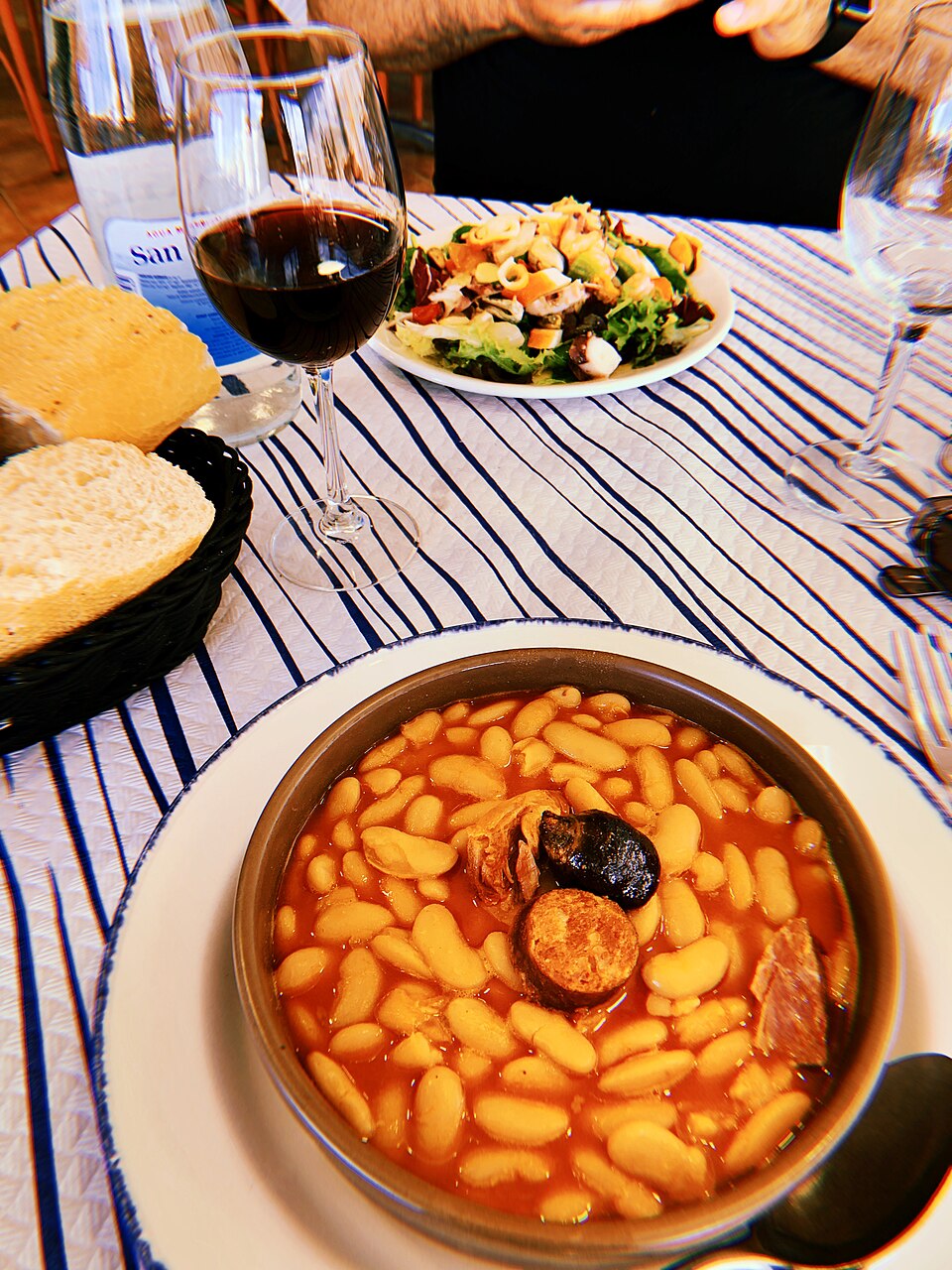
Photo: Amanda Coutinho from São Paulo, Brasil, CC BY 2.0, via Wikimedia Commons · source

Big white fabe beans slow-cooked with chorizo, morcilla blood sausage, pork belly and saffron.
Asturias's great bean stew, cooked slowly so the beans stay whole and buttery. Gijón's sidrerías serve it at lunch with plenty of cider.
Where to eat it: the best three in Gijón
Río Astur
El LlanoOrder: Fabada, then the cachopo if you're brave
A sidrería whose fabada has been named the best in the world.
Casa Segundo
CabueñesOrder: Fabada and rice pudding (arroz con leche)
A traditional country house restaurant just outside the center.
La Gitana
La ArenaOrder: Fabada at lunch
A Gijón classic for Asturian home cooking.
All three are on Chef Amazing’s list The best fabada asturiana in Gijón, which you can save and take with you.
Cook it at home: Fabada asturiana
The beans should stay whole and creamy, never broken. Never stir: shake the pot gently. Add cold water a splash at a time (asustar, to 'scare' the beans) when they boil, so the skins stay tender.
Pans and tools
- Wide heavy pot
- Skimmer
- Small pan
You’ll need
- 1 lb (450 g) dried fabes de la granja (Asturian white beans) or large white beans (judión or gigante)
- 2 Asturian chorizos (about 7 oz / 200 g total)
- 2 Asturian morcillas (smoked blood sausage, about 7 oz / 200 g total)
- 7 oz (200 g) cured pork belly (panceta) or salt pork in one piece
- 4 oz (115 g) cured ham shoulder (lacón) or serrano ham end (optional)
- 1 small onion, peeled and halved
- 2 garlic cloves
- A large pinch of saffron threads
- 1 tsp sweet pimentón
- 2 tbsp olive oil
- Salt, if needed
Steps
- The night before, soak the beans in plenty of cold water. Soak the pork belly and lacón separately in water to desalt.
- Drain the beans and put them in a wide pot with the pork belly, lacón, chorizos, morcillas, onion and garlic. Cover with cold water by about 1 inch.
- Bring slowly to a boil over medium heat. Skim off the foam. As soon as it boils, add 1/2 cup cold water to stop the boil (asustar). Repeat 2 more times as it returns to the boil.
- Lower the heat so it barely simmers. Cook uncovered 2 1/2 to 3 hours, gently shaking the pot every 15 minutes instead of stirring, and adding a splash of cold water whenever the beans peek above the liquid.
- After 1 hour, crush the saffron in a spoon with a little hot broth and add it. Warm the olive oil in a small pan, take off the heat, stir in the pimentón and pour it into the pot.
- The fabada is ready when the beans are creamy and tender and the broth is thick. Taste and add salt only if needed. Discard the onion and garlic.
- Rest 30 minutes off the heat (it's even better the next day). Slice the meats and serve them on a separate platter (the compango), with the beans in bowls, and cider.
Asturian fabes are worth seeking out (Spanish shops online); they're creamier than other beans.
Never stir with a spoon; it breaks the beans.
Leftovers thicken overnight; loosen with a little water.
Contains: None.
More in Gijón
The dish in every cityWhere to eat in GijónPicked October 2026 from what locals, food writers and the city’s own guides agree on. Places change; confirm hours before you go.
Chef Amazing · Will Travel for Food · Gijón · The dish in every city