The dish to eat in Seoul · South Korea
Pyeongyang naengmyeon
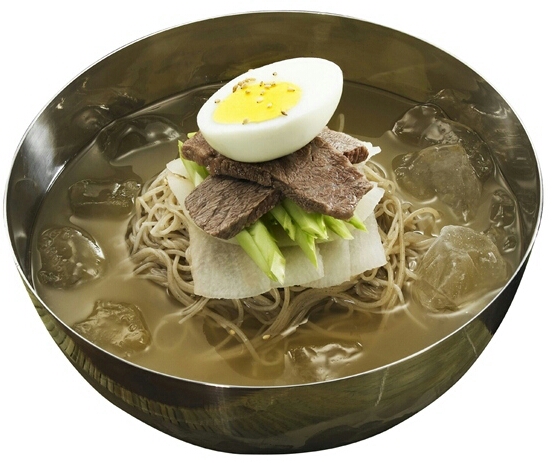
Photo: Korea.net / KOCIS, CC BY-SA 2.0, via Wikimedia Commons · source

Buckwheat noodles in an ice-cold, clear beef broth with radish kimchi, pear, beef slices and a boiled egg.
Brought south by families fleeing the North, the cold noodle soup became Seoul's most debated bowl. Its old-school restaurants have queues even in winter.
Where to eat it: the best three in Seoul
Woo Lae Oak
Euljiro, Jung-guOrder: Mul naengmyeon and bulgogi
Serving Pyeongyang noodles since 1946; Michelin-listed and still the reference.
Pildong Myeonok
Pil-dong, Jung-guOrder: Mul naengmyeon and boiled pork (jeyuk)
A stripped-down room with a pale, delicate broth that purists adore.
Eulji Myeonok
Jung-gu (moved from its original Euljiro building)Order: Mul naengmyeon with chili flakes and boiled beef
One of the city's oldest naengmyeon houses, beloved for its clean broth.
All three are on Chef Amazing’s list The best Pyeongyang naengmyeon in Seoul, which you can save and take with you.
Cook it at home: Mul naengmyeon (cold buckwheat noodle soup)
The broth is beef, simmered and chilled until icy, then mixed with the juice from radish water kimchi (dongchimi) for a clean, gently sour flavor. The noodles are rinsed in ice water so they're chewy.
Pans and tools
- Large stockpot
- Fine-mesh sieve and cloth or paper towels
- Large bowls
- Kitchen scissors
You’ll need
- For the broth: 1 1/2 lb (680 g) beef brisket or shank in one piece
- 12 cups (2.8 l) water
- 1/2 onion, 1 scallion, 6 garlic cloves, 1-inch piece ginger, 1/2 Asian pear
- 2 tbsp soup soy sauce (guk-ganjang), 1 tbsp sugar, 1 1/2 tsp salt
- 2 cups (480 ml) dongchimi liquid (radish water kimchi, from a Korean market), or 3 tbsp rice vinegar and 1 tbsp sugar instead
- For the radish pickle: 8 oz (225 g) Korean radish, thinly sliced; 2 tbsp vinegar, 1 tbsp sugar, 1/2 tsp salt
- 1 1/4 lb (560 g) dried naengmyeon noodles (buckwheat and starch)
- 2 eggs, hard-boiled and halved
- 1/2 Asian pear and 1/2 cucumber, thinly sliced
- To serve: hot mustard (gyeoja), rice vinegar
Steps
- Soak the beef in cold water 30 minutes to draw out the blood. Put it in a pot with the 12 cups water, onion, scallion, garlic, ginger and pear. Bring to a boil, skim, and simmer gently 1 1/2 hours, until the beef is tender.
- Lift out the beef and cool, then wrap and refrigerate. Strain the broth through a cloth or paper towel-lined sieve. Season with the soup soy sauce, sugar and salt. You need about 8 cups.
- Chill the broth at least 6 hours, then skim off every bit of fat from the top.
- Mix the chilled broth with the dongchimi liquid (or vinegar and sugar). Taste: savory, a little sweet and lightly tangy. Put it in the freezer 1 to 2 hours until slushy at the edges.
- Toss the sliced radish with the vinegar, sugar and salt and leave 30 minutes. Slice the chilled beef very thin.
- Cook the noodles in plenty of boiling water for 40 to 60 seconds (check the package), then drain and rinse them hard under cold running water, rubbing them between your hands to remove the starch. Finish in ice water and drain well.
- Twist the noodles into a neat mound in four large bowls. Top with beef slices, pickled radish, cucumber, pear and half an egg.
- Pour the icy broth around the noodles. At the table, add hot mustard and vinegar to taste, and cut the noodles with scissors if they're too long.
Pyeongyang-style broth should be light and clear, not sweet like some versions.
Rinse the noodles until the water runs clear; that's what makes them springy.
Dongchimi liquid is sold in pouches in Korean freezer sections, ready for naengmyeon.
Contains: Wheat, buckwheat, soy, egg, mustard.
More in Seoul
The dish in every cityWhere to eat in SeoulPicked October 2026 from what locals, food writers and the city’s own guides agree on. Places change; confirm hours before you go.
Chef Amazing · Will Travel for Food · Seoul · The dish in every city