Every week, one ingredient and 25 great things to do with it, from the food creators worth following. This week it's winter squash: butternut, kabocha, delicata, acorn, honeynut, spaghetti and the humble can of pumpkin. Soups, pasta, a few real centerpieces for Thanksgiving, sides and two bakes. Save any of them and it lands in your recipes, laid out the way we cook.
If you make one thing this week, make Alexandra's lasagna. The squash becomes the sauce, the no-boil noodles mean no big pot of water, and you can build it the day before and bake it for a crowd. It's the vegetarian main that nobody at the table treats as the vegetarian option.
Red curry paste does all the work: a few spoonfuls fried in the pot, then pumpkin, stock and coconut milk, blended silky. The crispy shallots and a torn-up roti on the side make it dinner.
From Nagi Maehashi at RecipeTin Eats · @recipe_tin
The quickest way to a soup that tastes like it took all day: the curry paste brings garlic, lemongrass, galangal and chili in one spoon.
You need
2 tbsp vegetable oil
1 brown onion, diced
2 garlic cloves, finely minced
3 tbsp Thai red curry paste (Maesri is a good one)
1.8 kg (3.6 lb) pumpkin or butternut squash, peeled, seeded and cut into 3 cm (1¼ in) chunks (about 1.3 kg / 2.6 lb once trimmed)
2½ cups (625 ml) vegetable or chicken stock, low salt
1 can (400 ml / 14 oz) full-fat coconut milk
1 tbsp fish sauce (or soy sauce)
To serve: crispy fried shallots, a sliced red chili, fresh coriander leaves, pan-fried flaky roti
How to make it
Heat the oil in a large pot over medium-high heat. Add the onion and garlic and cook, stirring, for 2 to 3 minutes until the onion turns translucent.
Add the curry paste and stir it into the oil for 1 to 2 minutes, until it darkens a shade and smells strongly of lemongrass. Don't let it catch.
Add the pumpkin, the stock and all but 3 tablespoons of the coconut milk (keep that for the top). The liquid won't quite cover the pumpkin; that's right, so the soup ends up thick.
Bring to a boil, then cover, turn down to a steady simmer and cook for 20 minutes, until a piece of pumpkin squashes easily against the side of the pot.
Take it off the heat, add the fish sauce and blend until completely smooth, with a stick blender in the pot or in batches in a blender (vent the lid and hold a towel over it).
Taste: add a little more fish sauce for salt, or a splash of water if it's thicker than you like. Ladle into bowls, swirl in the saved coconut milk and pile on crispy shallots, chili and coriander. Serve the roti on the side for dunking.
Chef's notes
Pumpkin varies a lot in sweetness; if yours tastes flat, a squeeze of lime at the end wakes it up.
It keeps 4 days in the fridge and freezes well before the garnishes go on.
Save it and it opens in Chef Amazing with a timeline, mise en place and what you already have.
Sweet, golden and thick enough to stand a spoon in, with chewy little rice balls. Korea eats it for breakfast, for the sick and for the first cold week. Hyosun's is the classic.
Kabocha (danhobak) cooks down to a naturally sweet, velvety base; ground sweet rice thickens it, and the rice-flour balls (saealsim) give it chew.
You need
1 kabocha (danhobak) or small pumpkin, about 2 lb (900 g)
½ cup sweet (glutinous) rice, soaked in water for at least 1 hour
½ tsp salt
1 to 2 tbsp brown sugar, to taste (or none)
About 6 cups water, divided
For the rice balls: ½ cup sweet rice flour (chapssal garu or mochiko), 2 tsp sugar, ¼ tsp salt, about 3 tbsp just-boiled water
Optional: ¼ cup red beans (pat), soaked and boiled until soft
To finish: 1 tbsp pine nuts, pumpkin seeds or sliced jujubes (walnuts or pecans work too)
How to make it
Microwave the whole kabocha for 3 to 4 minutes (prick it first) so the skin softens. Cut it in half, scoop out the seeds and peel it, then cut it into 2-inch chunks.
Put the squash in a pot with 4 cups of water, bring to a boil and simmer, covered, for 15 to 20 minutes, until completely soft.
While it cooks, drain the soaked rice and blend it with 1 cup of fresh water until it's as fine as you can get it. Set aside.
Make the rice balls: mix the sweet rice flour, sugar and salt, then stir in the hot water a tablespoon at a time and knead into a smooth dough like soft clay (add a few drops more water if it cracks). Roll into ½-inch (1 cm) balls.
Mash the squash in its water with a potato masher, or blend it smooth. Pour in the ground rice and bring back to a simmer over medium-low heat, stirring constantly with a wooden spoon so it doesn't stick, for about 10 minutes, until it thickens and turns glossy. Add a little water if it gets too thick.
Drop in the rice balls. When they float, cook 2 minutes more so they're cooked through. Stir in the salt and sugar to taste, and the red beans if using.
Serve hot in bowls, topped with pine nuts, seeds or jujubes.
Chef's notes
Stir the whole time once the rice goes in: it scorches fast.
It thickens as it cools; loosen leftovers with a splash of water when you reheat them.
Save it and it opens in Chef Amazing with a timeline, mise en place and what you already have.
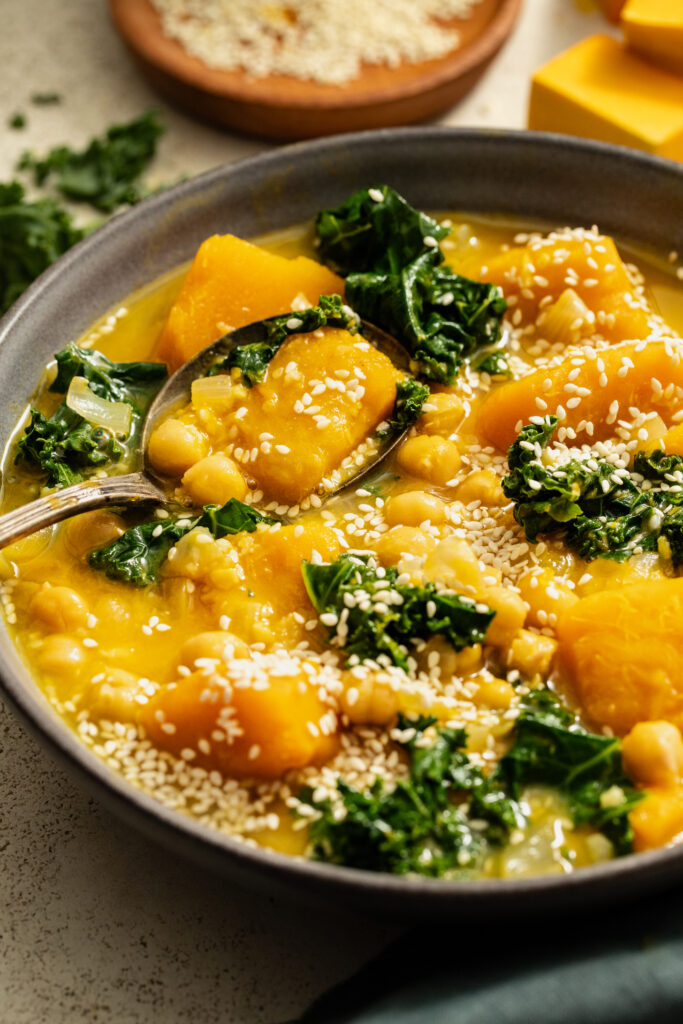
Ten ingredients, one pot, half an hour. Kabocha melts into the broth, chickpeas make it a meal, and the miso goes in at the very end so it stays bright.
A weeknight soup with real body: some kabocha breaks down and thickens the broth while the rest stays in chunks.
You need
1 to 2 tbsp olive oil
1 cup diced white or yellow onion (about ½ medium)
4 large garlic cloves, minced
4 heaping cups kabocha squash, seeded, peeled and cut into 1½-inch pieces
1 can (15 oz) chickpeas, drained (double it for a heartier soup)
2 cups vegetable broth
2 cups water
2 cups chopped kale or other hearty greens
2 tbsp chickpea miso (or white miso if gluten isn't a concern)
Sesame seeds, to serve
How to make it
Warm the oil in a large pot over medium heat. Add the onion and cook for 3 to 4 minutes, stirring, until soft and translucent. Add the garlic and cook 1 minute more.
Add the kabocha, chickpeas, broth and water. Bring to a boil, then cover and simmer for 12 to 15 minutes, until the kabocha is tender all the way through and some of the edges have started to fall apart.
Stir in the kale and cook 2 to 3 minutes, until it's bright green and wilted.
Take the pot off the heat. Put the miso in a small bowl, whisk in a ladle of hot broth until smooth, then stir it into the soup. (Boiling miso dulls its flavor, so it always goes in last, off the heat.)
Taste and add a pinch of salt if it needs it (miso brands vary a lot). Serve topped with sesame seeds.
Chef's notes
Mash a few pieces of squash against the side of the pot if you want a thicker broth.
Spinach instead of kale? Add it with the miso; it only needs a minute.
Save it and it opens in Chef Amazing with a timeline, mise en place and what you already have.
1 hour 15 minutesserves 6Butternut or Hokkaido pumpkin
VegetarianGluten-free
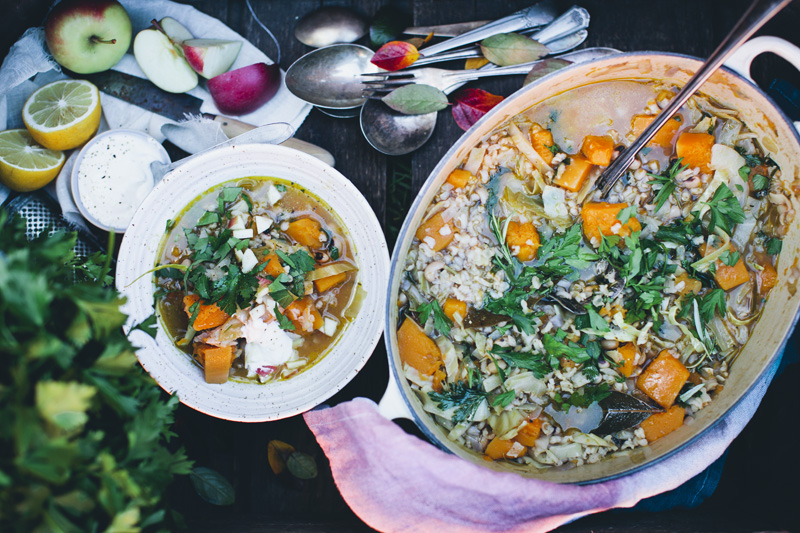
The kind of pot that feeds you for three days. Squash, cabbage, brown rice and black-eyed peas, finished with something fresh: herbs, a spoon of yogurt, raw apple.
From David Frenkiel and Luise Vindahl at Green Kitchen Stories · @gkstories
Rice and beans together make it a complete meal; the chopped apple and herbs on top keep it from feeling heavy.
You need
1 cup whole-grain (brown) rice, soaked 8 to 12 hours
1 cup dried black-eyed peas, soaked 8 to 12 hours
1 large onion, finely chopped
4 garlic cloves, finely chopped
1 tbsp coconut oil, ghee or olive oil
1 butternut squash or Hokkaido pumpkin, peeled, seeded and cubed
3 rosemary sprigs, bashed a few times with the back of a knife
1 lemon (unwaxed), zested and juiced
1 small head of cabbage, sliced, core discarded
About 6 cups (1.5 liters) water
1 tbsp vegetable bouillon powder
3 dried bay leaves
Sea salt and black pepper
To serve: plain yogurt, chopped parsley, a chopped fresh apple, grated Parmesan (all optional)
How to make it
The morning of (or the night before): put the rice and the black-eyed peas in two bowls, cover each with plenty of water and leave 8 to 12 hours. Drain and rinse both.
Heat the oil in a large, heavy pot over medium heat. Add the onion, garlic and rosemary and cook, stirring, for 2 minutes until fragrant and starting to soften.
Add the squash and the lemon zest and stir to coat everything in the oil.
Add the cabbage, the drained rice and peas, the water, bouillon and bay leaves, plus 1 teaspoon salt and some pepper. Stir and bring to a boil.
Cover, turn the heat down to low and simmer for 45 to 60 minutes, stirring now and then and adding a splash more water if it looks dry, until the rice and peas are completely tender and the squash has started to melt into the stew.
Fish out the rosemary stems and bay leaves. Stir in the lemon juice, then taste for salt and pepper.
Serve in bowls with a spoon of yogurt, a handful of parsley and chopped raw apple, and Parmesan if you like.
Chef's notes
A Parmesan rind dropped in while it simmers adds a lot (take it out before serving).
Skip the yogurt and Parmesan and it's vegan.
Save it and it opens in Chef Amazing with a timeline, mise en place and what you already have.
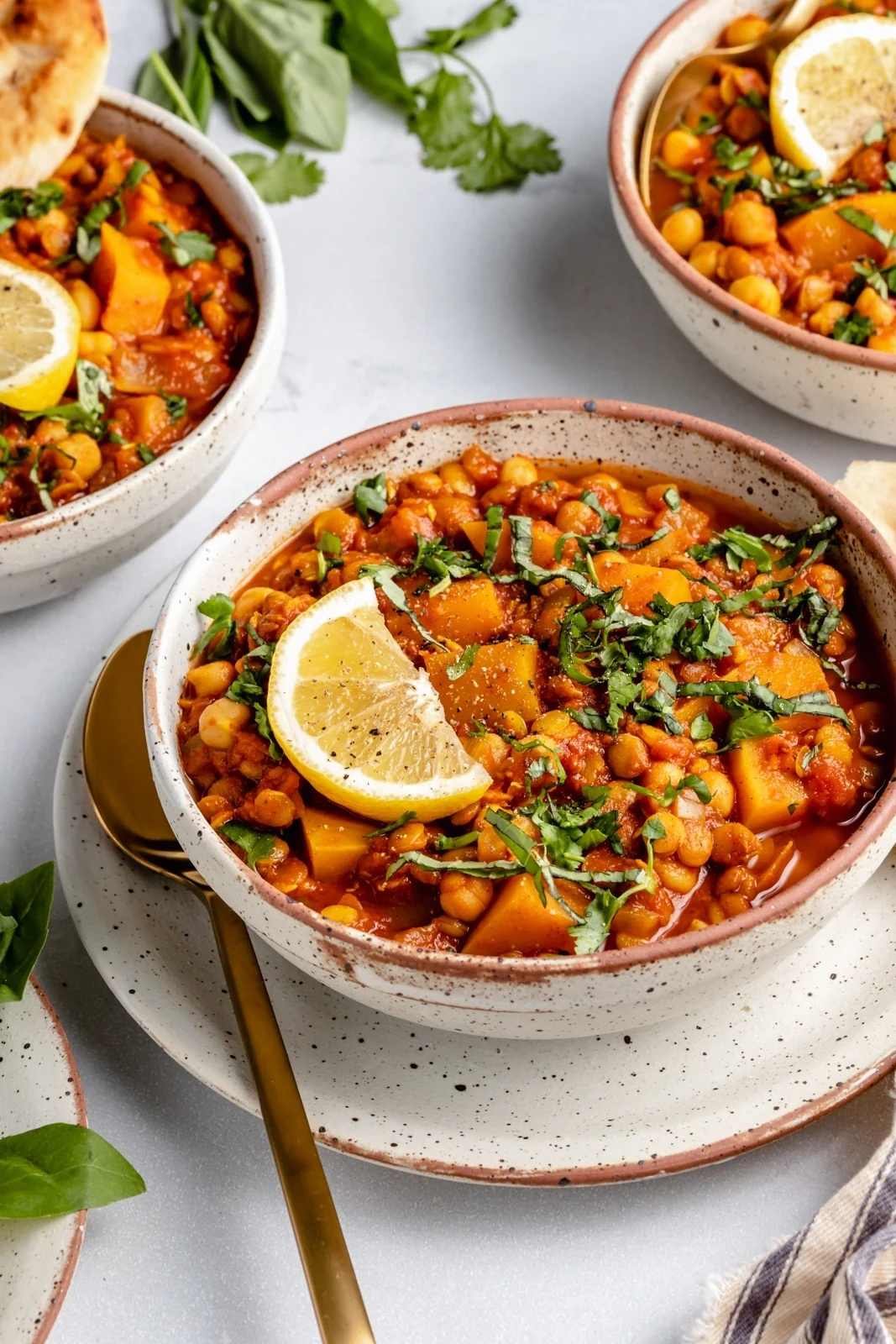
Pantry cooking at its best: a can of tomatoes, a can of chickpeas, a cup of lentils and one squash, warm-spiced and done in under an hour.
You need
1 tbsp olive or coconut oil
1 medium white or yellow onion, chopped
6 garlic cloves, minced
2 tsp ground cumin
1 tsp ground cinnamon
1 tsp ground turmeric
¼ tsp cayenne pepper
1 can (28 oz) crushed tomatoes
2½ cups low-sodium vegetable broth
1 can (15 oz) chickpeas, rinsed and drained
4 cups cubed butternut squash (from about a 2 lb squash)
1 cup green lentils, rinsed well
½ tsp salt and black pepper to taste
Juice of ½ lemon
⅓ cup chopped cilantro (a few chopped basil leaves too, if you have them)
How to make it
Heat the oil in a large pot over medium heat. Add the onion and cook 4 to 5 minutes, stirring, until soft. Add the garlic and cook 30 seconds, until fragrant.
Add the cumin, cinnamon, turmeric and cayenne and stir for 30 seconds so the spices toast in the oil.
Add the crushed tomatoes, broth, chickpeas, squash, lentils, salt and pepper. Stir well and bring to a boil.
Turn down to a simmer, cover and cook for 25 to 30 minutes, stirring now and then, until the lentils are soft and the squash is fork-tender. If it gets too thick, add broth or water a splash at a time.
Stir in the lemon juice and taste for salt. Serve in bowls topped with cilantro (and basil).
Chef's notes
Green or brown lentils keep their shape; red lentils will melt and make it more like a thick soup.
It's better the next day and freezes for 3 months.
Save it and it opens in Chef Amazing with a timeline, mise en place and what you already have.
The game-day pot of the season: three kinds of beans, warm spices and pumpkin for body.
You need
1 tbsp olive oil
1 small onion, chopped
1 garlic clove, minced
1½ lb ground beef
1 red bell pepper, diced
1 green bell pepper, diced
1 can (15 oz) kidney beans, drained and rinsed
1 can (15 oz) pinto beans, drained and rinsed
1 can (15 oz) black beans, drained and rinsed
1 can (10 oz) Rotel diced tomatoes and green chiles, with their juice
1 can (15 oz) pumpkin purée (not pumpkin pie filling)
1 can (6 oz) tomato paste
2 cups chicken broth
2 tbsp chili powder
1 tbsp ground cumin
1 tbsp dried oregano
1 tsp smoked paprika
2 tsp salt
½ tsp black pepper
2 bay leaves
How to make it
Heat the oil in a large pot or Dutch oven over medium heat. Add the onion and cook 3 to 4 minutes until soft, then the garlic for 30 seconds.
Add the ground beef, turn the heat up to medium-high and cook, breaking it up with a spoon, for 6 to 8 minutes, until browned with no pink left. Spoon off most of the fat.
Add both bell peppers and cook 3 minutes more.
Stir in the chili powder, cumin, oregano, smoked paprika, salt and pepper and cook 1 minute so the spices bloom.
Add the three kinds of beans, the Rotel with its juice, the pumpkin, tomato paste, broth and bay leaves. Stir until the tomato paste and pumpkin dissolve into the liquid.
Bring to a boil, then turn down to low and simmer, partly covered, for 30 minutes, stirring now and then, until thick and the flavors have come together.
Pull out the bay leaves, taste for salt and serve, with whatever you like on chili: cheddar, sour cream, scallions, avocado.
Chef's notes
Ground turkey works the same way; add a tablespoon more oil when browning it.
It holds for hours on low heat or in a slow cooker, so it's a good one for a crowd.
Save it and it opens in Chef Amazing with a timeline, mise en place and what you already have.
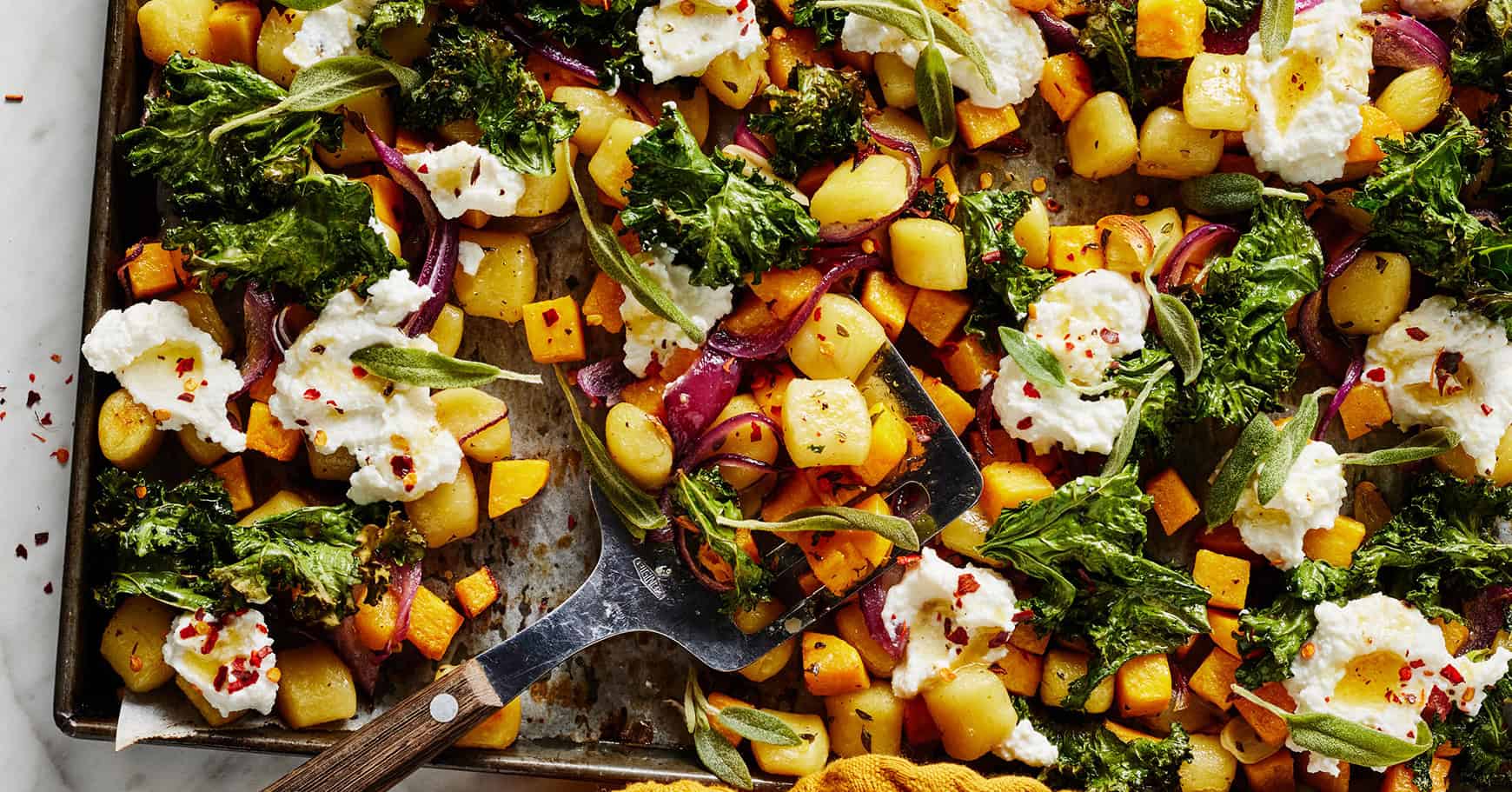
Store-bought gnocchi pan-crisped like little potatoes, roasted squash, kale and dollops of cold ricotta, all in a sharp cider-vinegar dressing. Crispy sage leaves on top.
3 curly kale leaves, stemmed and torn into bite-size pieces (3 oz)
¾ cup whole-milk ricotta
Red pepper flakes
How to make it
Heat the oven to 425°F (220°C) and line a sheet pan with parchment. Toss the squash with a drizzle of oil and a pinch of salt and pepper, spread it out and roast 20 to 25 minutes, until tender and browned at the edges.
Make the crispy sage: heat 2 tablespoons oil in a large skillet over medium heat. Add the sage leaves and fry about 1 minute, until they darken slightly and go crisp. Lift them onto a paper towel and sprinkle with salt. Keep the oil in the pan.
Whisk the dressing ingredients together in a small bowl with a pinch of salt and pepper.
Turn the skillet with the sage oil up to medium-high. Add the gnocchi in a single layer and cook, turning now and then, for 6 to 8 minutes, until golden and crisp on the outside. (Don't boil them first.) Tip them into a bowl.
Turn the heat to medium. Add a little more oil if the pan is dry, then the onion, and cook 3 minutes. Add the garlic and thyme for 1 minute, then the kale and a pinch of salt, and toss for 1 to 2 minutes until it just wilts.
Return the gnocchi to the pan with the roasted squash and pour over most of the dressing. Toss to coat.
Plate it, drop spoonfuls of ricotta on top, then crumble over the crispy sage, a pinch of red pepper flakes and the rest of the dressing.
Chef's notes
Give the gnocchi room in the pan; crowded, they steam instead of crisping. Do two batches if your skillet is small.
Save it and it opens in Chef Amazing with a timeline, mise en place and what you already have.
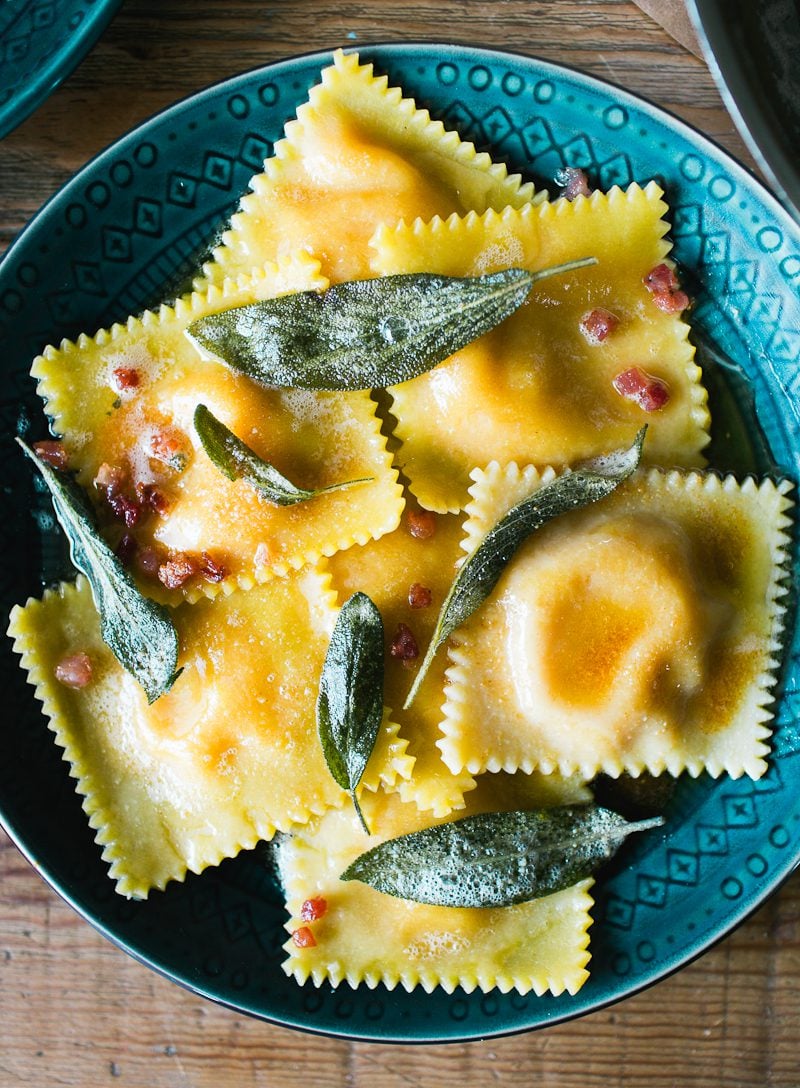
The weekend project. Fresh egg pasta, a filling of whole-roasted squash with butter and nutmeg, and a brown butter sauce with sage and crisp pancetta. Worth every minute.
Roasting the squash whole, without peeling or cutting it, concentrates it into a thick filling that won't make the pasta soggy.
You need
For the pasta: 300 g (about 2⅓ cups) tipo 00 flour, 3 large eggs, 1 large egg yolk, a drizzle of olive oil, semolina for dusting
For the filling: 1 butternut squash (about 2 lb), roasted whole; 400 g (about 1¾ cups) of its flesh, 42 g (3 tbsp) salted butter, a generous pinch of nutmeg, salt
For the sauce: 115 g (8 tbsp) salted butter, 8 fresh sage leaves, 113 g (4 oz) cubed pancetta
Parmesan, to serve
You'll need: a pasta machine (or stand-mixer roller), parchment, a sheet pan, a fluted cutter or sharp knife
How to make it
Roast the squash: heat the oven to 400°F (200°C). Prick the whole squash all over with a knife, set it on a lined sheet pan and roast 60 to 75 minutes, until a knife slides into the neck with no resistance. Let it cool, then halve it, scoop out the seeds and scrape out the flesh.
Make the dough while the squash roasts: mound the flour on a board or in a bowl, make a well, add the eggs, the yolk and a drizzle of oil. Beat with a fork, slowly pulling in flour, then knead by hand for 8 to 10 minutes until smooth and springy. Wrap and rest at room temperature for at least 30 minutes.
Make the filling: mash 400 g of the roasted squash with the 3 tablespoons butter, the nutmeg and a pinch of salt until smooth. Taste: it should be well seasoned. If it looks wet, cook it in a pan for a few minutes, stirring, to dry it out. Let it cool.
Roll the pasta: cut the dough into quarters (keep the rest wrapped). Flatten one, run it through the widest setting twice, folding it in thirds between passes, then roll it thinner one setting at a time to the second-thinnest setting, until you can almost see your hand through it.
Lay a sheet on a semolina-dusted board. Spoon 1-teaspoon mounds of filling along it, 1½ inches apart. Brush around each mound with a little water, lay a second sheet on top and press down around each mound, pushing out the air. Cut into squares with the fluted cutter and set on a semolina-dusted, parchment-lined pan. Repeat with the rest of the dough.
Make the sauce: cook the pancetta in a large skillet over medium heat for 5 to 6 minutes until crisp; lift it out. Add the 8 tablespoons butter and cook, swirling, until it foams and smells nutty and the flecks at the bottom turn brown, 3 to 4 minutes. Add the sage leaves for 30 seconds, until crisp. Turn off the heat.
Cook the ravioli in a big pot of well-salted, gently boiling water for 3 to 4 minutes, until they float and the edges are tender. Lift them straight into the brown butter with a slotted spoon, add a splash of pasta water and the pancetta, and swirl gently. Serve with Parmesan.
Chef's notes
Make them ahead: freeze the raw ravioli on the tray, then bag them. Cook from frozen, adding 1 to 2 minutes.
Leave out the pancetta for a vegetarian version.
Save it and it opens in Chef Amazing with a timeline, mise en place and what you already have.
The squash is simmered with sage and blended into the sauce, so there's no béchamel and no boiling noodles. Layers of oyster mushrooms, chard, Parmesan and mozzarella. Build it the day before.
From Alexandra Stafford at Alexandra's Kitchen · @alexandracooks
A squash sauce instead of béchamel keeps it light and lets the mushrooms and greens taste like themselves.
You need
For the sauce: ¼ cup olive oil, 1 tbsp finely chopped fresh sage, 1 onion, diced, 1.25 lb peeled butternut squash pieces (about 4 cups), 2 cups water, 1 tsp kosher salt, black pepper
For the lasagna: ¼ cup olive oil, divided
1 lb oyster mushrooms, roughly chopped
1 lb Swiss chard, leaves stripped from the stems (8 to 9 oz leaves), roughly chopped
Kosher salt
12 sheets no-boil lasagna noodles
4 oz Parmigiano Reggiano, grated (about 1 cup)
8 oz low-moisture whole-milk mozzarella, pulled into small pieces
How to make it
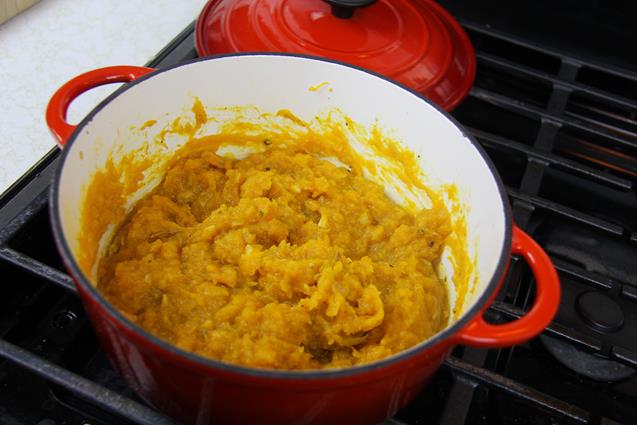
Make the sauce: heat ¼ cup oil in a 5- to 6-quart heavy pot over medium-high heat. Add the sage and stir for 15 seconds, until fragrant. Add the squash, onion, 2 cups water, 1 teaspoon salt and some pepper. If the squash isn't covered, add water until it just is. Simmer, uncovered, stirring now and then, for 15 to 20 minutes, until the squash is very soft and the water has reduced a lot.
Blend it smooth in a food processor or blender (or with a stick blender in the pot). Taste and add salt if needed. You should have about 1 quart.
Heat the oven to 375°F (190°C). Heat 2 tablespoons oil in a large skillet over high heat. When it shimmers, add the mushrooms and leave them alone for 2 minutes, then salt and stir and cook 2 minutes more, until browned at the edges. Tip into a bowl.
Put the skillet back over high heat with the last 2 tablespoons oil. Add the chard leaves, leave them for 1 minute, season with salt, then turn them with tongs for 1 to 2 minutes more until collapsed. Tip into a bowl.
Assemble in a 9x13-inch baking dish: spread ½ cup sauce on the bottom, then 3 noodles. Spread a scant ½ cup sauce over the noodles, then a third of the mushrooms and a third of the chard, ¼ cup Parmesan and ¼ cup mozzarella. Repeat twice, ending with greens, cheese and a scant ½ cup sauce.
For the top layer, pour just-boiled water into a shallow dish and soak the last 3 noodles for 2 to 3 minutes, moving them so they don't stick (the top layer gets less sauce, so this softens it). Lay them on top and spread over the remaining sauce (about ½ cup) and the rest of the cheese.
Cover with foil. Refrigerate for up to 24 hours, or bake right away for 40 minutes. Uncover and bake 10 to 20 minutes more, until bubbling and golden. Rest 10 minutes before cutting.
Chef's notes
Straight from the fridge, add 10 minutes to the covered bake.
No oyster mushrooms? Cremini work; slice them and give them a few minutes longer in the pan.
Save it and it opens in Chef Amazing with a timeline, mise en place and what you already have.
Cooked like a risotto but with orzo, so it's done in one pot without the stirring. Roasted squash folded in at the end, with kale, a little cream and Parmesan.
The starch from the orzo makes its own sauce, so half a cup of cream goes a long way. A full dinner for about the price of a takeout coffee.
You need
1 butternut squash (about 2 lb), peeled, seeded and cut into small dice (a heaping 4 cups)
1 tbsp vegetable oil
1 tsp salt, divided
1 tsp freshly cracked black pepper, divided
½ onion, finely diced (1 cup)
2 garlic cloves, minced
1½ cups dry orzo
3 cups vegetable broth
⅛ tsp ground cinnamon
1 small bunch kale, stripped and chopped (about 2 cups packed)
½ cup heavy cream
½ cup grated Parmesan
How to make it
Heat the oven to 400°F (200°C). Toss the squash on a sheet pan with half the oil, ½ teaspoon salt and ½ teaspoon pepper. Roast 25 to 30 minutes, stirring once, until tender and caramelized at the edges.
About 10 minutes before the squash is done, heat the rest of the oil in a large deep skillet or pot over medium heat. Add the onion and garlic and cook 3 to 4 minutes, until soft.
Add the dry orzo and stir for 2 minutes so it toasts lightly in the oil.
Add the broth, cinnamon and the rest of the salt and pepper. Bring to a boil, then turn down to a simmer and cook, stirring every minute or two, for 10 to 12 minutes, until the orzo is tender and most of the broth is absorbed.
Stir in the kale and cook 1 to 2 minutes until wilted.
Take it off the heat and stir in the cream, the Parmesan and the roasted squash. Taste for salt and pepper and serve right away (it thickens as it sits; loosen with a splash of broth).
Chef's notes
Mash a few cubes of the squash as you stir it in and the whole pot turns creamier and more orange.
Save it and it opens in Chef Amazing with a timeline, mise en place and what you already have.
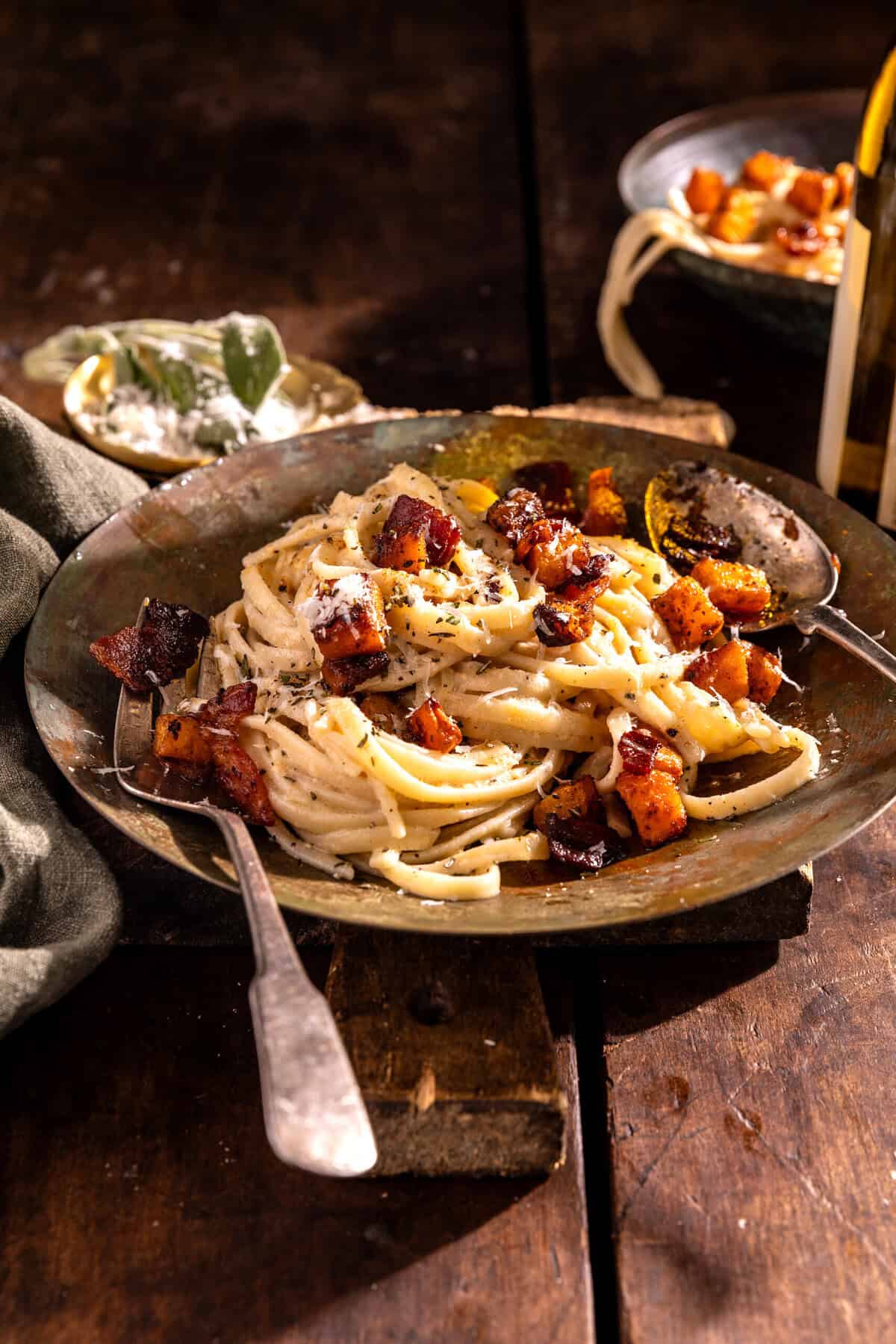
Spiced roasted squash blended into a cream-cheese alfredo with Parmesan and gouda, over linguine, with maple-and-rosemary candied bacon crumbled on top. Rich, and meant to be.
The squash and the bacon roast on the same pan while the pasta boils, so it's a Tuesday dinner that tastes like a weekend.
You need
3 cups cubed butternut squash
1 tsp smoked paprika
1 tsp chili powder
⅛ tsp cinnamon
6 to 8 slices bacon, chopped
2 tbsp chopped fresh rosemary
½ tsp cayenne pepper, or to taste
2 tsp maple syrup
Sea salt and black pepper
1 lb pasta (linguine is good)
1 stick (8 tbsp) salted butter
1 tbsp chopped fresh sage
6 oz cream cheese, at room temperature
1 to 2 cups heavy cream or whole milk (or half and half of each), as needed
¾ cup grated Parmesan
½ cup grated gouda
How to make it
Heat the oven to 425°F (220°C). On one side of a sheet pan, toss the squash with a drizzle of olive oil, the smoked paprika, chili powder, cinnamon and a pinch of salt and pepper. On the other side, toss the bacon with the rosemary, cayenne and maple syrup.
Roast 20 to 25 minutes, stirring once, until the squash is soft and the bacon is crisp and glazed. Lift the bacon onto a plate.
Meanwhile, bring a large pot of salted water to a boil and cook the pasta until al dente. Save 1 cup of the pasta water, then drain.
Blend about half the roasted squash with 1 cup of the cream until smooth.
In the empty pasta pot, melt the butter over medium heat with the sage until it foams, 1 to 2 minutes. Add the cream cheese and whisk until melted, then the blended squash. Whisk in the Parmesan and gouda until smooth, adding more cream or milk until it's a pourable sauce. Season with salt and pepper.
Add the pasta and the rest of the squash and toss, loosening with pasta water as needed so it coats every strand. Serve topped with the candied bacon, broken into pieces.
Chef's notes
The sauce tightens quickly off the heat; keep a little pasta water by the stove for the table.
Save it and it opens in Chef Amazing with a timeline, mise en place and what you already have.
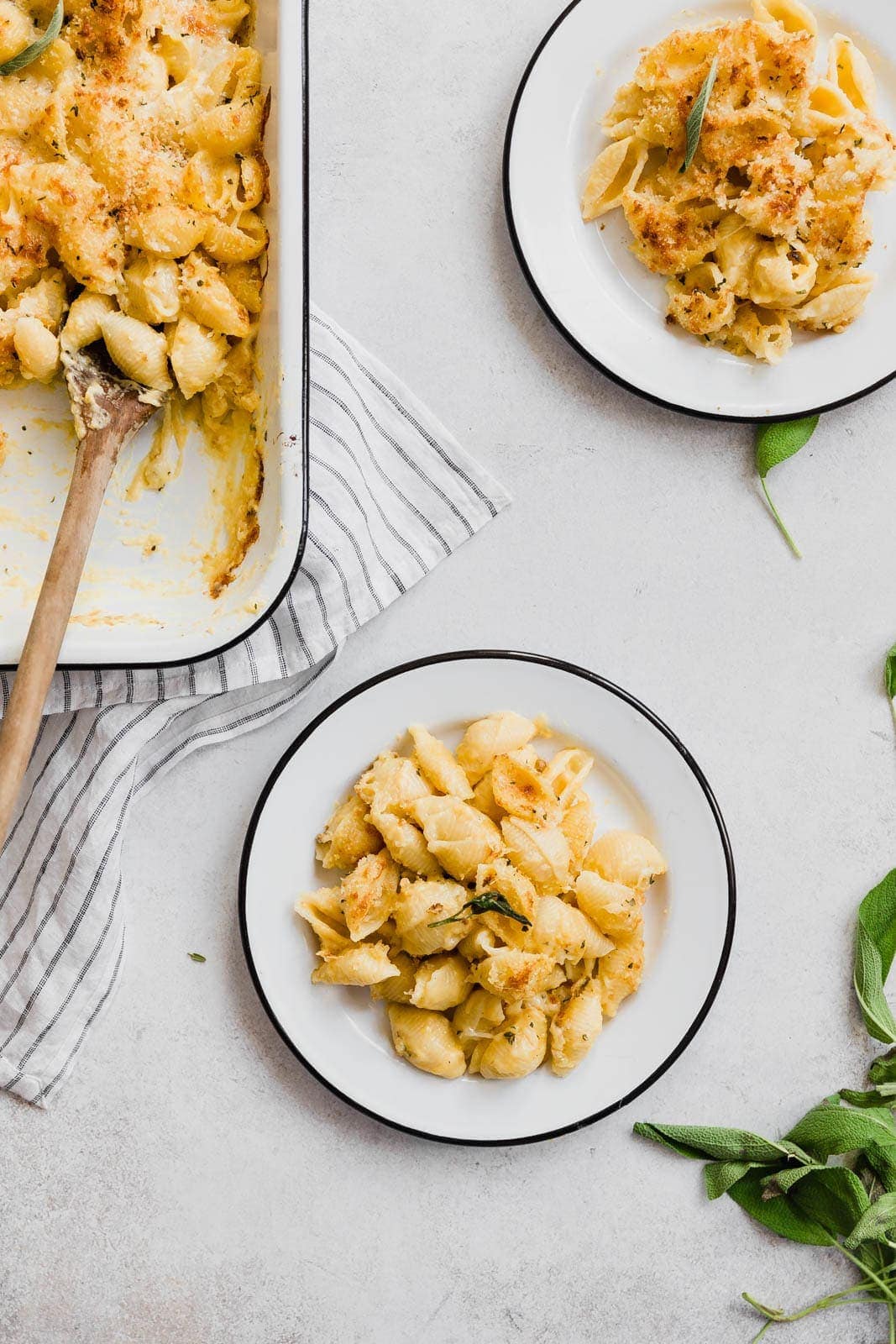
Roasted squash with sage and thyme, blended into the cheese sauce with mascarpone, Gruyère and mozzarella, under a herby breadcrumb crust. A Thanksgiving side that eats like a main.
Squash in the sauce means you get all the creaminess with less butter and a deep orange color.
You need
4 cups cubed butternut squash
1 tbsp fresh sage, minced
1 tbsp fresh thyme, minced
2 tbsp olive oil
Salt and pepper
1 cup chicken or vegetable broth
1 lb macaroni shells
2 tbsp butter
2 tbsp flour
2 cups milk
¼ tsp salt and ¼ tsp black pepper
4 oz mascarpone
6 oz Gruyère, shredded
4 oz mozzarella, shredded
For the topping: 1 cup breadcrumbs, 1 tsp thyme and 1 tsp sage, minced
How to make it
Heat the oven to 400°F (200°C). Toss the squash with the sage, thyme, olive oil, salt and pepper on a sheet pan and roast 25 to 30 minutes, until soft. Turn the oven down to 375°F (190°C).
Blend the roasted squash with the broth until completely smooth.
Cook the shells in well-salted boiling water for 2 minutes less than the package says. Drain.
In a large pot, melt the butter over medium heat. Whisk in the flour and cook, whisking, for 1 minute. Slowly whisk in the milk and cook, whisking, for 4 to 5 minutes until it thickens enough to coat a spoon. Add the salt and pepper.
Take it off the heat. Whisk in the squash purée, the mascarpone, the Gruyère and the mozzarella until melted and smooth. Fold in the pasta.
Spread it in a buttered 9x13-inch dish. Mix the breadcrumbs with the thyme, sage and a drizzle of oil and scatter over the top.
Bake for 20 minutes, until bubbling at the edges and golden on top. Rest 5 minutes before serving.
Chef's notes
For Thanksgiving: assemble it the day before without the crumbs, refrigerate, add crumbs and bake 30 to 35 minutes.
Save it and it opens in Chef Amazing with a timeline, mise en place and what you already have.
How Chris's mum cooked pumpkin in Trinidad: stewed with onion, garlic and a little brown sugar, with flaked salt cod through it. Serve it with roti or rice.
From Chris De La Rosa at Caribbean Pot · @caribbeanpot
Sweet squash and salty cod is an island classic; honeynut cooks down quickly and goes almost jammy.
You need
3 honeynut squash (or 1 medium butternut), peeled, seeded and cubed
¾ cup salted cod (saltfish)
½ onion, diced
2 garlic cloves, diced
1 tbsp olive oil
1 tbsp brown sugar
½ tsp Caribbean green seasoning (a blend of herbs, scallion and garlic)
¼ tsp salt (taste first; the fish is salty)
Optional: a slice of scotch bonnet pepper
How to make it
Get the salt out of the fish: soak the saltfish in cold water for a few hours or overnight, changing the water once or twice. (In a hurry: boil it in fresh water for 15 minutes, drain, and boil again.) Drain, cool, then flake it, removing any skin and bones.
Heat the oil in a deep pan over medium heat. Add the onion and garlic and cook 2 to 3 minutes, until soft.
Add the flaked saltfish and cook 2 minutes, stirring.
Sprinkle in the brown sugar and let it melt and darken a little, about 1 minute; this is what gives the stew its color.
Add the squash, the green seasoning (and the scotch bonnet, if using) and ¼ cup water. Stir, cover and cook on medium-low for 15 to 20 minutes, stirring now and then, until the squash is completely tender.
Mash some of the squash with the back of the spoon so it turns into a thick, chunky stew. Taste, then add the salt only if it needs it. Serve hot with roti, rice or bread.
Chef's notes
Most of the saltiness comes from the cod, so always taste before adding salt.
Leave out the fish and it's a lovely sweet side for a roast.
Save it and it opens in Chef Amazing with a timeline, mise en place and what you already have.
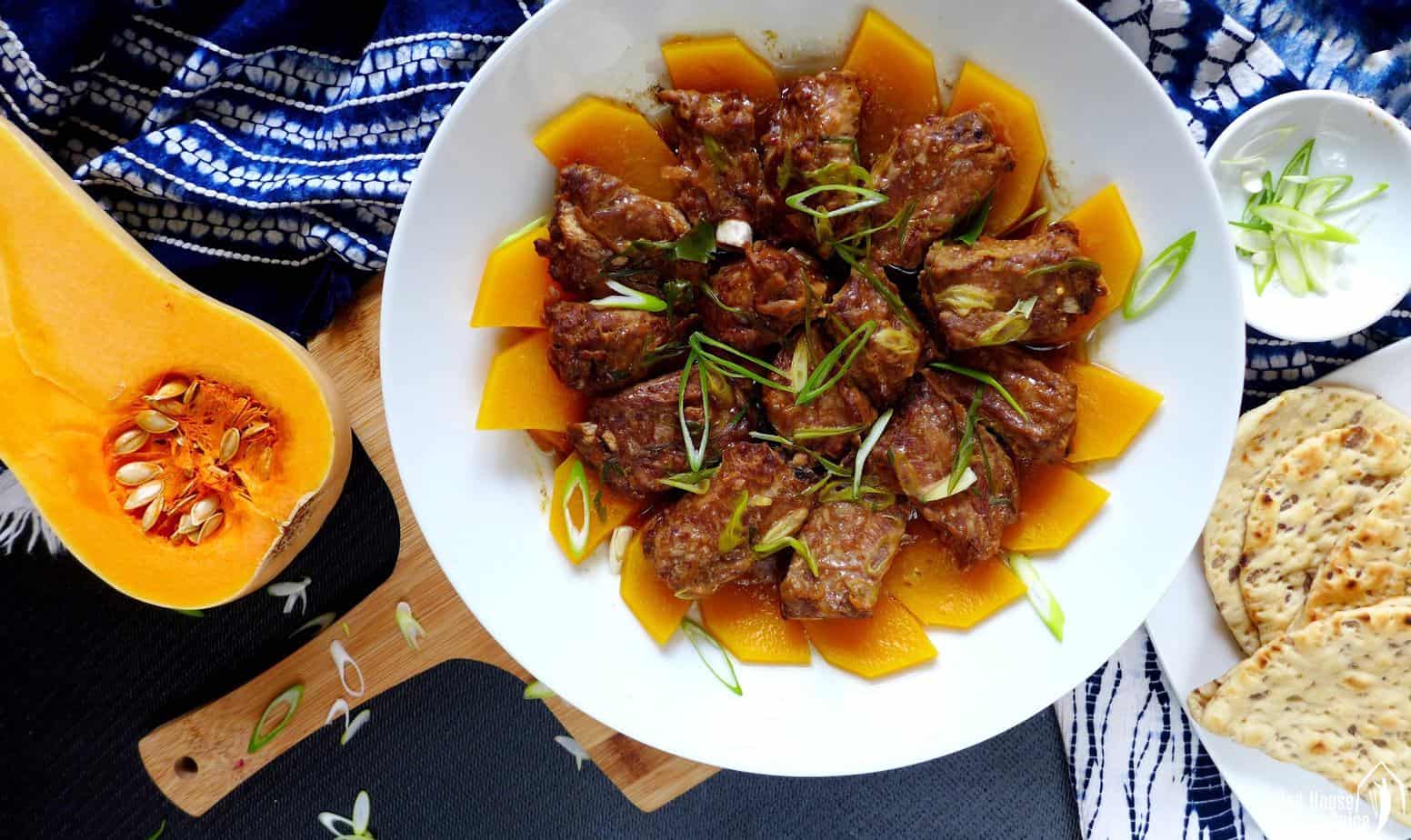
Ribs marinated in fermented bean curd and soy, piled on squash and steamed until the squash soaks up all the juices. A Chinese family dish that cooks itself.
Steaming keeps the ribs juicy, and every drop of seasoned juice runs down into the squash underneath.
You need
400 g (14 oz) pork ribs, cut into 1½-inch pieces (ask the butcher)
½ butternut squash (about 400 g / 14 oz), peeled and cut into ½-inch slices
2 tsp light soy sauce
2 tsp dark soy sauce
1 tsp Shaoxing rice wine
2 tsp cornstarch
1 pinch ground Sichuan pepper (or black pepper)
1 tbsp ginger, cut into thin strips
5 cubes white fermented bean curd (fu ru), mashed
½ tsp sesame oil
1 scallion, finely chopped
How to make it
Rinse the ribs and soak them in cold water for 10 minutes to draw out the blood, then drain and pat dry.
Marinate: in a bowl, mix the ribs with the mashed fermented bean curd, light and dark soy, Shaoxing wine, Sichuan pepper and ginger. Add the cornstarch and mix until every piece is coated. Leave 30 minutes.
Line a heatproof dish (one that fits in your steamer or wok) with the squash slices, overlapping them. Lay the ribs on top in one layer and pour over any marinade left in the bowl.
Steam over boiling water on high heat, covered, for 40 to 50 minutes, until the meat pulls easily from the bone and the squash is completely soft. Check the water halfway and top up with boiling water if it's low.
Drizzle with sesame oil, scatter over the scallion and serve hot with rice, straight from the dish.
Chef's notes
No steamer? Set the dish on a rack or upturned bowl in a big pot with 2 inches of water and cover tightly.
Look for fermented bean curd in jars at Asian groceries; it gives a savory, cheesy depth. Soy sauce for gluten-free cooks: use tamari.
Save it and it opens in Chef Amazing with a timeline, mise en place and what you already have.
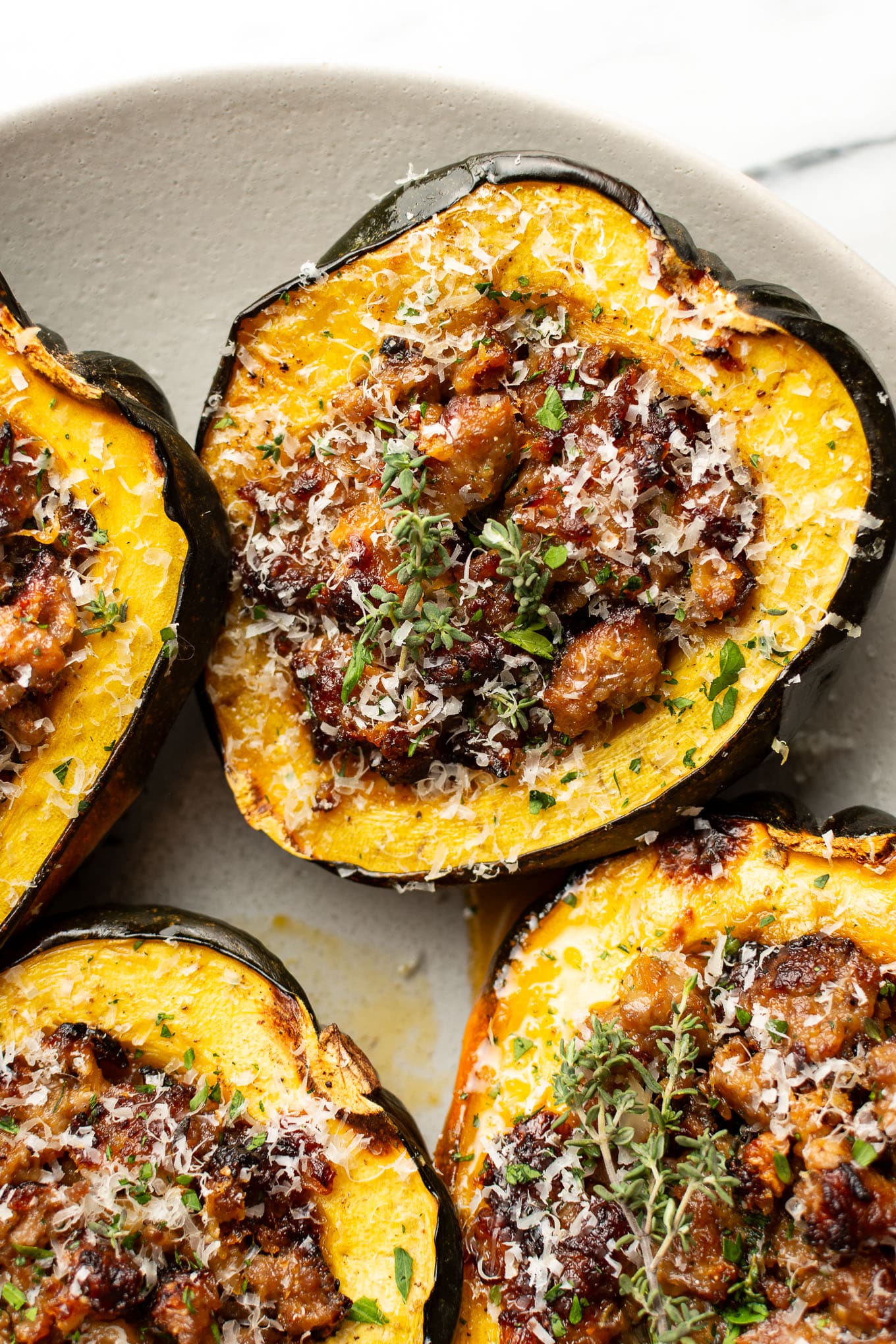
Acorn squash halves roasted with a pat of butter in each, filled with Italian sausage, onion and a lot of Parmesan, then back in the oven until the top goes golden. Its own bowl.
Five ingredients that matter and very little hands-on time; the butter melts into the squash while it roasts so every bite is seasoned.
You need
2 acorn squash
Salt and pepper
4 tbsp butter, cut into 4 pats
16 oz Italian sausage, casings removed
½ medium onion, chopped
2 to 3 garlic cloves, minced
½ tbsp Worcestershire sauce
2 sprigs fresh thyme, leaves stripped
1½ cups freshly grated Parmesan, divided
How to make it
Heat the oven to 400°F (200°C). Cut each squash in half from stem to tip (microwave them for 3 minutes first if they're very hard) and scoop out the seeds. Trim a sliver off the round side of each half so it sits flat.
Set the halves cut side up on a sheet pan, season with salt and pepper and put a pat of butter in each hollow. Roast 40 to 45 minutes, until the flesh is soft when pierced with a fork.
Meanwhile, brown the sausage in a skillet over medium-high heat, breaking it up, for 6 to 8 minutes until cooked through. Add the onion and cook 4 to 5 minutes until soft, then the garlic for 30 seconds.
Stir in the Worcestershire and thyme, take it off the heat and mix in 1 cup of the Parmesan.
Pile the filling into the roasted squash halves (stir the melted butter from each hollow into the filling first). Top with the rest of the Parmesan.
Bake 10 to 15 minutes more, until the cheese has melted and turned golden. Serve one half per person.
Chef's notes
Use mild or hot sausage, or chicken sausage. A spoon of the roasted squash flesh mixed into the filling makes it creamier.
Save it and it opens in Chef Amazing with a timeline, mise en place and what you already have.
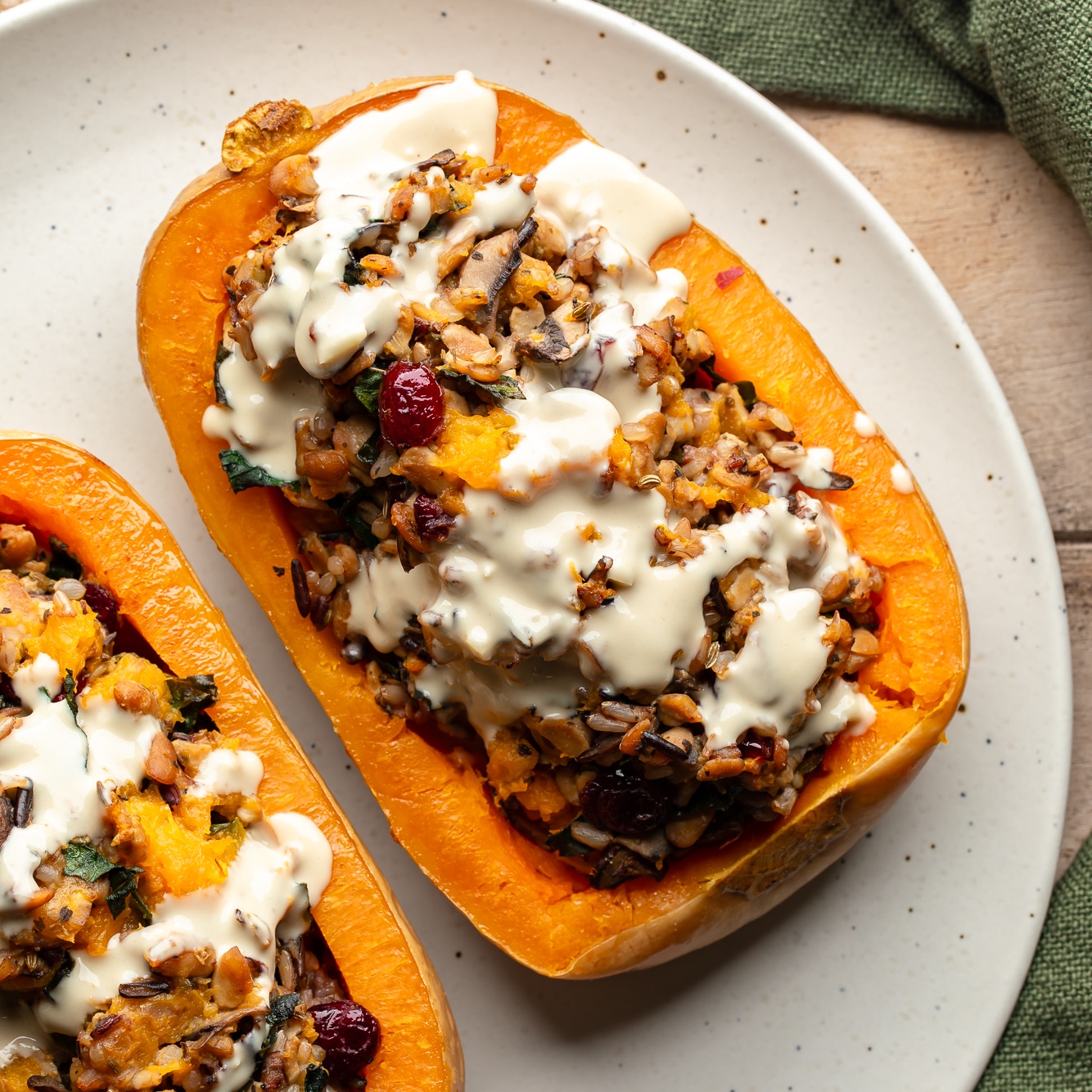
The Thanksgiving centerpiece for the people who don't eat turkey. Roasted butternut halves heaped with wild rice, savory crumbled tempeh, mushrooms, kale and cranberries, with a lemony tahini sauce.
Tempeh cooked with fennel, oregano, chili and soy tastes like sausage stuffing; it makes the dish hearty enough to be the main.
You need
3 medium butternut squash (2 to 2.5 lb each)
2 tbsp olive oil, plus salt and black pepper
¾ cup wild rice and 1½ cups water
16 oz tempeh
2 tbsp olive oil
4 garlic cloves, minced
1 tbsp fennel seeds
2 tsp dried basil
2 tsp dried oregano
1 tsp red chili flakes
⅓ cup low-sodium soy sauce
8 oz sliced mushrooms
4 cups loosely packed chopped kale
½ cup dried cranberries
For the tahini sauce: ½ cup tahini, ¼ cup water (more as needed), ¼ cup fresh lemon juice, 2 tbsp maple syrup (optional), 2 garlic cloves, minced, ⅛ tsp ground cumin, ½ tsp salt
How to make it
Heat the oven to 400°F (200°C). Halve each squash lengthwise and scoop out the seeds. Brush the cut sides with the 2 tablespoons oil, season with salt and pepper and roast cut side down on lined sheet pans for 45 to 60 minutes, until a knife slides easily into the neck.
Meanwhile, rinse the wild rice and simmer it in the 1½ cups water, covered, for 40 to 45 minutes, until the grains split open and are chewy-tender. Drain off any extra water.
Crumble the tempeh into small pieces. Heat 2 tablespoons oil in a large skillet over medium heat, add the tempeh and cook 6 to 8 minutes, stirring, until golden. Add the garlic, fennel seeds, basil, oregano and chili flakes and cook 1 minute, then pour in the soy sauce and stir until absorbed.
Add the mushrooms and cook 5 minutes until soft, then the kale until wilted, 2 minutes. Stir in the cooked wild rice and the cranberries.
When the squash is done, turn the halves over. Scoop out some of the flesh from each to make a wide hollow, leaving a ½-inch wall, chop it and stir it into the filling. Pile the filling into the halves.
Bake 10 to 15 minutes more, until hot through. Meanwhile whisk all the tahini sauce ingredients together, adding water until it pours.
Drizzle the squash with tahini sauce and serve; each half feeds one hungry person or two at a big dinner.
Chef's notes
Make the filling a day ahead, then roast the squash and stuff it on the day.
Gluten-free: use tamari instead of soy sauce.
Save it and it opens in Chef Amazing with a timeline, mise en place and what you already have.
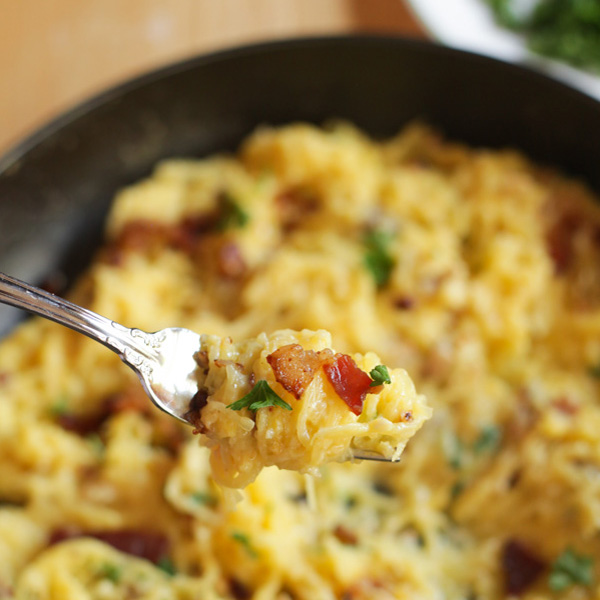
Carbonara with roasted squash strands instead of pasta: bacon, eggs and a full cup of Parmigiano, tossed off the heat so it turns silky, not scrambled.
Spaghetti squash is mild and needs a big sauce; carbonara is exactly that, and it's gluten-free this way.
You need
2 lb spaghetti squash, halved lengthwise and seeded
1 tsp salt, plus more to taste
½ tbsp butter
Freshly ground black pepper
½ lb bacon, cut into small strips
1 tbsp minced shallot
2 tsp minced garlic
¼ cup white wine or chicken broth
2 egg yolks and 1 whole egg
1 cup freshly grated Parmigiano-Reggiano
2 tbsp chopped parsley
How to make it
Heat the oven to 400°F (200°C). Rub the cut sides of the squash with the butter, 1 teaspoon salt and pepper. Roast cut side down on a lined sheet pan for 30 to 40 minutes, until a fork pulls the flesh into strands easily.
While it roasts, whisk the egg yolks, the whole egg and the Parmigiano in a bowl with plenty of black pepper.
Cook the bacon in a large skillet over medium heat for 6 to 8 minutes, until crisp. Leave about 1 tablespoon of fat in the pan.
Add the shallot and garlic and cook 1 minute. Pour in the wine and let it bubble for 1 to 2 minutes until mostly gone.
Scrape the squash strands out of the skins with a fork, straight into the skillet, and toss over medium heat for 1 to 2 minutes to warm through and pick up the bacon fat.
Take the pan off the heat and wait 30 seconds. Pour in the egg mixture and toss quickly and constantly for a minute; the heat of the squash cooks the eggs into a creamy sauce. If it looks runny, set it back over the lowest heat for a few seconds while tossing.
Taste for salt, scatter with parsley and more pepper and Parmigiano, and serve right away.
Chef's notes
Squash holds water; let the strands steam dry in the open skins for 5 minutes before they go in the pan, or the sauce turns thin.
Save it and it opens in Chef Amazing with a timeline, mise en place and what you already have.
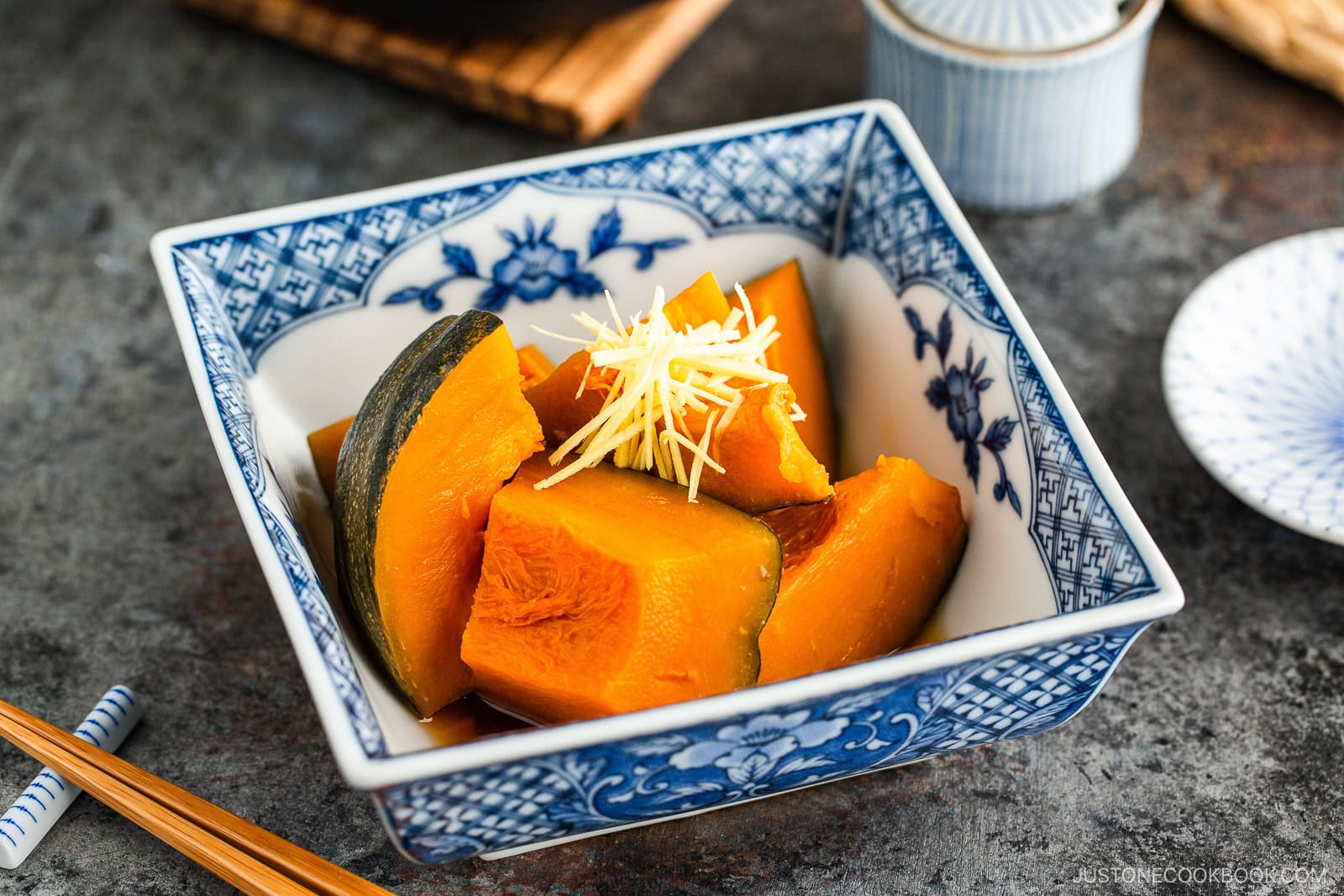
Kabocha simmered in dashi with sake, sugar and soy until it's sweet, savory and so tender it nearly melts. Served warm or at room temperature, in every bento in Japan.
The simplest way to taste how good kabocha is: no oil, a short ingredient list, and the skin left on so it holds its shape.
You need
1 lb kabocha squash (about ½ small one)
1¾ cups water
½ cup katsuobushi (dried bonito flakes)
2 tbsp sake
1 tbsp sugar
2 tsp soy sauce
⅛ tsp Diamond Crystal kosher salt (half that of table salt)
Fresh ginger, julienned from a 1-inch knob, to garnish
How to make it
Make a quick dashi: bring the water to a boil, turn off the heat, add the katsuobushi and leave 2 minutes. Strain through a fine sieve, pressing gently. You need about 1½ cups.
Scoop the seeds out of the kabocha and cut it into 1½- to 2-inch pieces. Peel off a few patches of skin from each piece (it helps the flavor in and looks pretty), and shave the sharp edges off each piece with a knife so they don't break up while simmering.
Lay the pieces in a single layer in a wide pot, skin side down. Pour over the dashi, then add the sake and sugar.
Cover with a drop lid (a circle of parchment or foil with a hole in the middle, laid right on the squash) and bring to a boil, then lower to a gentle simmer for 10 minutes.
Add the soy sauce and salt, replace the drop lid and simmer 5 to 10 minutes more, until a skewer goes through a piece easily. Don't stir; shake the pot gently if needed.
Turn off the heat and leave the kabocha to cool in the liquid for at least 15 minutes; it soaks up flavor as it cools. Serve warm or at room temperature with a little of the broth, topped with ginger.
Chef's notes
Vegetarian? Use kombu dashi instead of katsuobushi.
It keeps 3 to 4 days in the fridge, in its liquid, and is good cold.
Save it and it opens in Chef Amazing with a timeline, mise en place and what you already have.
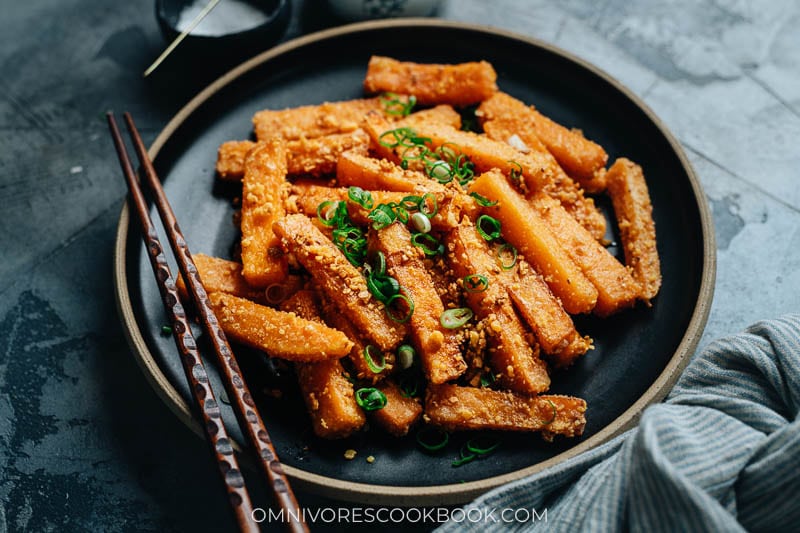
Pumpkin sticks fried crisp, then tossed in salted duck egg yolk foamed in butter-yellow oil with garlic. Sweet, salty, sandy-crunchy. The bar snack you'll keep making.
Salted egg yolk is the restaurant trick: cooked and mashed, then fried until foamy, it clings to anything crisp as a golden, savory coating.
You need
1 lb peeled pumpkin or winter squash (butternut works), cut into 2 x ½-inch (5 x 1 cm) sticks
½ tsp salt
¼ cup cornstarch
1 cup canola or vegetable oil, for frying
1 garlic clove, minced
2 salted duck egg yolks, cooked (steam the yolks 8 to 10 minutes) and mashed fine with a fork
1 tsp Shaoxing wine
½ tsp sugar
How to make it
Toss the pumpkin sticks with the salt and leave 10 minutes. Pat dry, then toss with the cornstarch until each one is evenly coated; shake off the extra.
Heat the oil in a small, deep pan or wok to 350°F (175°C), or until a stick sizzles steadily the moment it goes in.
Fry the pumpkin in 2 or 3 batches for 3 to 4 minutes each, turning, until golden and crisp. Drain on a rack or paper towel.
Pour out all but 1 tablespoon of the oil. Over low heat, add the garlic and stir for 15 seconds, then add the mashed egg yolks.
Stir constantly over low heat for 1 to 2 minutes, until the yolk turns foamy and smells rich and buttery. Add the Shaoxing wine and sugar.
Add the fried pumpkin, turn off the heat and toss quickly until every stick is coated. Serve right away while it's crisp.
Chef's notes
Salted duck eggs come raw or cooked in Asian groceries; if raw, separate the yolks and steam them.
Keep the heat low for the yolk; too hot and it goes grainy and bitter.
Save it and it opens in Chef Amazing with a timeline, mise en place and what you already have.
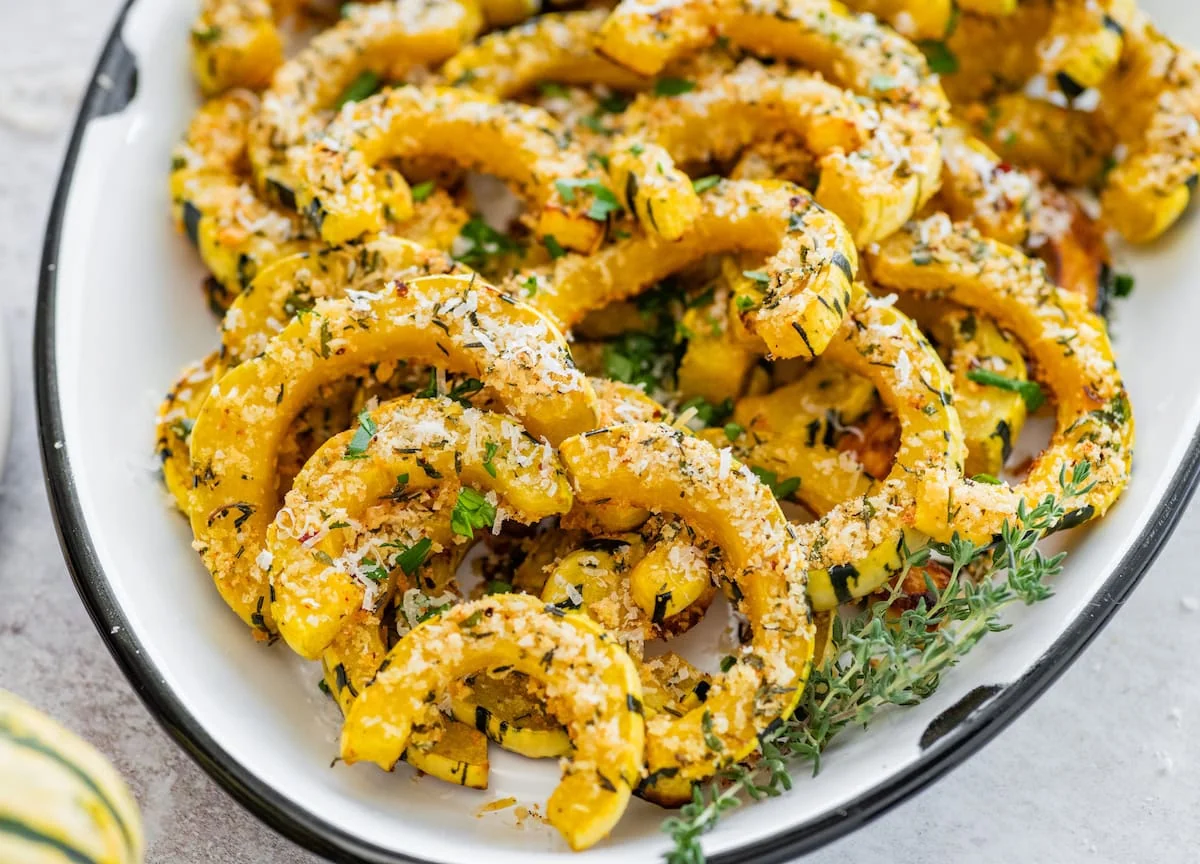
No peeling: slice delicata into rings, coat them in Parmesan, panko and herbs and roast until crisp-edged. Thirty minutes, and they disappear faster than fries.
From Maria Lichty at Two Peas & Their Pod · @twopeasandpod
Delicata's skin is thin enough to eat, so the prep is two cuts and a scoop. The cheesy crumb turns crunchy in the oven.
You need
1 large delicata squash (about 1¼ lb), washed and dried
1 tbsp olive oil
¼ cup freshly grated Parmesan
¼ cup panko breadcrumbs
1 tbsp finely chopped parsley
1 tsp finely chopped fresh thyme
½ tsp garlic powder
½ tsp kosher salt
¼ tsp crushed red pepper flakes
More parsley and Parmesan, to finish
How to make it
Heat the oven to 425°F (220°C) and line a sheet pan with parchment.
Trim the ends off the squash, cut it in half crosswise and scoop out the seeds with a spoon. Slice into ½-inch rings.
Toss the rings with the olive oil in a bowl.
In another bowl, mix the Parmesan, panko, parsley, thyme, garlic powder, salt and pepper flakes. Add the squash and toss, pressing the crumbs on so they stick.
Spread the rings out on the sheet pan in a single layer, scattering any crumbs left in the bowl over the top.
Roast 20 to 25 minutes, flipping halfway, until the squash is tender and the coating is golden and crisp. Finish with parsley and more Parmesan.
Chef's notes
Same method works with acorn squash cut into thin wedges; give it 5 to 10 minutes longer.
Save it and it opens in Chef Amazing with a timeline, mise en place and what you already have.
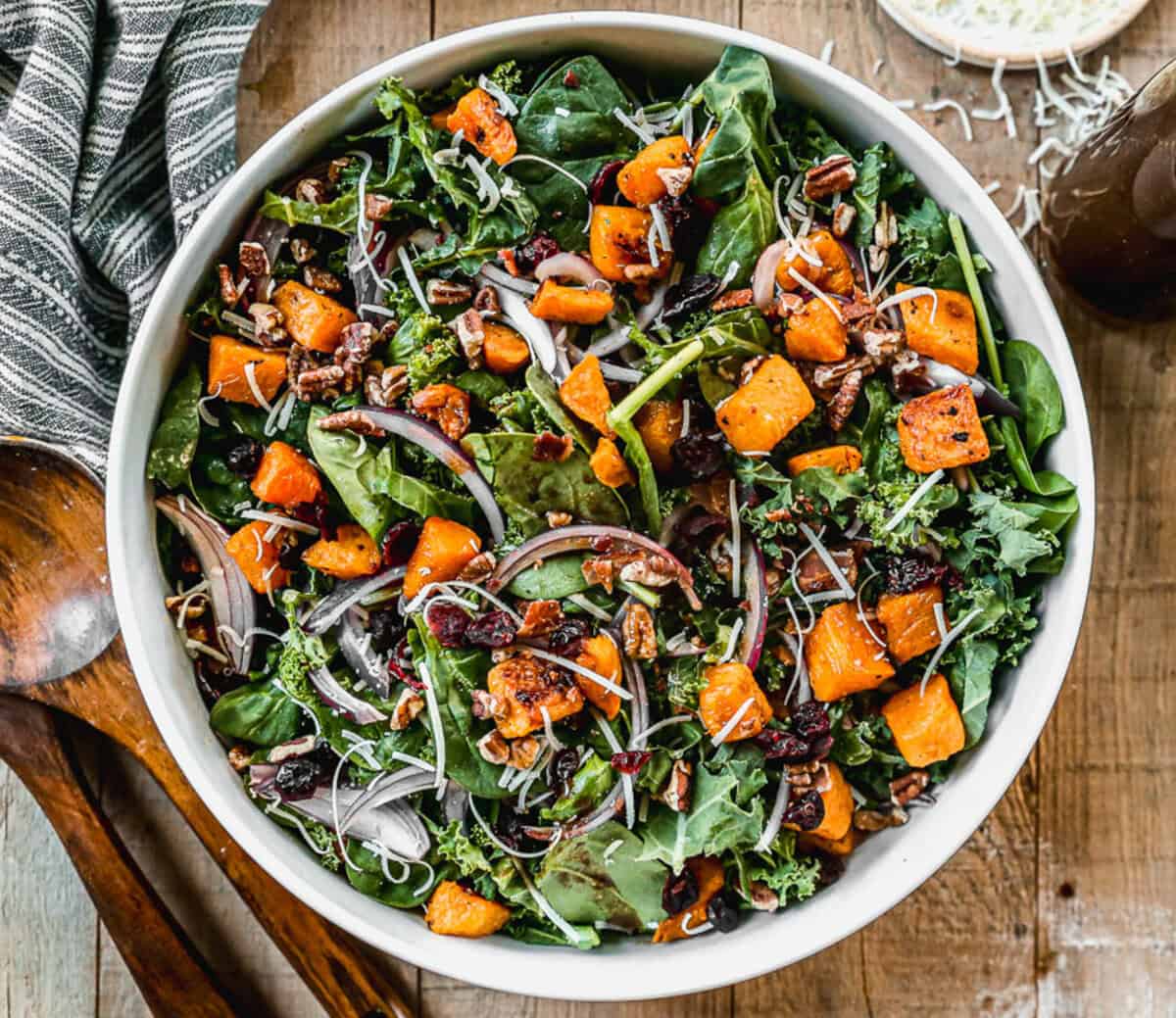
Warm roasted squash over kale and spinach with bacon, dried cranberries, pecans and Parmesan, in a balsamic-Dijon dressing. A salad that holds its own next to the turkey.
Sweet, salty, crunchy and sharp all in one bowl; everything can be prepped ahead and tossed at the last minute.
You need
1½ lb butternut squash, peeled and cut into ¾-inch cubes (about 4 cups)
1 tbsp olive oil, plus salt and pepper
3 to 4 heaping cups kale, stems removed, chopped
3 to 4 heaping cups spinach, chopped
6 slices bacon, cooked and crumbled
½ cup dried cranberries
½ cup pecans, chopped (toasted if you have time)
¼ red onion, thinly sliced
⅓ cup freshly grated Parmesan
For the dressing: ¾ cup olive oil, ¼ cup balsamic vinegar, 1 tbsp Dijon mustard, 2 tbsp sugar or honey, 1 tbsp lemon juice, salt and pepper
How to make it
Heat the oven to 400°F (200°C). Toss the squash with the oil, salt and pepper on a sheet pan and roast 25 to 30 minutes, turning once, until tender and browned on the edges.
While it roasts, cook the bacon until crisp and crumble it, and toast the pecans in a dry pan for 3 to 4 minutes until fragrant.
Shake the dressing ingredients in a jar (or whisk them) until thick and well mixed. Taste for salt.
Massage the kale with a spoon of dressing for 30 seconds so it softens, then add the spinach.
Just before serving, toss the greens with the warm squash, bacon, cranberries, pecans, red onion and Parmesan, and as much dressing as you like. Pass the rest at the table.
Chef's notes
Vegetarian: leave out the bacon and add toasted pumpkin seeds for crunch.
The dressing keeps a week in the fridge.
Save it and it opens in Chef Amazing with a timeline, mise en place and what you already have.
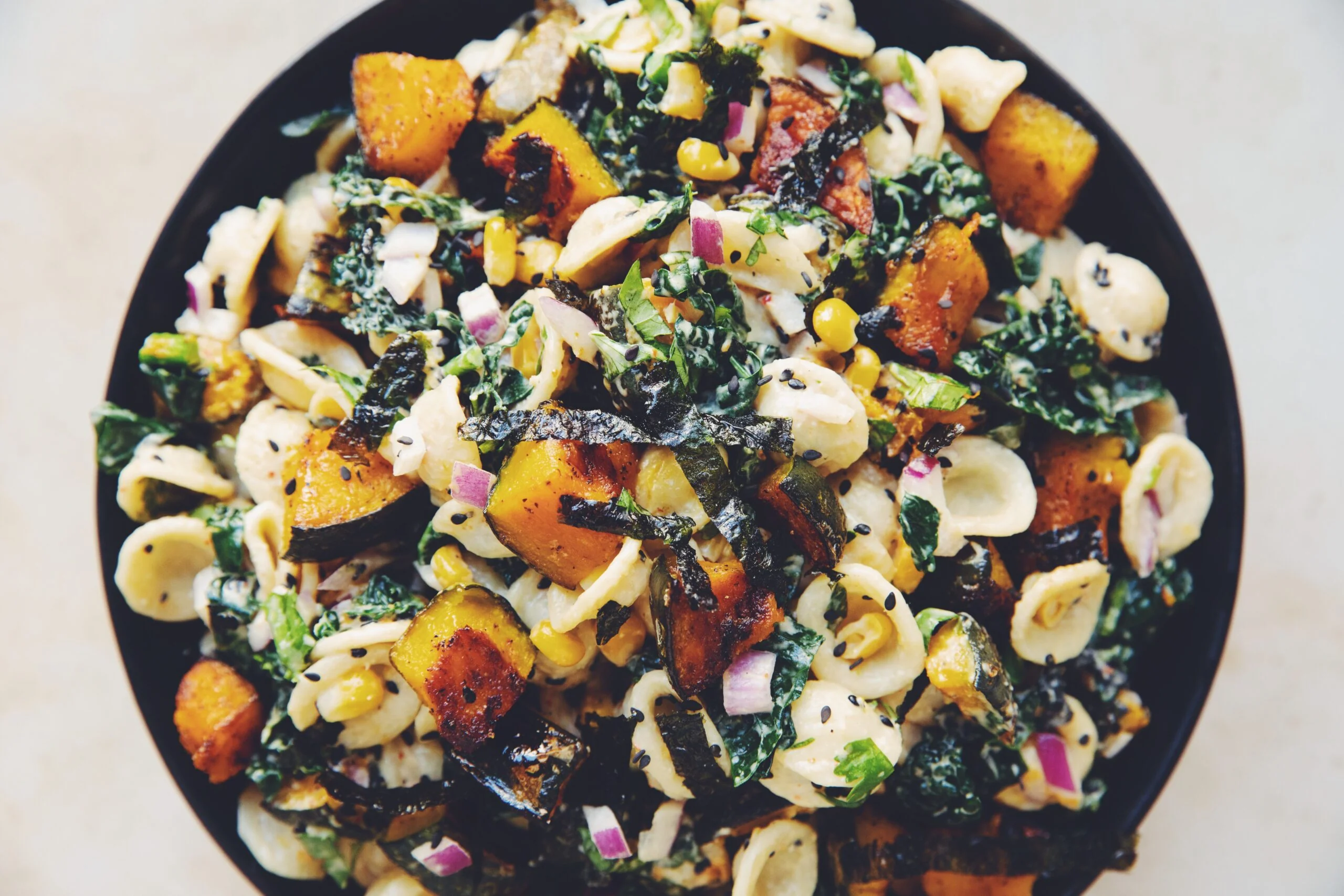
Orecchiette and roasted kabocha in a creamy miso-mayo dressing with lime and chili, with kale, corn, red onion, seaweed snacks and black sesame. A potluck dish people ask about.
Miso and vegan mayo make a dressing like Kewpie's, and roasted kabocha brings the sweetness that makes it addictive.
You need
1 kabocha squash (about 2 lb), seeded and cut into cubes (skin on is fine)
2 tbsp avocado or other high-heat oil
1 tsp garlic powder
½ tsp sea salt and ½ tsp ground pepper
3 cups dried orecchiette
2½ to 3 cups lacinato kale, stemmed and finely chopped (1 small bunch)
1 cup corn kernels, fresh or frozen (thawed)
1 cup finely chopped red onion
¼ cup finely chopped cilantro
1 package (5 g) seaweed snacks, cut into strips
2 tbsp black sesame seeds
For the dressing: ½ cup vegan mayonnaise, 2 tbsp mellow white miso, 2 tbsp water, 1 tbsp lime juice, 1 garlic clove, ½ tsp chili flakes
How to make it
Heat the oven to 425°F (220°C). Toss the kabocha with the oil, garlic powder, salt and pepper on a lined sheet pan and roast 25 to 30 minutes, turning once, until tender and caramelized. Let it cool a little.
Cook the orecchiette in salted boiling water until al dente, drain and rinse under cold water until cool. Drain well.
Blend or whisk the dressing ingredients until smooth (grate the garlic if you're whisking).
In a big bowl, toss the cooled pasta with the kale, corn, red onion, cilantro and dressing until everything is coated.
Fold in the roasted kabocha gently so it doesn't fall apart, and scatter the seaweed strips and sesame seeds on top just before serving (seaweed goes chewy if it sits).
Chef's notes
It keeps 3 days in the fridge; add the seaweed when you serve it.
Regular mayo works if it doesn't need to be vegan.
Save it and it opens in Chef Amazing with a timeline, mise en place and what you already have.
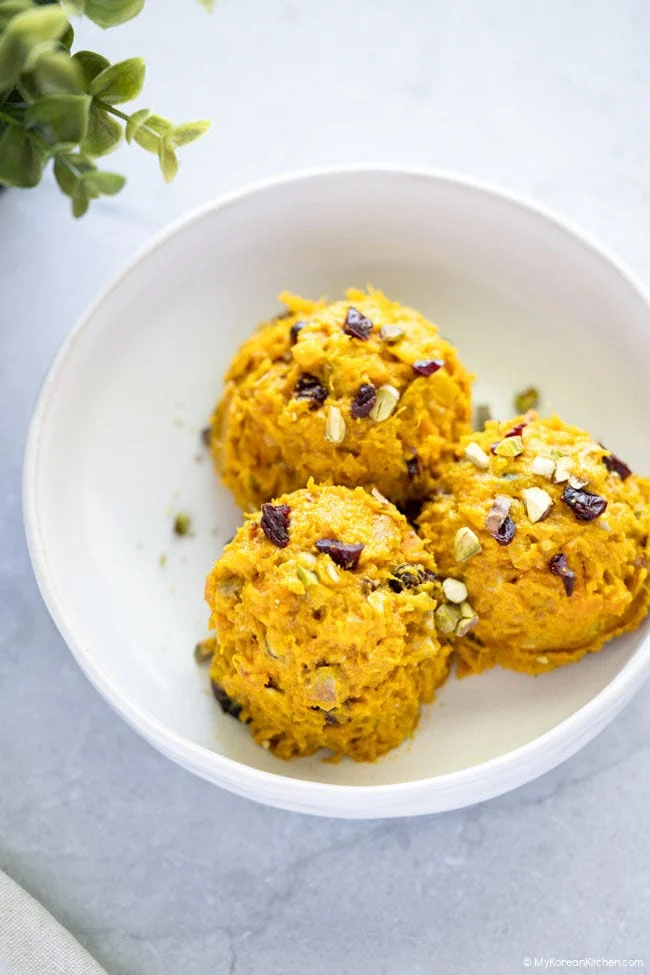
Kabocha roasted soft and mashed with a little Kewpie, Dijon and sugar, then studded with pistachios, walnuts, carrot and cranberries. The sweet little side dish at every Korean barbecue.
1 hour 15 minutesserves 10Kabocha, Mantovana or butternut
Vegetarian
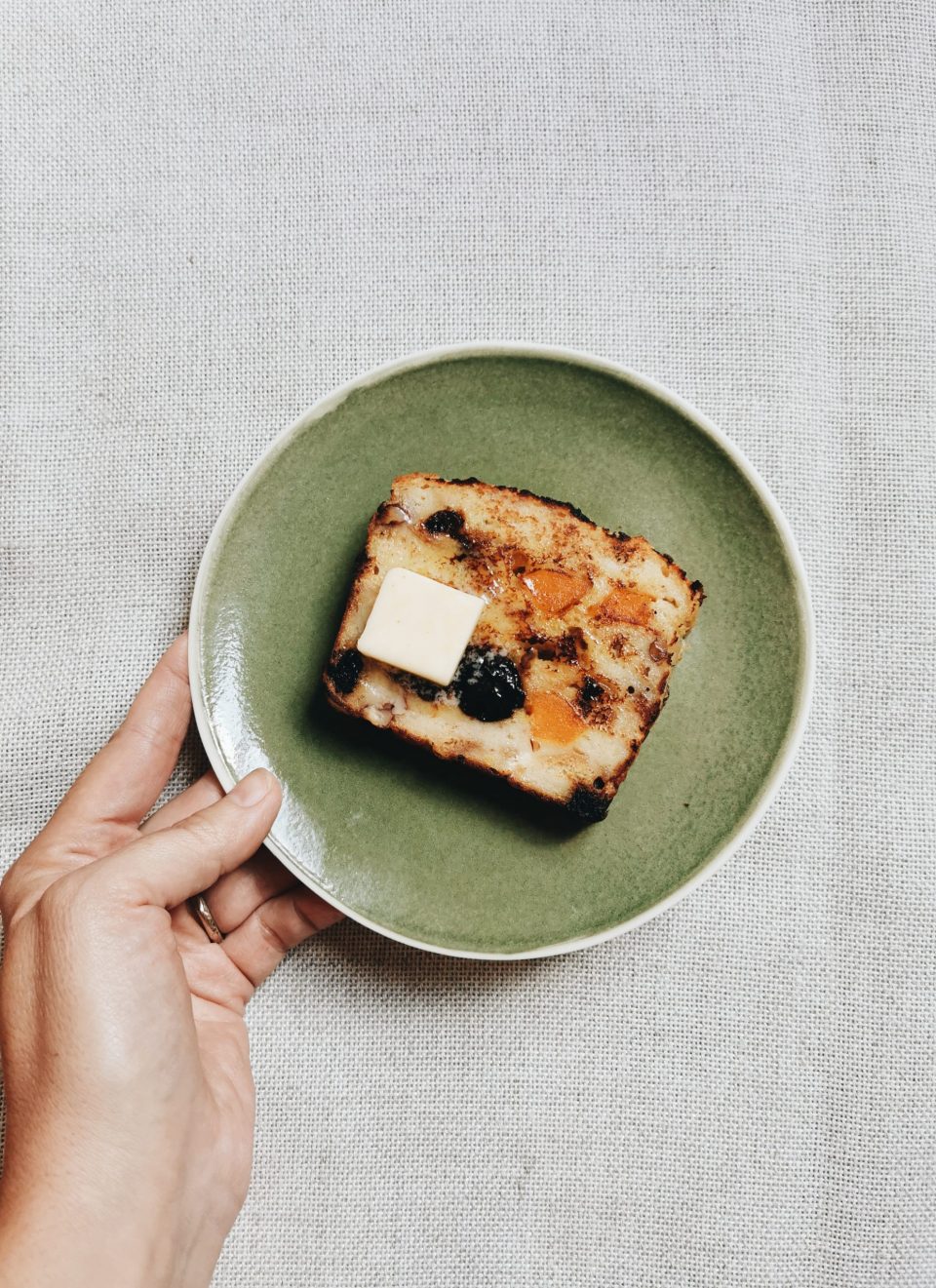
A Tuscan way to use up stale bread: soaked in warm milk, mixed with goat's curd, browned pumpkin, prunes and walnuts and baked into a loaf. Best the next day, toasted in butter.
Halfway between French toast and a savory cake, it's brunch, lunch with a bitter salad, or a slice with a glass of wine.
You need
400 g (14 oz) stale country-style bread or sourdough (about half a large loaf)
500 to 700 ml (2 to 3 cups) warm milk
120 g (4 oz) pumpkin, diced (kabocha, Mantovana or butternut)
2 tbsp olive oil
2 eggs, beaten
70 g (5 tbsp) butter, melted, plus more for the tin
200 g (7 oz) caprino (soft goat's curd or fresh goat cheese)
1½ tsp baking powder
A generous pinch of salt
100 g (3½ oz) dried prunes, roughly chopped
70 g (2½ oz) walnut pieces
How to make it
Cut the bread into thick cubes and put it in a bowl. Pour over 500 ml warm milk and leave 15 minutes, until soft enough to crumble with your hands (very hard bread may need the full 700 ml, or an overnight soak in the fridge). Cut off any crusts that stay hard.
Crumble the bread into a rough paste by hand (or pulse it briefly with a stick blender).
Cook the diced pumpkin in the olive oil in a small skillet over medium heat for 8 to 10 minutes, until tender and well browned around the edges. Let it cool.
Heat the oven to 180°C (350°F). Butter a large loaf tin and line it with parchment.
In a small bowl, mix the eggs, melted butter and goat's cheese with a fork until roughly combined. Stir it evenly through the bread, along with the baking powder and salt. Fold in the walnuts, prunes and pumpkin.
Pour into the tin, smooth the top and bake about 45 minutes, until the top is golden brown and springs back when pressed.
Cool 10 minutes, then turn out. Eat it warm, or the next day cut into thick slices, browned in a pan and topped with good butter.
Chef's notes
Cheesier? Add a handful of Parmesan to the mix.
Wrapped well, it keeps 3 days in the fridge.
Save it and it opens in Chef Amazing with a timeline, mise en place and what you already have.
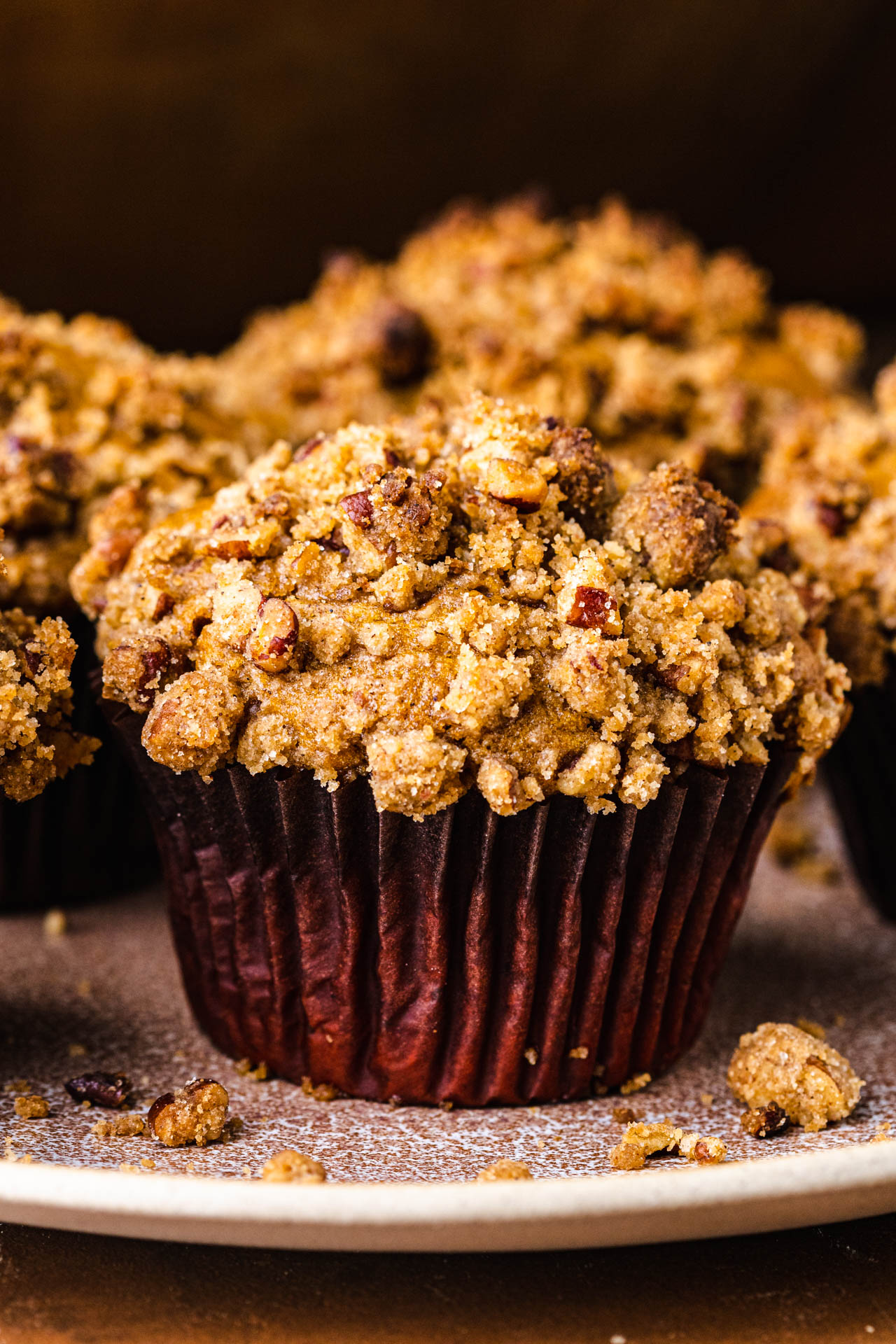
Properly spiced pumpkin muffins (cinnamon, ginger, allspice, cardamom, nutmeg) with a buttery pecan crumble on top. No eggs, no dairy, and nobody notices.
Pumpkin purée does the job of eggs, keeping them moist for days, and a little lemon juice with the baking soda gives a good rise.
You need
For the crumble: 55 g (¼ cup) vegan butter or coconut oil, 60 g (½ cup) plain flour, 75 g (heaped ⅓ cup) sugar (half demerara, half dark muscovado is best), ¼ tsp salt, ¾ tsp cinnamon, 50 g (½ cup) pecans, chopped small
Wet: 300 g (10.5 oz, about 1¼ cups) pumpkin purée, 120 ml (½ cup) plant milk (oat is good), 60 ml (¼ cup) mild oil, 175 g (¾ cup + 2 tbsp) sugar (half demerara, half dark muscovado), 10 ml (2 tsp) lemon or lime juice
Dry: 220 g (1¾ cups) all-purpose flour (or a gluten-free blend plus ½ tsp xanthan gum), 1 tsp baking powder, 1 tsp baking soda, ¼ tsp fine salt
Spices: 1½ tsp cinnamon, 1 tsp ground ginger, ½ tsp allspice, ½ tsp cardamom, ½ tsp nutmeg
55 g (2 oz) pecans, roughly chopped, for the batter
How to make it
Heat the oven to 180°C (350°F), or 160°C fan. Line a muffin tin with 10 paper cases.
Make the crumble: rub the vegan butter into the flour, sugar, salt and cinnamon with your fingertips until it looks like damp sand and clumps when squeezed. Mix in the chopped pecans and put it in the fridge.
In a large bowl, whisk the pumpkin purée, plant milk, oil, sugar and lemon juice until smooth.
In another bowl, whisk the flour, baking powder, baking soda, salt and spices.
Add the dry ingredients to the wet and fold with a spatula just until no dry flour shows (a few lumps are fine; overmixing makes them tough). Fold in the pecans.
Fill the cases almost to the top and press a generous spoon of crumble onto each.
Bake 22 to 25 minutes, until risen and a skewer in the center comes out clean. Cool in the tin 10 minutes, then on a rack.
Chef's notes
Homemade purée: roast squash, purée it, and let it drain in a sieve for 30 minutes so it's as thick as canned.
They keep 3 days in a tin, and freeze well.
Save it and it opens in Chef Amazing with a timeline, mise en place and what you already have.
The all-rounder. Sweet, smooth, no strings. Soups, sauces, roasting, purée. Peels easily with a Y-peeler.
Kabocha
Japanese pumpkin. Drier, nuttier and sweeter than butternut, almost chestnut-like. The skin is edible once cooked. Simmer, steam or roast.
Delicata
Thin, edible skin, so no peeling. Slice into rings and roast. Ready in 25 minutes.
Acorn
Ribbed and dark green. Halve it and stuff it, or roast in wedges. The skin softens enough to eat.
Honeynut
A tiny, extra-sweet butternut. One feeds one person. Roast it halved or stew it whole-cubed.
Spaghetti
Roast it and the flesh pulls into strands. Mild, so it wants a strong sauce.
Pumpkin (and the can)
Sugar pie pumpkins for cooking; carving pumpkins are watery. Canned purée is just cooked squash, and good: use it for chili, muffins and pie.
Pick one that feels heavy for its size, with a dull (not shiny) skin, a dry, firm stem and no soft spots.
It keeps a month or more in a cool, dry spot. Don't refrigerate a whole squash; once cut, wrap it and use it within 4 or 5 days.
To cut one safely, slice a thin strip off one side so it sits flat, then cut down with a heavy knife. Hard ones (kabocha, acorn) cut easier after 3 to 4 minutes in the microwave, pricked first.
To roast any squash: 1-inch pieces, a slick of oil, salt, a single layer on a sheet pan, 425°F (220°C) for 25 to 35 minutes, turning once, until the edges are brown and a knife slides in with no push.
Swaps: butternut, kabocha and sugar pumpkin trade in almost any recipe here (kabocha cooks a little faster and drier). Delicata and honeynut trade with each other. 1 cup of roasted, mashed squash is about 1 cup of canned purée.
Save the seeds: rinse, dry, toss with oil and salt, and roast at 325°F (160°C) for 15 to 20 minutes.
Every Monday
Next week: brussels sprouts
Sweetest after the first frost. Shaved raw, charred hard, or roasted with something salty. A new ingredient and 25 recipes every Monday, in Chef's daily. Free.
How we picked
One recipe per cook, all from the food creators on our Hot 100, so you get 25 different kitchens instead of five versions of the same soup. We looked for the ones their readers keep making, and for range: weeknight and weekend, vegan and not, from Seoul and Trinidad to Florence and Utah. Every recipe page was checked on Nov 1, 2026. The photos are the creators' own and say so. Who did we miss? Tell us at hello@chefamazing.com.
Every photo is the creator's own, from the recipe it goes with, and every recipe is theirs; what you save is Chef's own write-up in our words, with their quantities, credited and linked to the original. Chef Amazing isn't paid by anyone on this list.
Chef Amazing remembers every place you ate, keeps the lists friends send you, and helps you cook it at home.
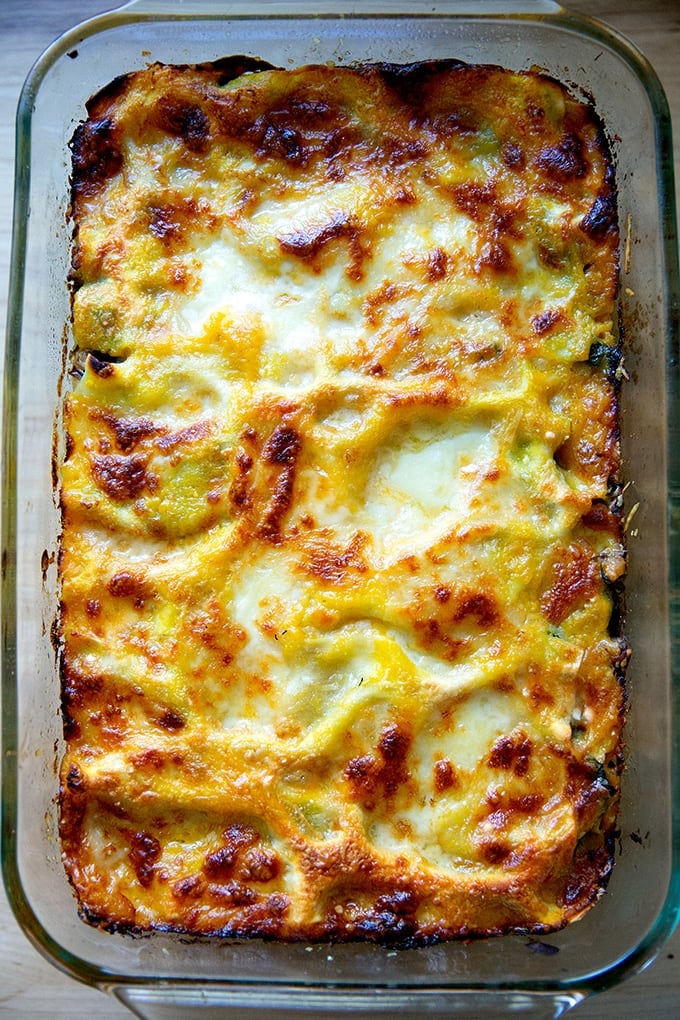 Photo: Alexandra's Kitchen