‹ The best bowl in 50 cities › Buenos Aires
Soup season · Buenos Aires, Argentina
The best bowl in Buenos Aires: Locro
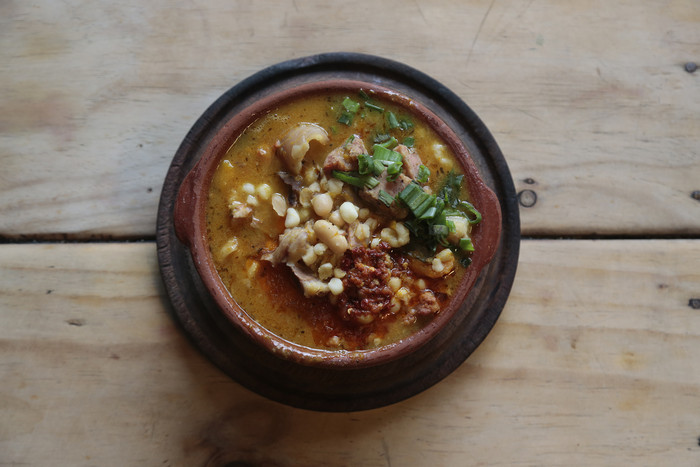
A thick stew-soup of white corn, beans, squash and several cuts of pork and beef, cooked for hours and finished with a red chile oil called quiquirimichi.
Argentines eat locro on May 25 and July 9 (the two national days) and all winter in between. It's from the northwest, and the porteños who miss it go to a Santiago del Estero family's place in Recoleta.
El Sanjuanino
Posadas 1515, Recoleta, Buenos Aires
Get: The locro, then two baked empanadas (the carne cortada a cuchillo)
Un locro, por favor, con bastante salsita picante.A locro, please, with plenty of the hot sauce.
Run by the same northern family since 1966, and TasteAtlas's top-rated locro in the country. The room is small, brick and always warm.
Locro is on all year, best from May to September.
Make it at home
Locro criollo (Argentine corn and pork stew)
Locro is a party dish: one pot, hours of slow cooking, everyone at the table. The corn and beans soak overnight, and the squash cooks down until it thickens everything. It's even better the next day.
You need
- 1 lb (450 g) dried white hominy (maíz blanco partido), or 3 cans (15 oz) hominy, drained
- 8 oz (225 g) dried white beans (alubias or great northern)
- 1 lb (450 g) beef brisket or flank, in 1 1/2-inch cubes
- 1 lb (450 g) pork shoulder, in 1 1/2-inch cubes
- 8 oz (225 g) pork belly or panceta, in 1/2-inch pieces
- 2 pork trotters, split (optional, for body)
- 2 links Spanish-style chorizo (about 8 oz / 225 g), sliced
- 1 small butternut squash (about 2 lb / 900 g), peeled and cut in 1-inch chunks
- 1 large onion, chopped
- 1 bunch scallions, white parts chopped (keep the greens)
- 4 quarts (3.8 l) water
- 2 tsp ground cumin
- 2 tsp sweet paprika
- 1 bay leaf
- 1 tbsp kosher salt, plus more to taste
- For the quiquirimichi: 1/2 cup (120 ml) neutral oil or rendered fat, 1 tbsp sweet paprika, 1-2 tsp crushed red chile, scallion greens, thinly sliced
How to make it
- The night before, cover the dried hominy and the beans in separate bowls with plenty of cold water and soak 12 hours. Drain.
- Put the hominy, beans, trotters and water in a large heavy pot. Bring to a boil, skim, then simmer gently, uncovered, 1 hour.
- Meanwhile, brown the pork belly in a skillet over medium heat until the fat runs, 8 minutes. Lift out the pieces, then brown the beef and pork shoulder in that fat in two batches, 5 minutes a batch. Add all of it to the pot.
- In the same skillet, cook the onion and scallion whites 8 minutes until soft. Stir in the cumin and paprika for 30 seconds, then scrape it all into the pot with the bay leaf.
- Add the squash. Simmer 2 hours more, stirring from the bottom every 15 minutes (locro catches easily), until the squash dissolves, the corn is tender and the stew is thick enough that a spoon leaves a trail.
- Add the chorizo for the last 30 minutes. Pull the trotters out, pick off any meat and return it. Season with the salt.
- For the quiquirimichi, warm the oil in a small pan until it shimmers, take it off the heat and stir in the paprika and chile (it should sizzle but not burn). Add the scallion greens.
- Ladle the locro into deep bowls and spoon the red oil over the top.
Pans and tools
- 10-quart heavy pot or Dutch oven
- large skillet
- small saucepan
Chef's tips
- Canned hominy cuts 1 hour: add it with the squash.
- Stir from the bottom. If it starts to stick, lower the heat and add a cup of hot water.
- It keeps 4 days in the fridge and freezes well; loosen with water as you reheat.
Four more bowls in Buenos Aires
Puchero

Beef, chicken, chorizo, squash, corn and potatoes boiled together, the broth served first and the meat and vegetables after.
El Globo · Hipólito Yrigoyen 1199, C1086AAW Buenos Aires
Get: Puchero for two, with the broth first
Un puchero, por favor.A puchero, please.
A Spanish-Argentine dining room since 1908, a block from Avenida de Mayo, known for its puchero and paella.
Make it at home: Puchero
The Argentine boiled dinner: one pot, two courses. The broth goes out first with a little rice or noodles, then a platter of everything that cooked in it.
You need
- 2 lb (900 g) beef shank or osobuco, in thick slices
- 1 lb (450 g) beef short ribs
- 4 chicken thighs, bone in
- 2 Spanish-style chorizos or morcilla
- 1 onion, halved
- 2 leeks, cleaned
- 2 carrots, in large pieces
- 2 ears of corn, cut in thirds
- 1 lb (450 g) calabaza or butternut squash, in large chunks
- 4 small potatoes, peeled
- 1 sweet potato, peeled, in chunks
- 1 can (15 oz / 425 g) chickpeas, drained
- 1 tbsp salt, 1 bay leaf, a few peppercorns
- Olive oil and salsa criolla, to serve
How to make it
- Put the beef in a big pot with 5 quarts (4.7 l) cold water, bring to a simmer and skim. Add the onion, leeks, bay leaf, peppercorns and salt and simmer 1 1/2 hours.
- Add the chicken and simmer 30 minutes.
- Add the carrots, potatoes, sweet potato, squash and corn and simmer 25 minutes. Prick the chorizos and poach them in the pot for the last 15 minutes with the chickpeas.
- Ladle out some broth, strain it, and serve it first with a handful of cooked rice or fine noodles.
- Lay the meats and vegetables on a platter, moisten with broth and serve with olive oil, salt and salsa criolla.
Chef's tips
- Morcilla falls apart if boiled hard: poach it in a separate pan of broth.
- The leftover broth makes the next day's soup.
Squash stew in a pumpkin

Beef, corn, sweet potato and dried peaches stewed together and served inside a whole roasted pumpkin.
Cumaná · Rodríguez Peña 1149, C1020ADW Buenos Aires
Get: The carbonada en zapallo, and empanadas from the clay oven
Una carbonada en zapallo, por favor.A carbonada in a pumpkin, please.
A busy, cheap northern-Argentine kitchen that has been serving locro, cazuelas and carbonada in clay since the 1990s.
Comes and goes with the season; ask.
Make it at home: Carbonada en zapallo
A stew from the Argentine interior, sweet with squash and dried fruit. Baking it in a pumpkin is the show; a pot works fine.
You need
- 1 small pumpkin or kabocha (about 4 lb / 1.8 kg)
- 1 1/2 lb (680 g) beef chuck, in 1 in (2.5 cm) cubes
- 3 tbsp oil
- 1 onion, chopped
- 1 red bell pepper, chopped
- 2 garlic cloves, chopped
- 1 tbsp sweet paprika, 1 tsp dried oregano
- 2 tomatoes, chopped
- 3 cups (720 ml) beef broth
- 2 potatoes and 1 sweet potato, peeled, in cubes
- 1 ear of corn, in rounds
- 6 dried peaches or apricots, halved
- 1 1/2 tsp salt
How to make it
- Heat the oven to 375°F (190°C). Cut a lid from the pumpkin, scoop out the seeds, rub inside with oil and salt and bake 50 minutes, until tender but holding its shape.
- Meanwhile brown the beef in the oil in batches. Add the onion, pepper and garlic and cook 8 minutes.
- Add the paprika, oregano, tomatoes and broth and simmer covered 50 minutes.
- Add the potatoes, sweet potato, corn and dried fruit and simmer 25 minutes more. Season.
- Ladle the stew into the pumpkin and bring it to the table; scoop some pumpkin flesh into each bowl.
Chef's tips
- If the pumpkin goes soft, serve it alongside instead.
Tripe stew

Tripe stewed slowly with tomato, chickpeas, potato and paprika, the Spanish way, in an old La Boca bodegón.
El Obrero · Agustín R. Caffarena 64, C1157ACB Buenos Aires
Get: Whatever stew is on the blackboard, the mondongo if it's there, and a flan
¿Hay mondongo hoy?Is there tripe stew today?
A La Boca workers' bodegón since 1954, covered in football shirts, with a chalkboard of old Spanish-Argentine dishes.
On the chalkboard some days, not every day. Go by taxi; the block is quiet at night.
Make it at home: Mondongo a la española
Clean honeycomb tripe from a good butcher saves a day of work. It needs long, gentle cooking until it is soft enough to cut with a spoon.
You need
- 2 lb (900 g) cleaned honeycomb tripe
- 1 lemon
- 3 tbsp olive oil
- 1 chorizo, sliced
- 1 onion and 1 red bell pepper, chopped
- 3 garlic cloves, chopped
- 1 tbsp sweet paprika, 1/2 tsp hot paprika
- 1 can (14 oz / 400 g) crushed tomatoes
- 1 bay leaf
- 1 quart (950 ml) beef broth
- 1 can (15 oz / 425 g) chickpeas, drained
- 2 potatoes, cubed
- 1 1/2 tsp salt, chopped parsley
How to make it
- Scrub the tripe with lemon and salt, rinse, cover with cold water, bring to a boil 5 minutes and drain.
- Cover again with fresh water and simmer 1 1/2 hours, until tender. Drain and cut into 1 in (2.5 cm) squares.
- In the oil, brown the chorizo, then cook the onion, pepper and garlic 10 minutes. Stir in both paprikas, then the tomatoes and bay leaf.
- Add the tripe and broth and simmer 45 minutes.
- Add the chickpeas and potatoes and simmer 25 minutes, until the sauce is thick. Season and finish with parsley.
Chef's tips
- Better the next day.
Ramen

A rich pork-bone ramen at one of the first ramen bars in Buenos Aires.
Fukuro Noodle Bar · Costa Rica 5514, C1414BTH Buenos Aires
Get: The tonkotsu, with a soft egg added
Un tonkotsu con huevo, por favor.A tonkotsu with egg, please.
The bar that started the city's ramen wave in 2013, still the name locals give first.
Make it at home: Tonkotsu ramen at home
Tonkotsu is pork bones boiled hard, not simmered, until the fat and collagen emulsify and the broth goes white. It takes a day, but it's mostly waiting.
You need
- 4 lb (1.8 kg) pork trotters and neck bones, cut by the butcher
- 1 lb (450 g) chicken backs
- 1 onion, halved, 1 head garlic, halved, 2-inch (5 cm) ginger, sliced
- 4 scallions, white parts
- For the tare: 1/2 cup (120 ml) soy sauce, 1/4 cup (60 ml) mirin, 2 tbsp sake, 1 tsp salt
- 1 lb (450 g) pork belly, rolled and tied
- 4 eggs
- 4 portions (about 1 lb / 450 g) thin fresh ramen noodles
- To serve: sliced scallions, nori, bean sprouts, pickled ginger, sesame seeds
How to make it
- Cover the bones with cold water, bring to a boil, boil 10 minutes, drain and scrub off the grey scum. Clean the pot.
- Return the bones with fresh water to cover by 2 inches (5 cm). Boil hard, lid off, 10 to 12 hours, topping up with boiling water to keep the bones covered. Add the onion, garlic, ginger and scallions for the last hour. Strain: you want about 2 quarts (1.9 l) of white broth.
- Meanwhile, braise the pork belly in the tare plus 1 cup (240 ml) water, covered, at a low simmer for 2 hours, turning now and then. Cool, slice thin, and keep the braising liquid.
- Boil the eggs 6 1/2 minutes, chill in ice water, peel and soak in 1/2 cup of the braising liquid for at least 4 hours.
- Put 2 tbsp braising liquid in each warm bowl. Cook the noodles 1 minute less than the packet says, drain well and add. Ladle 2 cups of boiling broth over each, then top with pork, a halved egg, scallions and nori.
Chef's tips
- A pressure cooker gets the broth white in about 2 hours on high.
- Taste the broth with the tare in it before adding salt; the tare is the seasoning.
Is this your restaurant?
You make the best bowl in Buenos Aires, by our read. Make your card above (it downloads, or opens your share sheet on a phone), post it, and tag us. Here's your tag for your site:

<a href="https://www.chefamazing.com/soup/buenos-aires"><img src="https://www.chefamazing.com/soup/badge/buenos-aires.svg" alt="El Sanjuanino: the best bowl in Buenos Aires" height="46"></a>
Something changed? Write to hello@chefamazing.com.Bowls nearby


All 50 bowls The 25 best soup recipes
No. 1 checked October 28, 2026; the other four picked the same day from local guides and menus. Places change; if one has, tell us at hello@chefamazing.com.
Chef Amazing remembers every place you ate, keeps the lists friends send you, and helps you cook it at home.
Our founder's story · For chefs and food creators · Privacy · Terms