‹ The best bowl in 50 cities › Tokyo
Soup season · Tokyo, Japan
The best bowl in Tokyo: Chicken paitan ramen

A creamy, almost velvety chicken broth with thin noodles, seasonal vegetables and slices of chicken and pork.
Tokyo has thousands of ramen shops. The creamy chicken bowl that changed Ginza's ramen scene, and still has a line down a back alley, is Kagari's.
Ginza Kagari
4-4-1 Ginza, Chuo-ku, Tokyo
Get: The tori paitan soba (chicken paitan ramen), with the seasonal vegetables
鶏白湯SOBA、ひとつお願いします。(Tori paitan soba, hitotsu onegaishimasu.)One chicken paitan ramen, please.
A tiny counter down a Ginza alley that made creamy chicken ramen famous and was on Michelin's Bib Gourmand list. Buy a ticket from the machine, then queue.
Lunch and dinner; expect 30 to 60 minutes in line.
Make it at home
Tori paitan ramen (creamy chicken broth ramen)
Paitan means white soup. Chicken boiled hard for hours breaks down into a creamy broth with no cream in it. A quick blend at the end makes it silky. It's lighter than tonkotsu and easier to make at home.
You need
- For the broth: 4 lb (1.8 kg) chicken backs, wings and feet (feet give body), 4 quarts (3.8 l) water, 1 onion, 1 leek (green part), 2-inch piece ginger, 6 garlic cloves
- For the shio tare: 1/2 cup (120 ml) water, 1 piece kombu (3 inches), 2 tbsp sake, 1 tbsp mirin, 2 tbsp sea salt, 1 tbsp light soy sauce
- For the chicken chashu: 2 boneless chicken breasts, 1 tsp salt, 1 tbsp olive oil
- 4 portions (about 1 lb / 450 g) thin straight ramen noodles
- To top: blanched seasonal vegetables (asparagus, baby corn, broccolini, snap peas), sliced scallions, 2 soft-boiled eggs, a little yuzu zest or grated lemon zest
How to make it
- Blanch the chicken parts in boiling water 5 minutes, drain and rinse.
- Put them in a clean pot with the 4 quarts of water. Bring to a hard boil and keep it boiling hard, uncovered, 3 hours, topping up with boiling water to keep the bones covered and stirring every 30 minutes. Add the onion, leek, ginger and garlic for the last hour.
- Strain the broth, pressing on the solids. Blend it for 30 seconds (an immersion blender works) to make it creamy and smooth. You want about 6 cups.
- Tare: soak the kombu in the water 20 minutes, heat to just below a simmer, take out the kombu and stir in the sake, mirin, salt and soy until the salt dissolves.
- Chicken: season the breasts with salt, seal in a zip-top bag with the oil and cook in water held at 145°F (63°C) for 1 hour (or poach gently in the broth 12-15 minutes). Slice thinly.
- Warm the bowls. Put 2 1/2 tbsp tare in each. Boil the noodles as the packet says, drain well and add to the bowls.
- Blend the hot broth for a few seconds so it's frothy, and pour 1 1/2 cups over each bowl. Top with the chicken, vegetables, half an egg, scallions and a little yuzu zest.
Pans and tools
- 12-quart stockpot
- fine sieve
- immersion blender or blender
- large pot for noodles
Chef's tips
- Chicken feet are what make it creamy; find them at an Asian market.
- It must boil hard to turn white.
- A little chicken fat from the top of the broth in each bowl adds richness.
Four more bowls in Tokyo
Shoyu ramen

A refined soy-sauce ramen with truffle oil and porcini, from the first ramen shop to win a Michelin star.
Tsuta · 3-2-4 Nishihara, Shibuya-ku, Tokyo 151-0066
Get: Shoyu soba, with the char siu
醤油そばをお願いします。The shoyu soba, please.
Yuki Onishi's shop became the first ramen restaurant with a Michelin star in 2015.
Ticket system; check the shop's posted rules on the day.
Make it at home: Kyoto-style shoyu ramen with chashu and kujo negi
Kyoto's classic is a clear-ish pork and chicken broth seasoned with a dark soy tare, topped with plenty of thinly sliced green onion. It's simpler than a tonkotsu: the broth simmers gently, not hard.
You need
- For the broth: 2 lb (900 g) pork neck bones, 2 lb (900 g) chicken backs, 4 quarts (3.8 l) water, 1 onion, 2-inch piece ginger, 6 garlic cloves, 1 piece kombu (4 inches)
- For the chashu: 1 1/2 lb (700 g) pork shoulder, tied; 1/2 cup soy sauce, 1/4 cup mirin, 1/4 cup sake, 2 tbsp sugar, 1 cup water
- For the shoyu tare: 1/2 cup dark soy sauce, 2 tbsp mirin, 1 tbsp sake, 1 tsp sugar, 2 tbsp of the chashu braising liquid
- 2 tbsp pork fat or lard (back fat if you can, for the classic seabura flecks)
- 4 portions (about 1 lb / 450 g) fresh thin straight ramen noodles
- To top: 1 big bunch scallions or kujo negi, thinly sliced on the diagonal; menma; a sprinkle of white pepper
How to make it
- Blanch the pork bones and chicken backs in boiling water 10 minutes, drain and rinse.
- Return them to a clean pot with the 4 quarts water, the onion, ginger and garlic. Bring to a boil, then keep at a gentle simmer, uncovered, 3 1/2 hours, skimming now and then. Add the kombu for the last 20 minutes only. Strain; you want about 2 quarts.
- Meanwhile, brown the pork shoulder in a pot, add the soy, mirin, sake, sugar and water, cover and simmer on low 2 hours, turning every 30 minutes. Cool, then slice thin.
- Make the tare: simmer the soy, mirin, sake and sugar 2 minutes, then add the braising liquid.
- Melt the pork fat in a small pan.
- Warm 4 deep bowls with hot water. Put 3 tbsp tare and 1/2 tbsp pork fat in each.
- Boil the noodles in a big pot of unsalted water as the packet says (usually 60-90 seconds), shake dry and add to the bowls. Pour 1 1/2 cups simmering broth over each, then top with pork, menma, a big heap of green onions and white pepper.
Pans and tools
- 12-quart stockpot
- medium pot for the pork
- fine sieve
- large pot for noodles
Chef's tips
- Taste the first bowl and add tare a teaspoon at a time; it should taste salty-savory, not sharp.
- Kujo negi are Kyoto's long green onions; the green tops of leeks sliced paper-thin come close.
- The broth freezes well.
Dan dan noodles

A creamy sesame and chili tantanmen with a deep Sichuan pepper tingle.
Nakiryu · 2-34-4 Minamiotsuka, Toshima-ku, Tokyo 170-0005
Get: Tantanmen
担々麺をお願いします。Tantanmen, please.
A small Otsuka shop that held a Michelin star for its tantanmen; expect a line.
Make it at home: Dan dan noodle soup
The soupy version of the Sichuan street classic: the sauce goes in the bowl and hot broth goes over.
You need
- 1/2 lb (225 g) ground pork
- 1 tbsp oil, 1 tbsp Shaoxing wine, 1 tbsp soy sauce
- 2 tbsp sui mi ya cai (preserved mustard greens), optional
- For each bowl: 1 tbsp Chinese sesame paste or tahini, 1 tbsp soy sauce, 1 tsp black vinegar, 1 tsp sugar, 1-2 tbsp chili oil, 1/4 tsp ground Sichuan pepper, 1 small garlic clove grated
- 5 cups (1.2 l) hot chicken broth
- 1 lb (450 g) fresh wheat noodles
- 4 handfuls bok choy or spinach
- Crushed roasted peanuts and green onion
How to make it
- Fry the pork in the oil until crisp and brown, add the wine, soy and preserved greens and cook 2 minutes.
- Put the sauce for each bowl in the bottom of the bowls and stir together.
- Cook the noodles and the greens.
- Ladle 1 1/4 cups (300 ml) hot broth into each bowl and stir into the sauce.
- Add noodles and greens, top with the pork, peanuts and green onion, and stir before eating.
Chef's tips
- Toast the Sichuan peppercorns before grinding them.
Soba
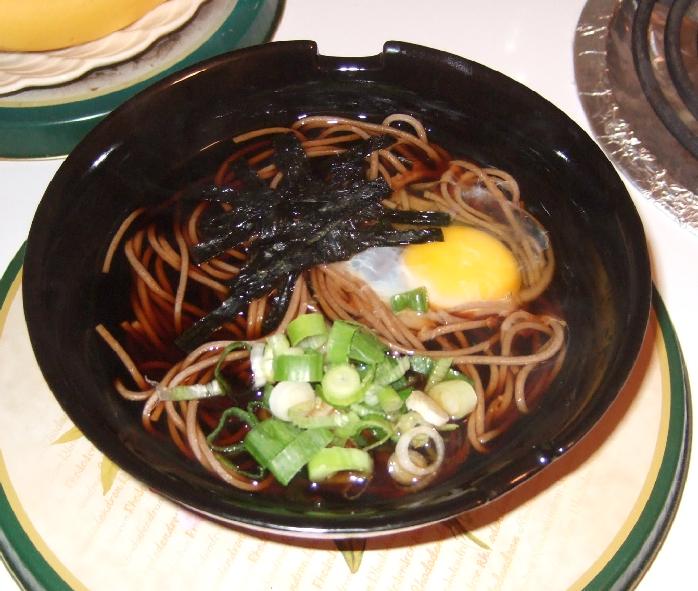
Hot buckwheat noodles in dashi, at an old wooden soba house in Kanda.
Kanda Matsuya · 1-13 Kanda Sudacho, Chiyoda-ku, Tokyo 101-0041
Get: Kake soba hot, or tori nanban (with chicken and leek), and a sake
かけそばをお願いします。Hot soba in broth, please.
A soba house founded in 1884, in a wooden building that survived the war.
Make it at home: Tsukimi soba (soba in hot dashi with egg)
'Moon-viewing' soba: the egg yolk sits on the noodles like the full moon. Good dashi makes it.
You need
- Dashi: 1 quart (950 ml) water, 1 piece kombu (4 inches / 10 cm), 1 cup (15 g) bonito flakes
- 1/4 cup (60 ml) soy sauce (usukuchi if you have it)
- 1/4 cup (60 ml) mirin
- 1 tsp sugar
- 7 oz (200 g) dried soba
- 2 very fresh eggs
- 2 scallions, thinly sliced
- Shichimi togarashi, to serve
How to make it
- Soak the kombu in the water 30 minutes, then heat until bubbles form at the edge and remove it. Add the bonito, turn off the heat, steep 3 minutes and strain.
- Add the soy, mirin and sugar to the dashi and bring to a simmer.
- Cook the soba 1 minute less than the packet says, drain and rinse under cold water to remove the starch, then dip in hot water to warm.
- Divide the soba between deep bowls, pour over the hot broth, and make a well in each. Crack in an egg yolk (or a whole egg), top with scallions and serve with shichimi.
Chef's tips
- Rinsing the soba is the step people skip; it keeps the broth clear.
Oden

Kanto-style oden in a darker dashi, served by kimono-clad staff in Asakusa.
Otafuku · 1-6-2 Senzoku, Taito-ku, Tokyo 111-0031
Get: Daikon, egg, and the tomato oden, with warm sake
大根と卵をお願いします。Daikon and egg, please.
An oden restaurant dating to 1915, among Tokyo's oldest.
Evenings.
Make it at home: Oden
A Japanese winter one-pot. The daikon takes longest and is often the favorite. Fish cakes come in packs at Japanese markets.
You need
- 2 quarts (1.9 l) dashi
- 1/4 cup (60 ml) light soy (usukuchi), 3 tbsp mirin, 2 tbsp sake, 1 tsp salt
- 1 daikon, peeled, in 1 1/2 in (4 cm) rounds
- 6 eggs, hard-boiled and peeled
- 1 block konnyaku, in triangles, parboiled
- 1 block firm tofu or fried tofu (atsuage), in cubes
- 1 lb (450 g) mixed fish cakes (chikuwa, satsuma-age, hanpen)
- 4 cooked octopus tentacles on skewers (optional)
- Karashi (Japanese mustard), to serve
How to make it
- Simmer the daikon rounds in water 15 minutes to soften; drain.
- Heat the dashi with the soy, mirin, sake and salt in a wide pot.
- Add the daikon, eggs and konnyaku and simmer gently 1 hour (don't boil).
- Add the tofu, fish cakes and octopus and simmer 20 minutes more.
- Serve straight from the pot with mustard.
Chef's tips
- It's better the next day, after everything has soaked overnight.
Is this your restaurant?
You make the best bowl in Tokyo, by our read. Make your card above (it downloads, or opens your share sheet on a phone), post it, and tag us. Here's your tag for your site:

<a href="https://www.chefamazing.com/soup/tokyo"><img src="https://www.chefamazing.com/soup/badge/tokyo.svg" alt="Ginza Kagari: the best bowl in Tokyo" height="46"></a>
Something changed? Write to hello@chefamazing.com.Bowls nearby


All 50 bowls The 25 best soup recipes
No. 1 checked October 28, 2026; the other four picked the same day from local guides and menus. Places change; if one has, tell us at hello@chefamazing.com.
Chef Amazing remembers every place you ate, keeps the lists friends send you, and helps you cook it at home.
Our founder's story · For chefs and food creators · Privacy · Terms