‹ The best bowl in 50 cities › Vancouver
Soup season · Vancouver, Canada
The best bowl in Vancouver: Shio ramen

A pale, gentle pork broth seasoned with salt, with thin wavy noodles, chashu, bamboo shoot and a single pickled plum.
Vancouver eats more ramen per block than anywhere outside Japan, and the line that has lasted longest on Robson is for a Hokkaido shio bowl.
Hokkaido Ramen Santouka
1690 Robson St, Vancouver, BC V6G 1C7
Get: The shio ramen, or the toroniku (pork cheek) shio if they have it, served separately
塩らーめん、ひとつお願いします。(Shio ramen, hitotsu onegaishimasu.)One salt ramen, please.
A Hokkaido chain from Asahikawa whose Robson shop has had a line out the door since 2007. The shio broth is the one it's famous for: creamy-white, gentle, with that pickled plum on top.
Lunch and dinner every day; the line is shortest after 2pm.
Make it at home
Shio ramen with chashu and soft egg
A home-scale version of a Hokkaido-style pork shio. The broth simmers hard so the bones turn it milky; the seasoning is just salt, kombu and a little dashi, so the broth has to be good. Make the eggs and chashu the day before.
You need
- For the broth: 3 lb (1.4 kg) pork neck bones or trotters, 2 lb (900 g) chicken backs or wings, 4 quarts (3.8 l) water, 1 onion, 2-inch piece ginger, 6 garlic cloves, 3 scallions
- For the chashu: 1 1/2 lb (700 g) pork belly, skin off, rolled and tied; 1/2 cup soy sauce, 1/2 cup mirin, 1/4 cup sake, 2 tbsp sugar, 1 cup water
- For the eggs: 4 eggs, plus 1/4 cup of the chashu liquid and 1/4 cup water
- For the shio tare: 1 piece kombu (4 inches), 1 cup water, 2 tbsp sake, 1 tbsp mirin, 2 1/2 tbsp sea salt, 1 tsp dashi powder or a handful of bonito flakes
- For the aroma oil: 1/4 cup pork or chicken fat (skimmed from the broth), 2 scallions, 1 garlic clove
- 4 portions (about 1 lb / 450 g) fresh thin wavy ramen noodles
- To top: menma (bamboo shoots), sliced scallion, 4 umeboshi (pickled plums), nori sheets
How to make it
- Broth: blanch the pork bones and chicken in boiling water 10 minutes, drain and rinse off the scum. Return to a clean pot with 4 quarts fresh water. Boil hard, uncovered, 4 hours, topping up with water to keep the bones covered, until the broth is milky. Add the onion, ginger, garlic and scallions for the last hour. Strain; you want about 2 quarts.
- Chashu (the day before): brown the rolled pork belly on all sides in a pot, add the soy, mirin, sake, sugar and water, cover and simmer on low 2 hours, turning every 30 minutes. Cool in the liquid and refrigerate.
- Eggs (the day before): boil the eggs 6 1/2 minutes, chill in ice water and peel. Soak overnight in the chashu liquid mixed with water.
- Tare: soak the kombu in the water 30 minutes, then bring just to a simmer and remove the kombu. Add the sake, mirin, salt and dashi, stir until the salt dissolves, and strain.
- Aroma oil: warm the fat with the scallions and garlic over low heat 10 minutes until fragrant. Strain.
- To serve, slice the chashu and warm it in a little broth. Bring the broth to a simmer. Put 3 tbsp tare and 1 tbsp aroma oil in each warm bowl.
- Boil the noodles in a big pot of unsalted water for the time on the packet (usually 60-90 seconds), shake dry, and put in the bowls. Pour 1 1/2 cups hot broth over each. Top with chashu, a halved egg, menma, scallions, an umeboshi and nori.
Pans and tools
- 12-quart stockpot
- medium pot for the chashu
- fine sieve
- large pot for the noodles
- kitchen twine
Chef's tips
- Taste one bowl first: if it's flat, add tare a teaspoon at a time.
- The broth freezes well in 1 1/2-cup portions for ramen night.
- Warm the bowls with hot water; ramen cools fast.
Four more bowls in Vancouver
Spicy Huế beef noodle soup

Thick round noodles in a lemongrass and chile beef broth, with shank, pork hock and a cube of blood cake.
Cafe Xu Hue · 2226 Kingsway, Vancouver, BC V5N 2T7
Get: Bún bò Huế đặc biệt (the special)
Bún bò Huế đặc biệt, please.The special Huế beef noodle soup, please.
A tiny family place Vancouver guides name for the city's best bún bò Huế.
Cash only.
Make it at home: Bún bò Huế
Central Vietnam's spicy beef noodle soup. Lemongrass and fermented shrimp paste are what make it Huế.
You need
- 2 lb (900 g) beef shank, in one piece
- 2 lb (900 g) pork hock or pork neck bones
- 4 quarts (3.8 l) water
- 6 stalks lemongrass, bruised and tied, plus 2 finely minced
- 1 onion, charred
- 2 tbsp fermented shrimp paste (mắm ruốc), mixed with 1 cup (240 ml) water
- 3 tbsp oil, 4 shallots and 4 garlic cloves minced, 2 tbsp chile flakes, 1 tsp annatto (or paprika)
- 3 tbsp fish sauce, 1 tbsp sugar, 1 tsp salt
- 1 1/2 lb (680 g) thick round rice noodles (bún bò)
- Thinly sliced onion, cilantro, Thai basil, shredded banana blossom or cabbage, bean sprouts, lime
How to make it
- Blanch the pork 5 minutes and rinse. Put it in the water with the beef, tied lemongrass and charred onion, and simmer 2 hours, skimming.
- Let the shrimp paste settle, then pour the clear liquid (not the grit) into the pot.
- Heat the oil, fry the minced lemongrass, shallots and garlic 2 minutes, add the chile flakes and annatto, then stir this chile oil into the broth.
- Lift out the meats; slice the beef and cut the hock. Season the broth with fish sauce, sugar and salt.
- Cook the noodles, divide among bowls with the meats, pour over boiling broth and serve with the herbs and lime.
Chef's tips
- Add more of the red chile oil at the table.
Pho

A rich, well-balanced beef pho from a Vietnamese favorite on Nanaimo Street.
Song Huong · 1613 Nanaimo St, Vancouver, BC V5L 4T9
Get: Phở tái, and try their bún bò Huế next time
Phở tái, please.Rare beef pho, please.
A long-time east side favorite that Vancouver noodle guides keep on their lists.
Cash only.
Make it at home: Pho Bo
A clear, fragrant beef broth simmered for hours with charred onion, ginger and warm spices, poured over rice noodles and paper-thin raw beef. Inspired by the beef noodle soup at Le Colonial in Houston.
You need
- 2 lb (900 g) beef oxtail, cut in sections
- 2 lb (900 g) beef marrow or knuckle bones
- 2 medium yellow onions (about 1 lb), halved and left unpeeled
- 4-inch piece fresh ginger (about 3 oz), halved lengthwise
- 3 whole star anise
- 1 cinnamon stick (3 inches)
- 4 whole cloves
- 1 teaspoon coriander seeds
- 1 teaspoon fennel seeds
- 5 quarts (4.7 liters) cold water, plus more for parboiling
- 3 tablespoons fish sauce, plus more to taste
- 1 tablespoon kosher salt
- 1 tablespoon sugar
- 1 lb (450 g) dried flat rice noodles (banh pho)
- 8 oz (225 g) beef tenderloin, trimmed and sliced paper thin
- 1 small white onion, very thinly sliced
- 2 scallions, thinly sliced
- 2 cups bean sprouts
- 1 cup Thai basil leaves
- 1/2 cup cilantro sprigs
- 1 jalapeno, thinly sliced
- 3 limes, cut into wedges
- Hoisin sauce and sriracha for the table (3 tablespoons each)
How to make it
- Put the oxtail and bones in the stockpot, cover with cold water by 2 inches, and bring to a boil over high heat. Boil hard for 10 minutes while gray scum rises, then drain and rinse every piece under cold water. Scrub out the pot.
- Heat the broiler with a rack 4 inches from the element. Broil the onion halves and ginger on the baking sheet for 10 minutes, turning once, until blackened in spots and soft. Cool, peel off the loose skin, and rinse.
- Toast the star anise, cinnamon, cloves, coriander and fennel in the dry skillet over medium heat for 2 minutes, until fragrant. Tie them into cheesecloth.
- Return the bones to the clean pot with the 5 quarts cold water, charred onion, ginger and the spice bundle. Bring to a boil over high heat, about 20 minutes, skimming off foam.
- Reduce the heat to low so the surface barely trembles. Simmer partly covered for 3 hours, skimming now and then, and lift out the spice bundle after the first hour so it does not turn bitter.
- Lift the oxtail onto a plate. When cool enough to handle, pull the meat off the bones in large pieces and set aside, returning the bones to the pot.
- Strain the broth through the fine-mesh strainer into a clean pot, pressing lightly. Skim fat from the top with a ladle, then stir in the fish sauce, salt and sugar and taste, adding fish sauce until savory with a slight sweetness. Keep at a bare simmer.
- About 40 minutes before serving, wrap the beef tenderloin and freeze it for 20 minutes to firm it up. Soak the dried noodles in warm tap water for 30 minutes, until pliable and white.
- Slice the chilled beef against the grain as thin as paper. Arrange the sliced onion, scallions, sprouts, basil, cilantro, jalapeno and lime wedges on a platter.
- Boil a large pot of water and cook the soaked noodles for 1 to 2 minutes, until tender but still springy. Drain and divide among 6 large bowls, then lay the shredded oxtail and raw beef slices on top.
- Bring the broth to a rolling boil, then ladle at least 1 1/2 cups over each bowl; the heat cooks the raw beef to a blush pink within a minute. Serve with the garnish platter, hoisin and sriracha.
Pans and tools
- 12-quart stockpot
- rimmed baking sheet
- dry skillet
- fine-mesh strainer
- cheesecloth or tea ball for spices
- large pot for noodles
- sharp slicing knife
- instant-read thermometer
Chef's tips
- Common mistake: boiling the broth hard, which turns it cloudy. Keep it at a bare simmer and skim.
- Make-ahead: the broth keeps 5 days refrigerated or 3 months frozen. The fat that hardens on top is easy to lift off.
- Reheat the broth to a full boil before serving or the raw beef will not cook.
- Swap: use beef shank or short rib for part of the oxtail, and gluten-free tamari-free hoisin is optional at the table.
Clam chowder
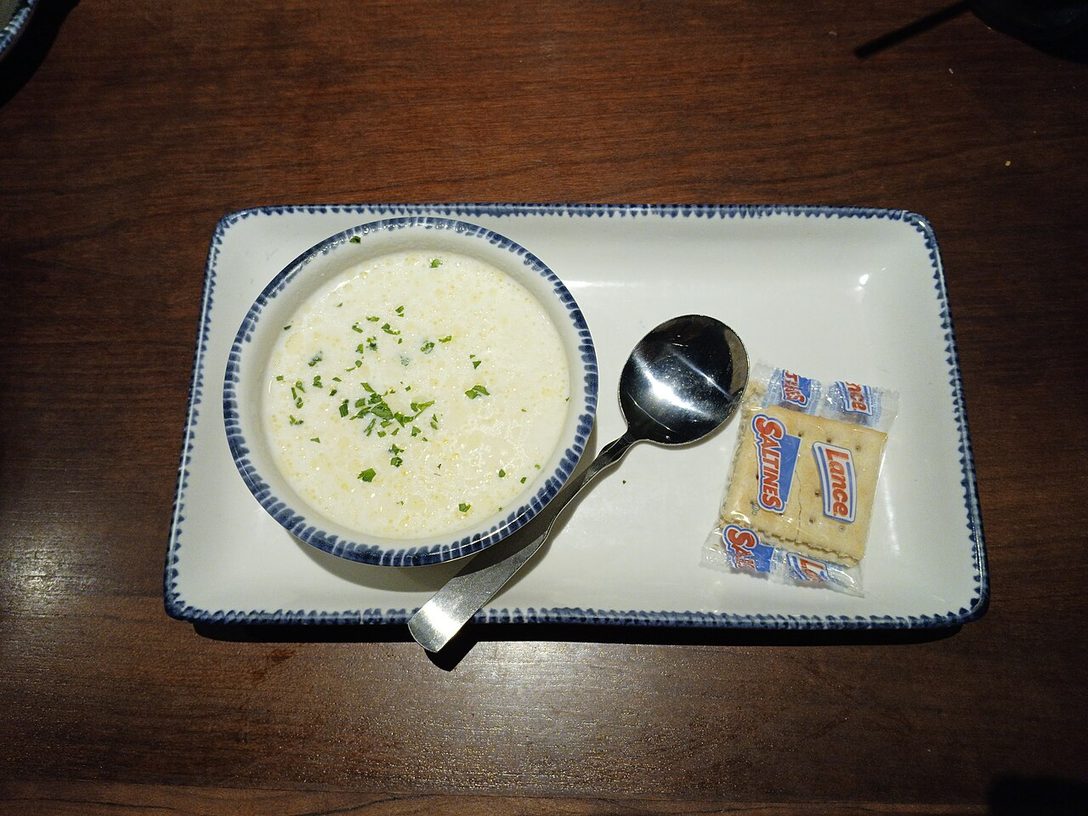
A creamy clam chowder at an oyster bar owned by a B.C. shellfish farm.
Fanny Bay Oyster Bar · 762 Cambie St, Vancouver, BC V6B 2P2
Get: Chowder and a dozen of the farm's oysters
A bowl of chowder, please.
Run by Taylor Shellfish, whose Fanny Bay farm on Vancouver Island supplies the oysters and clams.
Make it at home: New England Clam Chowder
A thick, peppery potato chowder built on salt pork, fresh steamed clams and cream, served with plenty of saltines. Inspired by the clam chowder at Eventide Oyster Co. in Portland, Maine.
You need
- 24 littleneck clams (about 3 lb), scrubbed
- 1 cup water
- 4 oz (115 g) salt pork, rind removed, cut into 1/4-inch dice
- 1 tbsp unsalted butter
- 1 large yellow onion (about 10 oz), cut into 1/2-inch dice
- 1 celery rib, cut into 1/4-inch dice
- 2 tbsp all-purpose flour
- 2 cups bottled clam juice
- 2 bay leaves
- 1 tsp fresh thyme leaves
- 3 medium Yukon Gold potatoes (about 1 1/4 lb), peeled and cut into 1/2-inch dice
- 2 cups heavy cream
- 1/2 tsp freshly ground black pepper
- 1/4 tsp kosher salt, plus more to taste
- 2 tbsp snipped fresh chives
- 1 sleeve saltine crackers, for serving
How to make it
- Put the clams and 1 cup water in the Dutch oven, cover, and cook over high heat for 7 minutes, shaking the pot once, until the shells open. Lift the clams out with tongs into a bowl and discard any that stay closed.
- Pour the broth through a fine strainer lined with a paper towel into a measuring cup, leaving the grit behind. Add enough bottled clam juice to total 3 1/2 cups. Wipe the pot clean.
- Pick the clams from their shells and chop the meat into 1/2-inch pieces. Refrigerate in a bowl.
- Cook the salt pork in the clean pot over medium heat for 9 minutes, stirring, until golden and crisp. Remove with a slotted spoon to a paper towel and leave 2 tbsp fat in the pot, pouring off the extra.
- Add the butter, onion and celery to the pot. Cook over medium-low heat for 8 minutes, until soft and translucent but not browned.
- Sprinkle in the flour and stir for 2 minutes. Slowly whisk in the clam broth, scraping up the browned bits. Add the potatoes, bay leaves and thyme.
- Bring to a boil, then lower to a gentle simmer, partly covered. Cook for 14 minutes, until a fork slides easily into a potato. Press about a quarter of the potatoes against the side of the pot to thicken the broth.
- Stir in the cream and pepper and heat for 5 minutes until steaming, but do not let it boil. Add the clams and half the pork bits, and cook for 2 minutes just to warm the clams. Taste, add up to 1/4 tsp salt, and remove the bay leaves.
- Take the pot off the heat and let the chowder rest for 10 minutes so it thickens and the flavors meld.
- Ladle into bowls and top with the remaining pork bits and chives. Serve with the saltines.
Pans and tools
- 5-quart Dutch oven or heavy pot with lid
- fine-mesh strainer
- paper towels
- slotted spoon
- wooden spoon
- ladle
Chef's tips
- Common mistake: rubbery clams. Add them at the very end, only to warm through.
- Taste before salting, since salt pork and clam juice are salty.
- Chowder tastes better the next day. Reheat gently over low heat and do not boil.
- Swap: two 6.5 oz cans of chopped clams with their juice for the fresh clams, added in step 8, or thick-cut bacon for the salt pork.
Cantonese congee

Rice cooked down to a silky porridge, with pork and century egg or fish, and a fried cruller to dip.
Congee Noodle House · 141 E Broadway, Vancouver, BC V5T 1W1
Get: Pork and century egg congee with a yau char kwai (fried dough)
Pork and century egg congee, and a yau char kwai, please.Pork and century egg congee, and a fried dough stick, please.
A no-frills Cantonese room open late, with a menu of more than 40 congees.
Make it at home: Cantonese congee with pork and century egg
Soaking the rice with a little oil helps it break down into the silky texture Hong Kong cooks want.
You need
- 3/4 cup (150 g) jasmine rice
- 1 tsp neutral oil, 1/2 tsp salt
- 10 cups (2.4 l) water or light chicken stock
- 1 in (2.5 cm) ginger, in thin matchsticks
- 1/2 lb (225 g) pork tenderloin, thinly sliced, mixed with 1 tsp soy sauce and 1 tsp cornstarch
- 2 century eggs, peeled and chopped
- White pepper, sesame oil, sliced green onion, cilantro
- Fried dough sticks (yau char kwai), to serve
How to make it
- Rinse the rice, drain, mix with the oil and salt and leave 30 minutes (or freeze it overnight, which breaks it down faster).
- Bring the water to a boil, add the rice and half the ginger, and simmer, stirring now and then, 1 1/4 hours, until it's smooth and porridge-thick.
- Stir in the pork and half the century egg and simmer 3 minutes, until the pork is just cooked.
- Season with salt and white pepper and serve with the rest of the egg and ginger, green onion, cilantro, a few drops of sesame oil and fried dough to dip.
Chef's tips
- Thin with hot water if it gets too thick; it keeps thickening as it sits.
Is this your restaurant?
You make the best bowl in Vancouver, by our read. Make your card above (it downloads, or opens your share sheet on a phone), post it, and tag us. Here's your tag for your site:

<a href="https://www.chefamazing.com/soup/vancouver"><img src="https://www.chefamazing.com/soup/badge/vancouver.svg" alt="Hokkaido Ramen Santouka: the best bowl in Vancouver" height="46"></a>
Something changed? Write to hello@chefamazing.com.Bowls nearby


All 50 bowls The 25 best soup recipes
No. 1 checked October 28, 2026; the other four picked the same day from local guides and menus. Places change; if one has, tell us at hello@chefamazing.com.
Chef Amazing remembers every place you ate, keeps the lists friends send you, and helps you cook it at home.
Our founder's story · For chefs and food creators · Privacy · Terms